During 1918 all three Baltic countries managed to escape the Russian grip and enjoyed some two decades of independence before they came under Russian/Soviet rule again. Despite the fact that the loss of their independence lasted for the following 50 years, all three countries celebrate their centenary this year. So how are the past 100 years described? During my years as a journalist in Vilnius, one of my major interests was precisely the way in which the country portrayed its own history. Over the years I pinpointed facts and covered aspects of this history that were not often highlighted in official speeches or by mainstream media. In the following I will focus on two topics in the case of Lithuania — the Soviet period and the Jews.
By
Påhl Ruin
September 6, 2018
Lithuanian architecture of the past 25 years is a mirror of social decomposition is here argued. It is suggested that is should serve as a space for engagement with outcomes of this decomposition instead of glossing over it. Further that architecture and architects might contribute to the dissensus in all spheres of life existing today, or might cultivate fantasies about the social unity and spirituality of their art-craft.
Essay by
Arnoldas Stramskas
June 18, 2018
In this interview, Laura Sintija Černiauskaitė shares her experience of becoming a writer in the post-Soviet conditions of 1990s Lithuania. Her development as a writer coincided with a drastic change in what it meant to be a writer: from being a political spokesperson to being an economic entity.
By
Stephan Collishaw
January 30, 2017
Kalle Kniivilä, Sovjets barnbarn: Ryssarna i Baltikum. [The grandchildren of the Soviet Union: The Russians in the Baltic states] Atlas 2016. 320 pages
By
Ingmar Oldberg
October 25, 2016
A new geopolitical situation in Lithuania has led to a growing need to focus on the purely heroic nature of the partisan war. The ideal picture of the heroic partisan is now in the forefront, while the more problematic aspects of their actions are downplayed. Among the darker side is that at least 9,000 civilians were designated as collaborators and executed by the Forest Brothers.
By
Påhl Ruin
October 25, 2016
Even though the EU’s conditionality per se did not make Lithuanian people more tolerant, it may have created the conditions for winning hearts and minds in the long run. Despite the fact that the majority of LGBT persons continue to hide their sexual or gender identity (in 2012, 81% did so at school and 55% at work), the problems they face are no longer invisible, and even backlash-like developments contribute to sparking a debate. On June 18, 2016 a march for LGBT (lesbian, gay, bisexual and transgender) rights, known as the Baltic Pride parade, took place in Lithuania’s capital, Vilnius.
Essay by
Ausra Padskocimaite
October 25, 2016
This paper explores the scope, causes, flourishing, and decline of squatting in Lithuanian society during the period of 1990-2002. Drawing on 16 in-depth interviews conducted with squatters in Vilnius, newspaper articles and legal documents, this paper shows that squatters made contributions to the city with their cultural capital, creating local subcultures and making the urban space more attractive.
By
Jolanta Aidukaite
June 23, 2016
Volha Sasunkevich, “From Political Borders to Social Boundaries: History of Female Shuttle Trade on the Belarus–Lithuania Borderland (1990—2011)” (PhD diss., Greifswald University, 2013).
By
Yulia Gradskova
November 19, 2015
Each year Mission Siberia sends 15 young Lithuanians to Siberia and other areas in the former Soviet Union where Lithuanians were deported. They search for traces that Lithuanians left behind and tidy up cemeteries where Lithuanians are buried. But most of all they go to meet Lithuanians — and their children and grandchildren — who decided to stay even after it was possible to return in the 1950s.
By
Påhl Ruin
November 19, 2015
In 2004, eight Central and Eastern European countries (CEECs) and two Mediterranean countries entered the European Union (EU). Hailed by some as the “New Europe”, the CEECs seemed to have finally affirmed their European identity. Ten years later, one is naturally tempted to examine whether the CEECs’ EU membership has indeed made them more “European”.
By
Péteris Timofejevs Henriksson
June 17, 2014

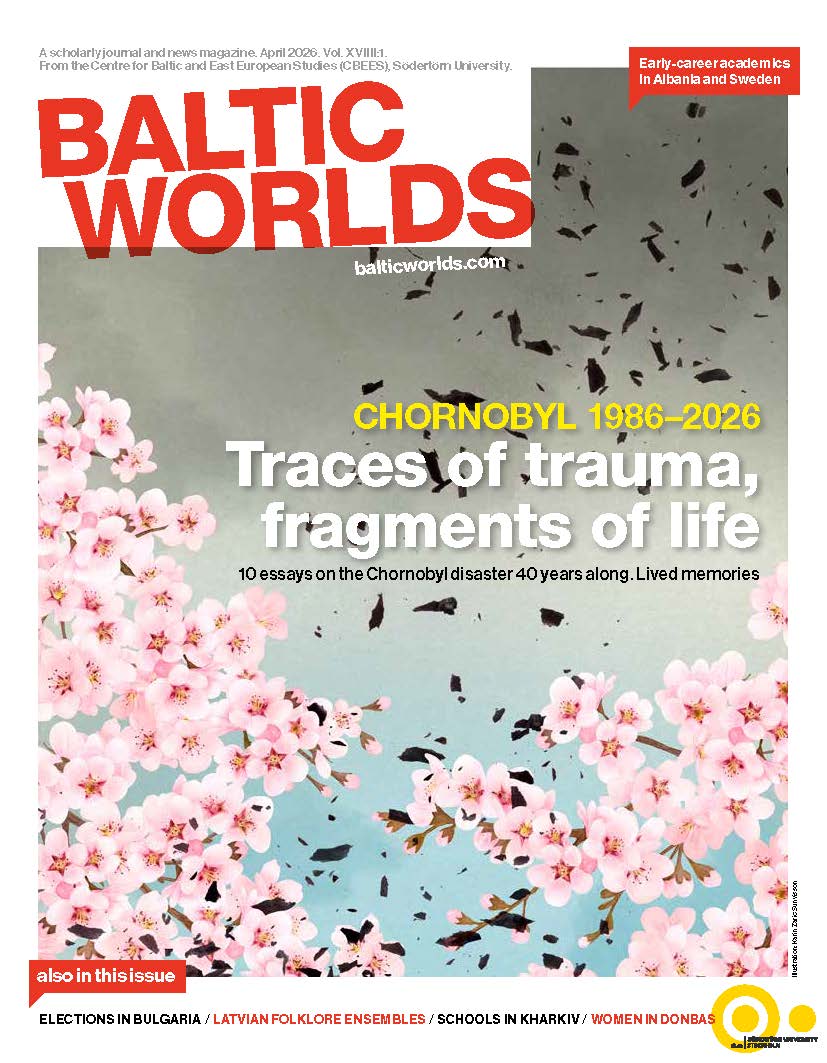 Issue 2026, 1:
 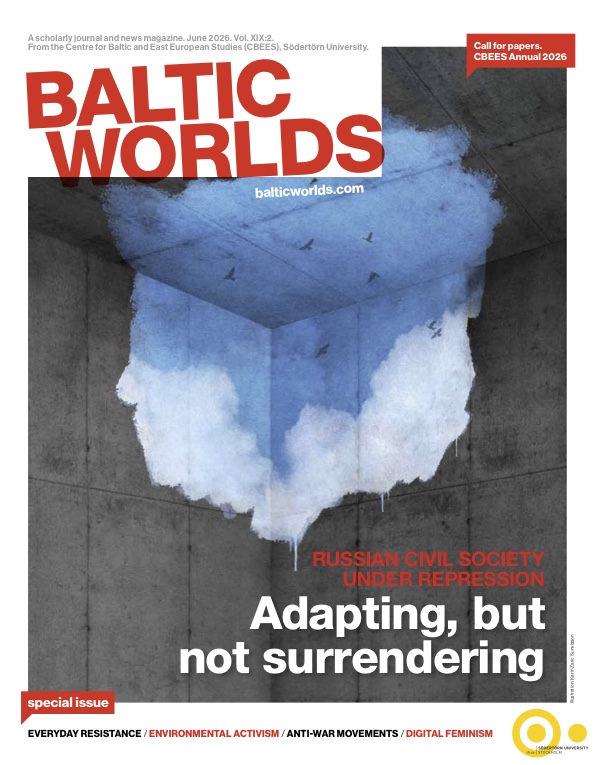 Issue 2026, 2:
  Baltic Worlds covers; the Baltic Sea Region, Eastern Europe, Russia, CentralAsia, Caucasus and the Balkan area.