Dr. Karlis Leyasmeyer arrived to the United States in 1949 as a displaced person from Latvia. While unknown to most Americans, he quickly embarked on a coast-to-coast speaking tour, organized by newly formed evangelical groups like Youth for Christ and InterVarsity Christian Fellowship. In these talks he glorified Christ and harshly criticized Soviet communism. We explore how Leyasmeyer went from relative unknown, to featured speaker in short order, but also how he situated himself in multiple spaces in his new country: as both a Latvian refugee among other Latvians, and as an evangelical Christian among American evangelicals. At times, Leyasmeyer thrived in these environments, but he would also find himself at the intersection of these groups. This research examines Leyasmeyer’s early career, his many achievements, but also how he developed an intellectual and theological outlook that was distinct from his Latvian contemporaries, as well as from the larger movements of American evangelicals.
By
Joseph M. Ellis et al
December 18, 2025
The revolt that lasted 63 days was a desperate attempt to push back the German enemy before the Red Army crossed the Vistula River. Once it was quashed, the Poles counted their losses in hundreds of thousands: It is estimated that roughly 15 000 Polish soldiers who followed orders from the government-in-exile in London perished, hundreds of whom had already fought during the April 1943 uprising of the Warsaw ghetto. 150 000—170 000 civilians lost their lives, 65 000 of them in organized massacres.
A contemporary Swedish reaction to the Warsaw uprising was published in September 1944 in Warszawa! [Warsaw!]. The editor of the anti-Nazi newspaper Trots allt! [In spite of everything!] and left-wing politician Ture Nerman wrote: "In the history of this time and age, Warsaw stands as one of the most heroic in humanity’s struggle for freedom."
By
Hanna Aspegren
April 16, 2025
This article focuses on the blackmailing of the Jews during the Nazi occupation of Lviv, Galicia. Despite a considerable amount of attention from historians to the Shoah in Lviv, this issue is still one of the few unstudied problems. Based on the carefully collected source materials, the author reconstructs the main features of this phenomenon, its evolution, its local specifics, and the main types of blackmailers and the methods of their activities.
By
Taras Martynenko
March 7, 2019

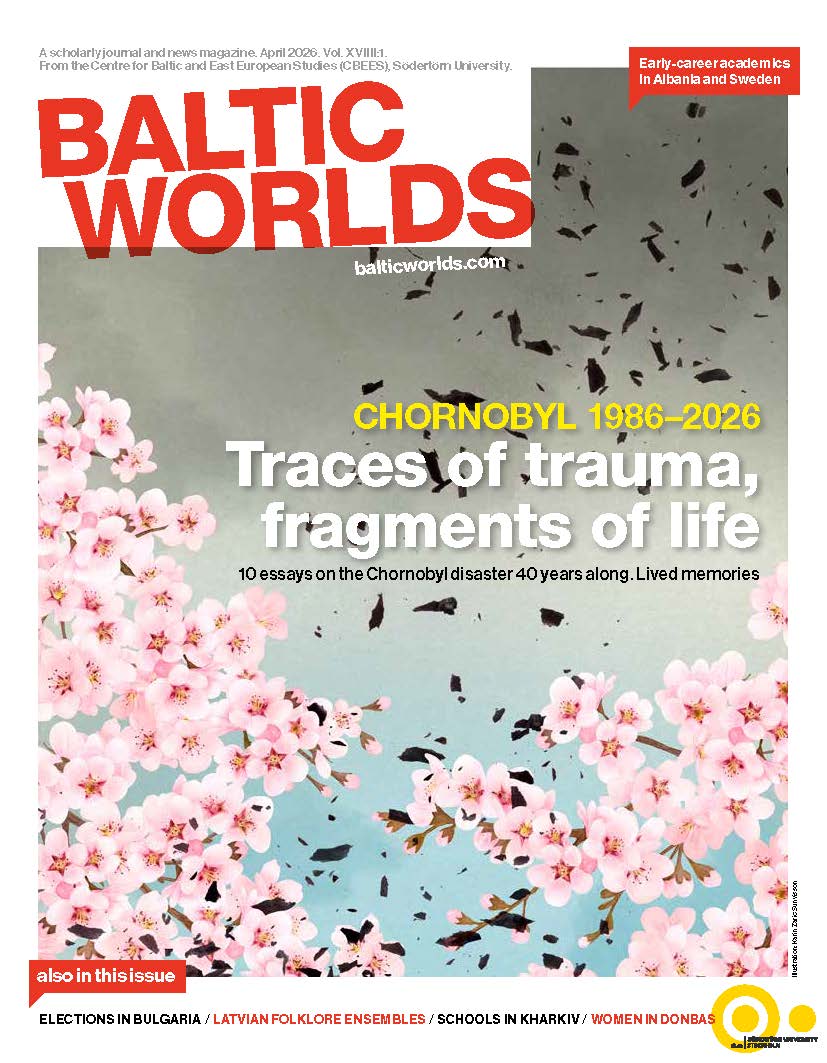 Issue 2026, 1:
 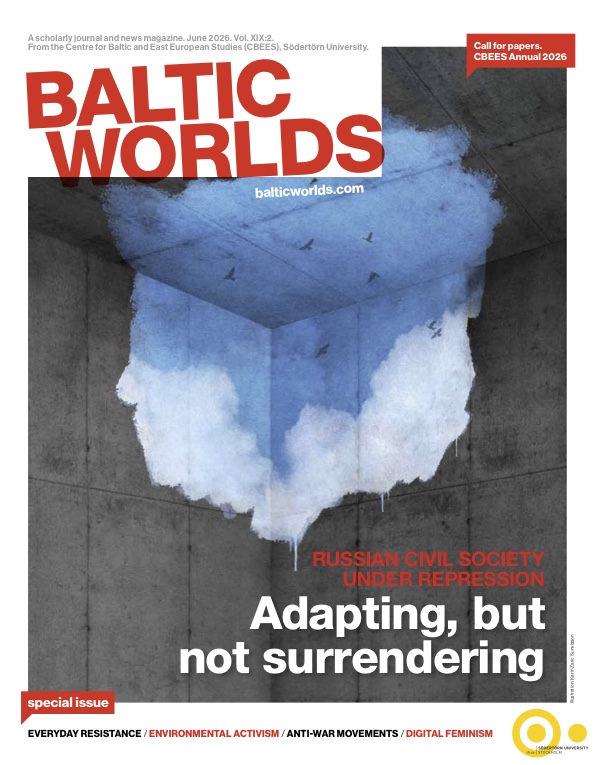 Issue 2026, 2:
  Baltic Worlds covers; the Baltic Sea Region, Eastern Europe, Russia, CentralAsia, Caucasus and the Balkan area.