
Download back issue of Baltic Worlds
 Issue 2026, 1: Download.
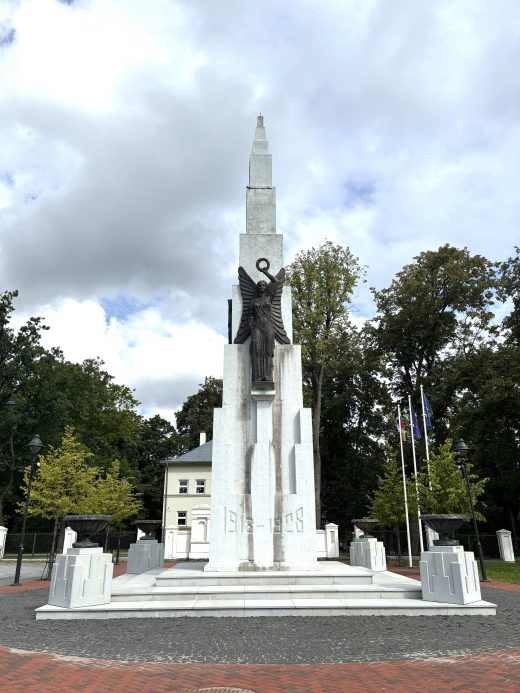
The Freedom Monument in Plungė, Lithuania. PHOTO: AUTHOR
Peer-reviewed articles The concept of positive de-Sovietization The meaning of new monument-making
The events in Ukraine prompted the countries of East-Central Europe to review their approach to the monuments and collective memory signs that have remained from the Soviet era. Although the region regards the dismantling of Soviet monuments in relation to de-Sovietization that started around 1990, the removal of the remaining Soviet artefacts from public spaces was also related to the international situation in 2013–2014 and 2022, almost thirty years after the collapse of the Soviet Union. As the dominant research of de-Sovietization focus on the elimination of Soviet monuments, i.e. by nature, a negative aspect of de-Sovietization based on the removal and dismantling of monuments, the article presents the concept of positive de-Sovietization based on the case analysis of Lithuanian monuments. The de-Sovietization process is considered dual: the removal of Soviet monuments is accompanied by the construction of the new ones establishing a new historical narrative and state’s identity. It can be defined as a positive aspect of de-Sovietization that makes its implementation complete.
Published in the printed edition of Baltic Worlds BW 2025:2, pp 4-18
Published on balticworlds.com on September 23, 2025


abstract
The events in Ukraine prompted the countries of East-Central Europe to review their approach to the monuments and collective memory signs that have remained from the Soviet era. Although the region regards the dismantling of Soviet monuments in relation to de-Sovietization that started around 1990, the removal of the remaining Soviet artefacts from public spaces was also related to the international situation in 2013–2014 and 2022, almost thirty years after the collapse of the Soviet Union. As the dominant research of de-Sovietization focus on the elimination of Soviet monuments, i.e. by nature, a negative aspect of de-Sovietization based on the removal and dismantling of monuments, the article presents the concept of positive de-Sovietization based on the case analysis of Lithuanian monuments. The de-Sovietization process is considered dual: the removal of Soviet monuments is accompanied by the construction of the new ones establishing a new historical narrative and state’s identity. It can be defined as a positive aspect of de-Sovietization that makes its implementation complete.
KEYWORDS: Sovietization, de-Sovietization, monuments, ontological security, Lithuania
DOWNLOAD THE FULL PAPER OA (see upper right corner)