
Download back issue of Baltic Worlds
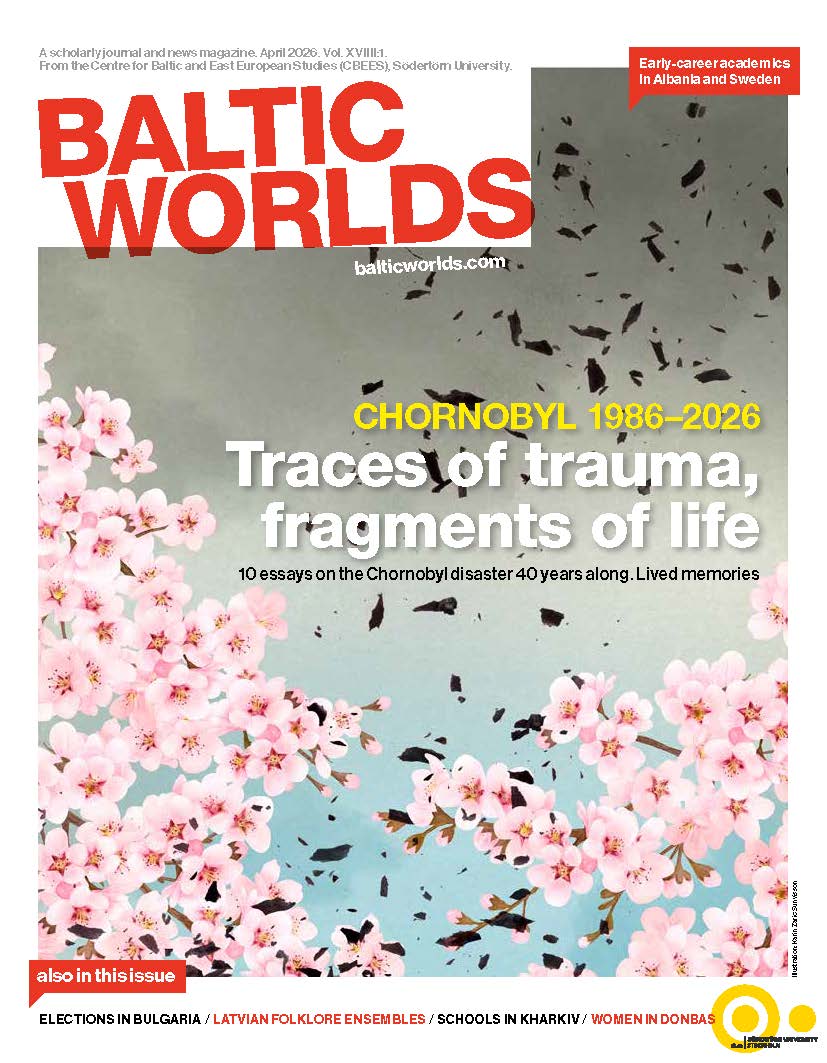 Issue 2026, 1: Download.
Essays Writing the disaster from Hiroshima to Chornobyl ATOMIC AND NUCLEAR TESTIMONIES AND THE AFTERLIFE OF DISASTERS
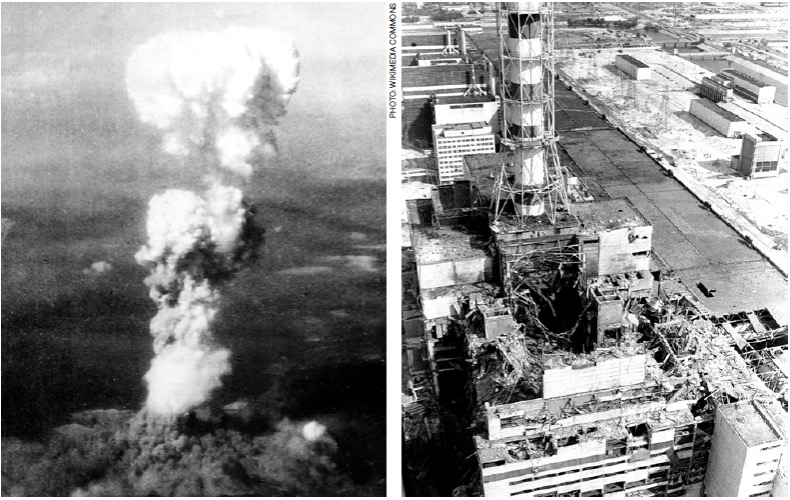
This essay examines the memorialization of two pivotal nuclear catastrophes – the atomic bombing of Hiroshima in 1945 and the Chornobyl nuclear disaster in 1986 – through the lens of testimonial writings and Maurice Blanchot’s concept of “the disaster.” Drawing on Japanese hibakusha testimonies and Chornobyl survivors’ accounts, the essay contrasts political memory, which seeks closure and national integration, with cultural memory, which preserves trauma, ambiguity, and unresolved loss. Testimonial writings, rather than commemorating a concluded past, emerge from within the disaster itself, articulating a reality that defies assimilation into redemptive historical narratives.
Published in the printed edition of Baltic Worlds BW 2026:1, pp 43-48
Published on balticworlds.com on April 23, 2026


abstract
This essay examines the memorialization of two pivotal nuclear catastrophes – the atomic bombing of Hiroshima in 1945 and the Chornobyl nuclear disaster in 1986 – through the lens of testimonial writings and Maurice Blanchot’s concept of “the disaster.” Drawing on Japanese hibakusha testimonies and Chornobyl survivors’ accounts, the essay contrasts political memory, which seeks closure and national integration, with cultural memory, which preserves trauma, ambiguity, and unresolved loss. Testimonial writings, rather than commemorating a concluded past, emerge from within the disaster itself, articulating a reality that defies assimilation into redemptive historical narratives.
KEYWORDS: Nuclear disaster, Maurice Blanchot, A-bomb literature, Chornobyl literature.
Full article as a pdf for free download, see upper right corner.
-
by Florence Fröhlig

An Associate Professor in Ethnology at the School of Contemporary and Historical Studies and Director of studies of the Baltic and East European Graduate School (BEEGS) at Södertörn University, Sweden. Besides her research interests concerning memory and mourning processes, counter-memories, resilience and the transmission of memory (PhD "Painful legacy of World War II: Nazi forced enlistment: Alsatian/Mosellan Prisoners of War and the Soviet Prison Camp of Tambov” 2013), she is interested in the memorialization’s and heritagization’s processes of industrial sites. Her research has also expanded to ecological issues in the Baltic and Eastern European regions. Currently, she is involved in a research project on Russian and Belarusian migrants and their identity construction in Lithuania and Poland following Russia’s invasion of Ukraine.
- all contributors