Alexander Abramov, Maria Chernova and Alexander Radygin
Alexander Radygin, Director at the Institute of Applied Economic Research, the Russian Presidential Academy of National Economy and Public Administration (RANEPA), Moscow. He is also head of the Research Department and a board member at the Gaidar Institute for Economic Policy, Moscow.
Alexander Abramov, Professor at the Institute of Applied Economic Research, RANEPA. His main research interests span over the development of financial markets in Russia, with a special focus on institutional investors including pension and mutual funds.
Maria Chernova, Researcher at the Laboratory of Institutions and Financial Markets Analysis at the Institute of Applied Economic Research, RANEPA. Financial markets and financial risk management are her main research filed.
view all contributors
Articles by Alexander Abramov, Maria Chernova and Alexander Radygin
-
He is the last Lithuanian Jewish author with first-hand experience of the shtetls, the small Jewish towns that vanished from the face of the earth in 1941.
”I have tried to create a written monument to the Lithuanian Jews”, says Grigory Kanovich in an interview with Baltic Worlds.
-
Ayse Gul Altinay statements at the court is here published. She signed the "We will not be party of this Crime"-petition in Turkey .
-
On the 6th of May this year, Baltic Worlds arranged a seminar at CBEES on the topic of the shrinking space for academic freedom. Updated reports from Poland and Hungary was followed by a presentation of the autocratic learning process in Eurasia. Finally there were suggestions on how protect academic freedom and work for international scholarly solidarity.
-
In my contribution I would like to provide an assessment of what has happened over the past two years in Hungary, how academics have been reacting, and finish with a few thoughts regarding academia in that country and beyond. My focus should and will be on the Hungarian Academy of Sciences.
-
Rather than moving towards arguments or ideological standpoints, the politics in Ukraine has moved farther towards selling emotions, stories and images. This time it was the politics of mediatised emotion on steroids. Is this simply a new politics that can be used in a populist and non-populist ways, or for progressive as much as reactionary causes? It may look like it is a neutral tool but I would still argue that this kind of politics substitutes political mobilisation with political immersion by submerging the audience into a story, an emotional environment, an experience.
-
On March 30, Zuzana Čaputová defeated Maroš Šefčovič in the second round of the Slovak presidential election. It looks like an important victory for those who want a “European” and socially liberal Slovakia - regardless of the fact that the country is a parliamentary republic with limited powers for the president. But the presidential race has also revealed more troubling aspects of Slovak politics, and exposed deep divisions within the Slovak society.
-
Gendering postsocialism: old legacies and new hierarchies, Yulia Gradskova and Ildikó Asztalos Morell, Eds.. 2018. London ; New York: Routledge, Taylor & Francis Group.
-
Die Ostsee. Berichte und Geschichten aus 2000 Jahren. Klaus-Jürgen Liedtke (ed.) Berlin: Galiani Verlag 2018, 650 pages.
-
Ukraina och informationskriget – journalistik mellan ideal och självcensur [Ukraine and the information war – journalism between ideal and self-censorship] Gunnar Nygren and Jöran Hök (ed.), Myndigheten för samhällsskydd och beredskap. (2016), 279 pages.
-
Belarus in Maps, Edited by Dávid Karácsonyi, Károly Kocsis, and Zsolt Bottlik. Budapest: Geographical Institute, 2017, 194 pages.
-

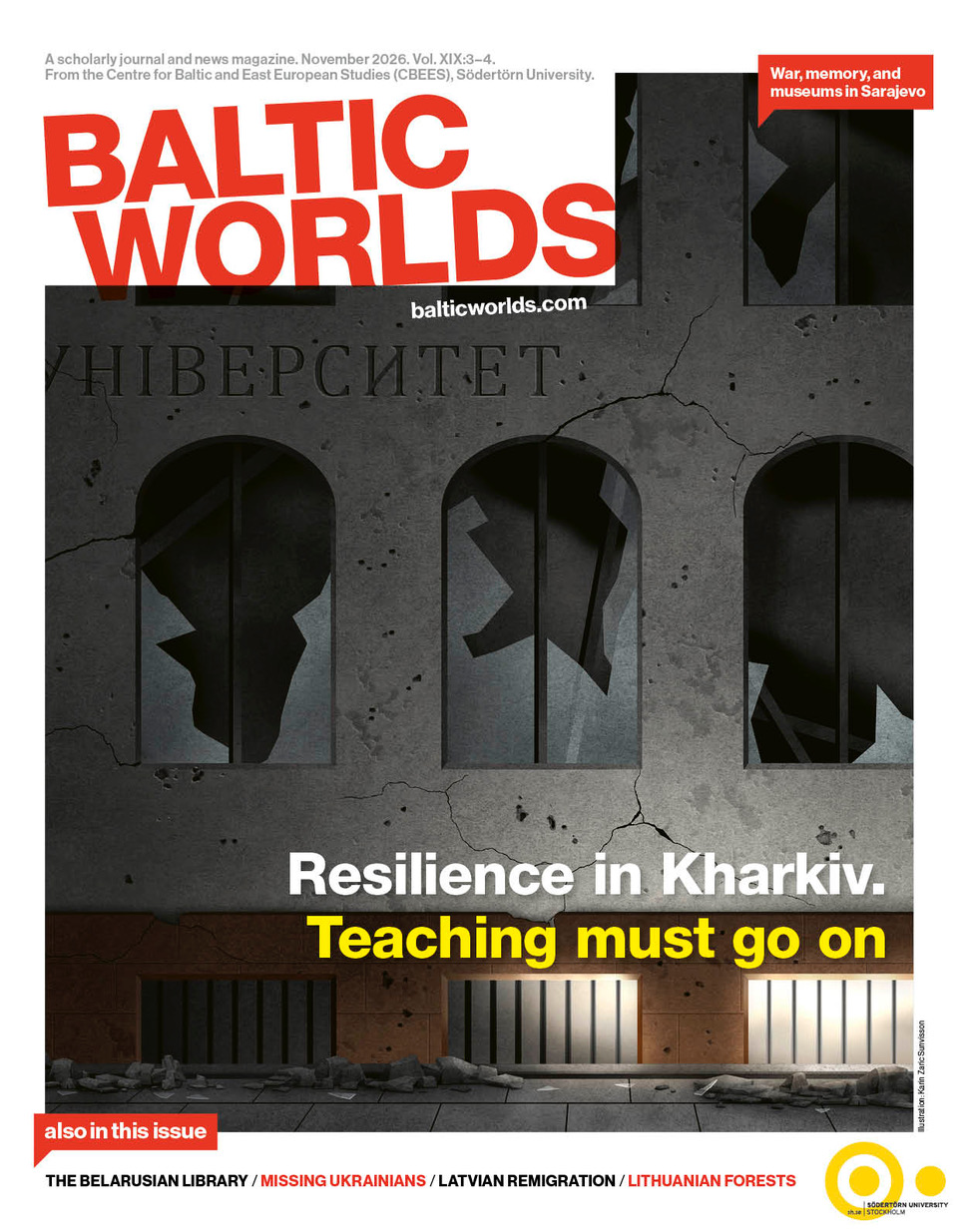 Issue 2026, 3-4: