Alexander Abramov, Maria Chernova and Alexander Radygin
Alexander Radygin, Director at the Institute of Applied Economic Research, the Russian Presidential Academy of National Economy and Public Administration (RANEPA), Moscow. He is also head of the Research Department and a board member at the Gaidar Institute for Economic Policy, Moscow.
Alexander Abramov, Professor at the Institute of Applied Economic Research, RANEPA. His main research interests span over the development of financial markets in Russia, with a special focus on institutional investors including pension and mutual funds.
Maria Chernova, Researcher at the Laboratory of Institutions and Financial Markets Analysis at the Institute of Applied Economic Research, RANEPA. Financial markets and financial risk management are her main research filed.
view all contributors
Articles by Alexander Abramov, Maria Chernova and Alexander Radygin
-
The paper examines the comic in relation to the figuration of the grotesque body in Sanskrit tradition in India. It is pursued with two objectives: firstly, to explore bodily figurations in the Indian comic tradition, and, further, to enquire the parallel elaboration of Bakhtin’s notion of the carnivalesque that celebrates the laughing body. A reading of a 14th century Indian text Hāsyārnava provides the ground for the elucidation. The paper elaborates on how the “distorted, deformed and diseased” body which Bharata refers to, the “grotesque body”t as Bakhtin says, institutes hāsya and carnivalesque discursively. The bodily desire pursued is pushed to the limits, resulting in rapture through a transgressive act.
-
In Hungary, the amount of protest to follow the announcement of Lex CEU was probably underestimated by the government, yet one relatively unexpected feature was that even a number of influential conservative public figures went against the prime minister and showed their support for CEU.
-
The founders of CEU, politicians, including PM Orban, had a common dream back then. That dream was that we would build a free and successful country where not party apparatchiks, but academics decide who can study at a university, and what institution can call itself a university.
-
New legislation at the end of the 1960s contained clearer procedural rules for marrying and divorcing and material regulations on support payments for children after divorce. Family values and domestic comfort increasingly occupied people’s minds from the 1960s onwards. This decade can be regarded as the point when, for the first time, public demands were made on men to be present in the family and more involved and engaged in their role as fathers.
-
Sweden’s indigenous people, the Sami, have struggled for years to get more attention. With little result. But now something is happening.
-
After five months of struggling and political crisis following the general elections in December 2016, Macedonia is finally getting a government. These fourth consecutive early elections were supposed to be a fresh restart and a means to overcome a longer period of deepening political crisis. But the effect was rather the opposite: the governing party lost the elections and have ever since done their utmost to prevent handing over power.
-
On April 2, Armenia held its first parliamentary election with the newly adopted constitution, transforming the country from a presidential to a parliamentary republic. In short the change transfers the substantial executive power from the presidential office to the prime minister and the parliament. The elections have widely been regarded as an important test of the democracy in Armenia.
-
Baltic Worlds invites you to support CEU with its long-held reputation as a center of innovation, academic excellence and scientific inquiry.
-
On 12 February 2017, the president of Turkmenistan, Gurbanguly Berdymukhamedov, won a predictably handsome presidential election victory with a margin of 97.7% and an impressive turnout of 97.28%. At first sight it might seem like just another Soviet-style election, with a solitary contender predestined to win a plebiscitary type contest. During this election, however, the Turkmen political elite constructed a facade of pluralism by running an unprecedented nine candidates representing three political parties.
-
This special theme focuses on the relation between realism and social or socialist realism from different angles and with examples from different countries. It consists of contributions from eight scholars who took part in the workshop: Sven-Olov Wallenstein, Karin Grelz, Aleksei Semenenko, Susanna Witt, Marcia Sá Cavalcante Schuback, Epp Lankots, and Charlotte Bydler and Dan Karlholm.
-

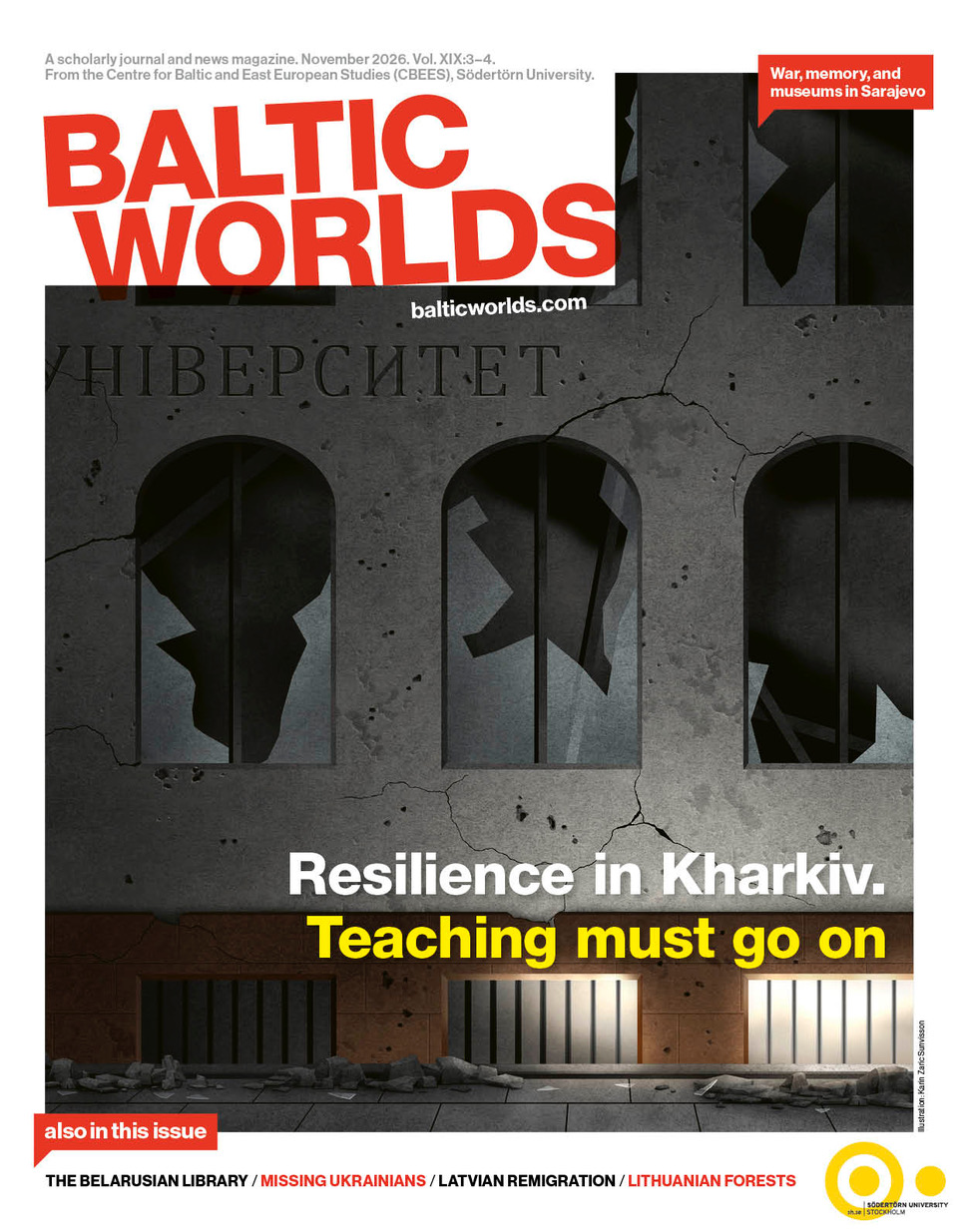 Issue 2026, 3-4: