Alexandra Biktimirova and Victoria Kravtsova
Alexandra Biktimirova is a student at the HSE University in Moscow and a feminist activist. Research interests center on the intersections of feminism and Islam in the Volga-Ural region in Russia, as well as globally. Coordinated the exhibition Feminist Translocalities in Kazan in 2020. Research interests are gender, muslim women, and relationships between discourses of power and marginality.
Victoria Kravtsova is a Feminist researcher, NGO-worker and activist. Born in Smolensk, Russia. Initiated Feminist Translocalities – a queer feminist network between the former USSR, Germany, and sometimes other locales, as wel l as a platform for supporting projects – publications, exhibitions, seminars, podcasts etc. Research interests include the intersections of feminist, antiracist and decolonial struggles in the countries of the former USSR.
view all contributors
Articles by Alexandra Biktimirova and Victoria Kravtsova
-
The referendum on family initiated by a group of Conservative NGOs has divided the Slovak citizenry into two opposing camps. Despite the conflictual nature of the campaign, the referendum has demonstrated that Slovakia is ready to handle civil-society deliberations on a large scale, which could be a sign indicating the gradual maturing of Slovak civil society.
-
There were two disparate and somehow polemic tendencies, or overarching discourses, among the parental movements presented at the workshop on Södertörn University in May 2014. The first was the nationalist discourse, whilst the other predominated discourse was concentrated on promoting new norms in parenting.
-
+ Cecilia Notini Burch, A Cold War Pursuit: Soviet Refugees in Sweden, 1945–54. Stockholm: Santérus Academic Press Sweden, 2014. 359 pages.
-
+ Peter Balogh, Perpetual Borders: German-Polish Cross-border Contacts in the Szczecin Area, Meddelanden från Kultur-geografiska institutionen vid Stockholms Universitet, [Reports of the Department of Human Geography, Stockholm University, Number 145] Stockholm: University of Stockholm Press, 2014, 204 pages.
-
In 1996, a Special Economic Zone was created that made it favorable for both Russian and foreign companies to relocate production to Kaliningrad. Once the intentions were to make Kaliningrad known for more than just its military bases. But this is no longer the case. Kaliningrad, once again, is gliding away from being an economic zone to becoming a military zone.
-
The main reason why we have not seen more severe conflicts between majorities and minorities in the new EU member states is, in the authors view, the EU’s success as a normative power. The pressure that the EU put on the candidates for membership to adapt to norms on minority protection and to solve their potential border conflicts had a positive effect.
-
The “feminization of migration” in the EU is spurred by a growing demand for labor in the low-paid sectors of the economy, including domestic work, personal services, care for the elderly and children, and the hotel and restaurant industries. One factor that encourages Central and Eastern European women to migrate to the West is the erosion of their own social and economic situation at home, which cements the asymmetry in economic prosperity between “East” and “West” and perpetuates inequalities between the “old” and “new” EU member states.
-
The post-communist countries did not see the Holocaust narrative and its relation to the history of the EU as part of their own narrative. Since entering the EU, a number of Eastern European countries have challenged the EU’s master narrative and tried to gain acceptance for — and draw attention to — their memory of Soviet Communism.
-
Survivors actually created manifold historical sources on the Holocaust and even completed a broad array of relevant publications before the end of 1940s; these sources were largely neglected afterwards and have remained underexplored to this day.
-
Communism has failed, not only on political and economic, but especially on moral grounds, the author claims; "Every communist state was a far cry from the paradise the doctrine proposed.".
-

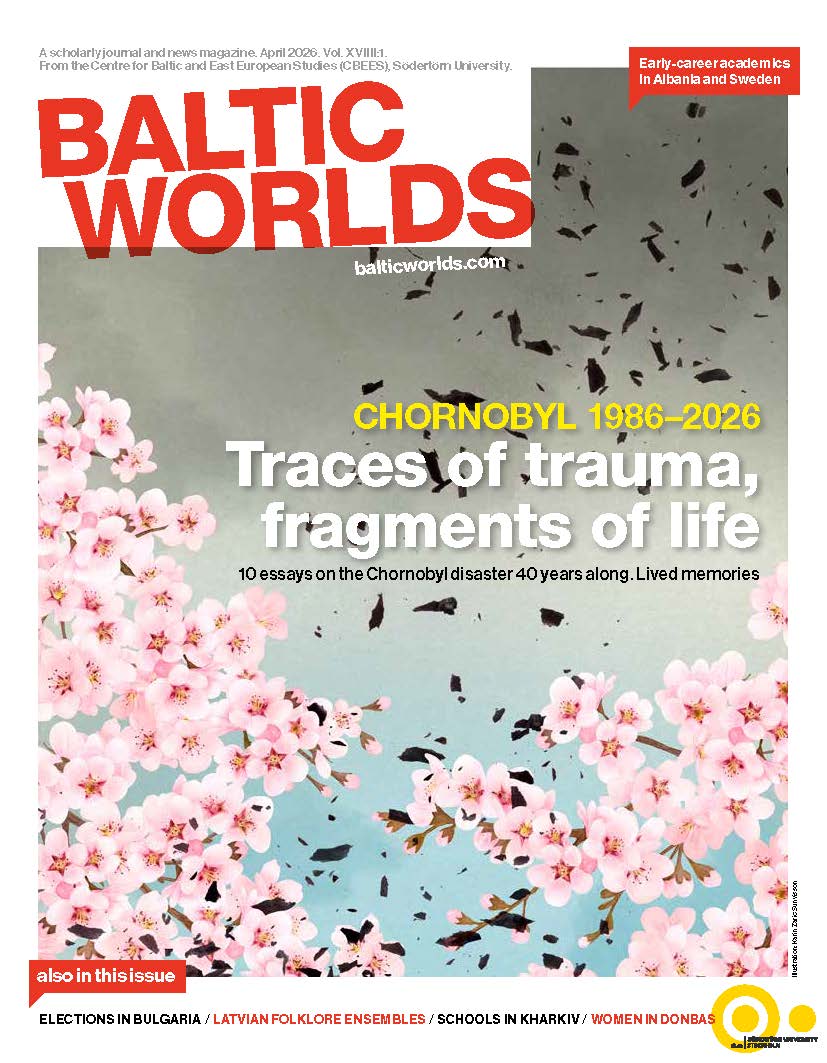 Issue 2026, 1: