Barbara Törnquist-Plewa & Magdalena Góra
Barbara Törnquist-Plewa is Professor of Eastern and Central European Studies; director for the Centre for European Studies, Lund University, Sweden. She specializes in cultural studies and contemporary history, focusing on studies of identities, collective memory, and nationalism.
Magdalena Góra is Assistant professor at the Institute of European Studies, Jagiellonian University, Cracow. PhD in political science. Her focus is on the EU role in international relations, Polish foreign policy and processes of collective identity formation in the context of the EU enlargement.
view all contributors
Articles by Barbara Törnquist-Plewa & Magdalena Góra
-
"Business is not particulary concerned with democratic values, but rather with the existence of stable rules of the game and secured property rights for investors, says professor Andrei Yakovlev, head of the Institute for Industrial and Market Studies at the higher School of Economics in Moscow.
-
This article discusses the reaction of the EU member-states to Russia’s 2014 military conflict with Ukraine. The European countries’ lack of united response and unwillingness to apply severe sanctions (restrictive measures) on Russia in a timely manner is attributed to a constellation of interests of the European countries and Russia in the European energy market.
-
In assessing intersectional sensitivity of the three NGOs here examined, one can conclude that all three identify the crucial interrelatedness of social marginalization with other marginalizing mechanisms. CfCf elaborates the intersection between ethnicity and social differentiation, where the main focus is on majority society’s institutional discrimination examined in the context of school segregation.
-
Each year Mission Siberia sends 15 young Lithuanians to Siberia and other areas in the former Soviet Union where Lithuanians were deported. They search for traces that Lithuanians left behind and tidy up cemeteries where Lithuanians are buried. But most of all they go to meet Lithuanians — and their children and grandchildren — who decided to stay even after it was possible to return in the 1950s.
-
It’s not always that the departure of someone whom we have a professional relationship with leaves a physical sense […]
-
The escalation around Ukraine calls for a larger historical re-assessment of social change in Eastern Europe – and indeed of the European project at large. The current moment of historical re-assessment requires a full-fledged competitor to liberal theory.
-
Whatever might be said of pop art techniques and art-historical discourses used in Hungary, and later in Estonia, (and less frequently in other countries), one would be hard-pressed to say that the 1960s was an era of pop in the region, especially one with North American influences. Why then?
-
Poet, essayist, film critic, journalist, feminist activist, researcher at Polish Academy of Science, literary researcher at Jewish Historical Institute and lecturer in gender studies at Warsaw University — Bożena Keff’s professional career is as multifaceted as it is interdisciplinary, and her interests impressively manifold.
-
On 11 October 2015, Belarus held presidential elections for the fifth time since independence from the USSR in 1991. The outcome was never in doubt: it was clear from the outset that the incumbent, Aliaksandr Lukashenka, would be re-elected. The real questions surrounding the election related to what processes would be triggered in the aftermath of the election. Time will tell whether the political theater of the presidential elections will succeed in helping Lukashenka avoid the further clientization of Belarus to Russia.
-
in October, the parliamentary elections took place and PiS got a landslide victory and a singlehanded majority in both chamber of the Polish parliament, the Lower House Sejm and the Upper House Senate. Polish and foreign press alike have been alarmed of the election results in Poland. PiS's main policy concerns are domestic and Polish politicians have long been more value conservative than society at large.
-

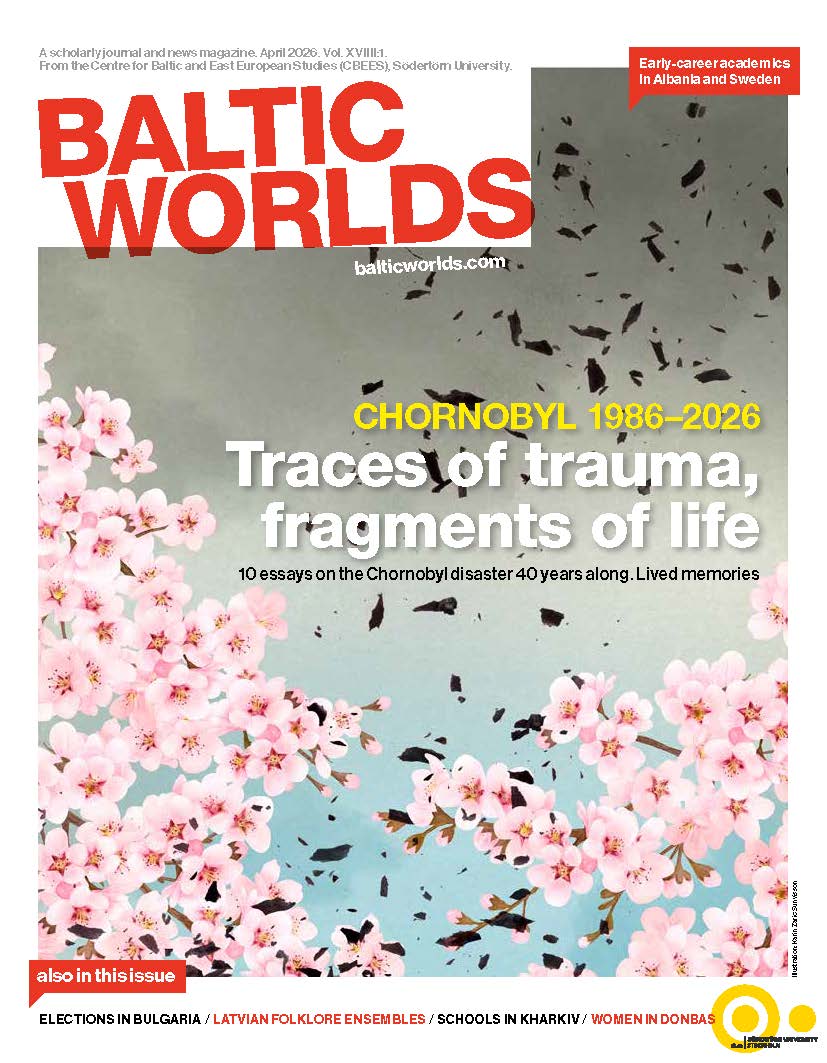 Issue 2026, 1: