Tolerance and the Intolerable
As the topic of tolerance became more and more “politically correct” and fashionable in the wake of postmodern relativism, its contours began to blur argues the author.

A scholarly journal from the Centre for Baltic and East European Studies (CBEES) Södertörn University, Stockholm.
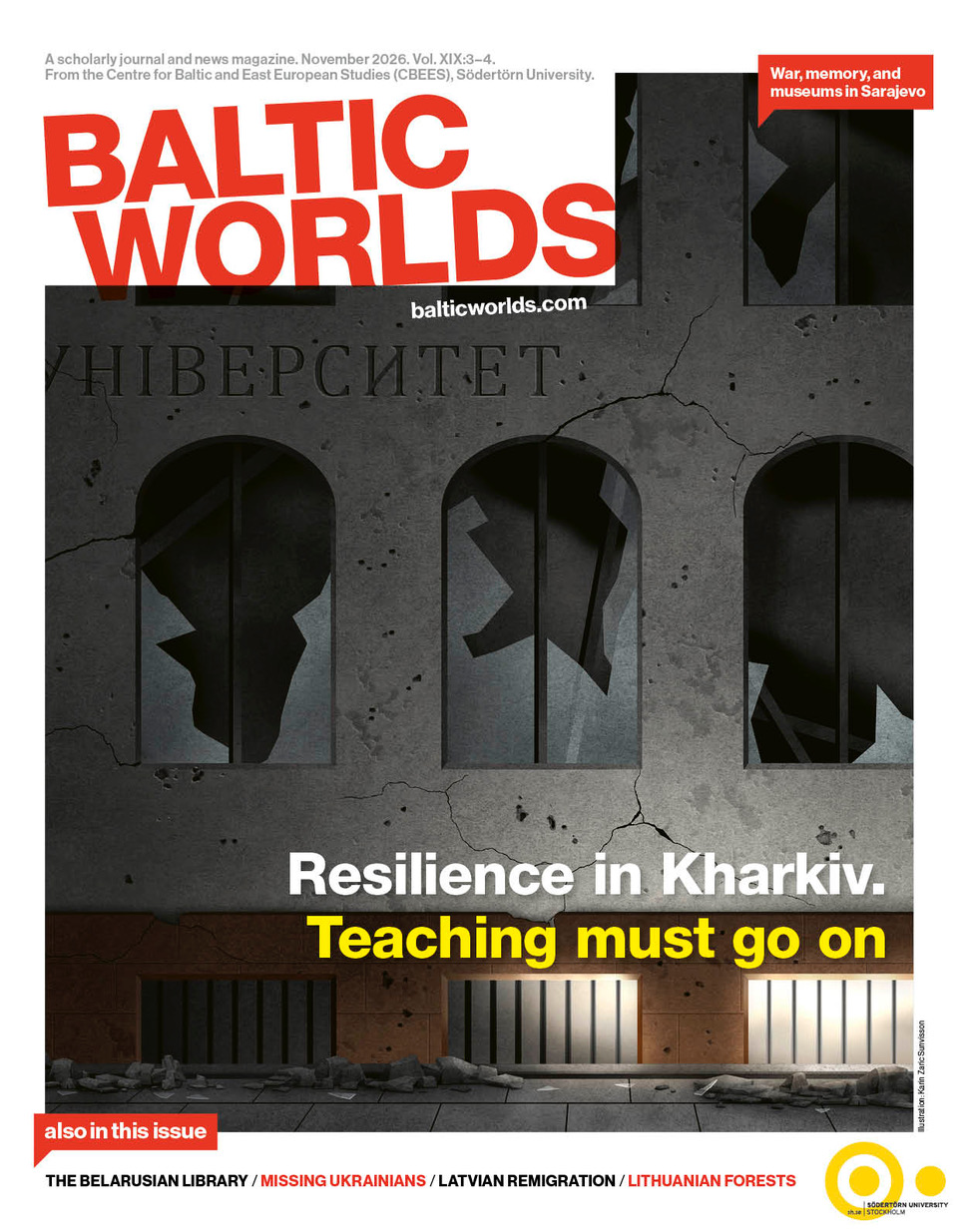 Issue 2026, 3-4: Download.
PhD in international relations; researcher at the Finnish Institute of Foreign Affairs, Helsinki. One of her ongoing research projects is “Russia’s Foreign Policy and the Quest for Leadership in the Eurasian Economic Space (2011–2013)”.
As the topic of tolerance became more and more “politically correct” and fashionable in the wake of postmodern relativism, its contours began to blur argues the author.
The small towns in the province of Posen became a nineteenth-century intellectual reservoir that fed German modernization. A new cultural interface had arisen where the Jewish tradition of text interpretation could interact with Enlightenment thinking and the new Bildung ideal in the spirit of von Humboldt.
The exhibition Fashion Talks: Fashion as Communication, which was shown for several months at the Museum for Communication, Berlin, was designed to explore — by looking at the messages conveyed by clothes — how people deal with fashion, both individually and collectively.
The questions posed by this year’s Berlin Biennale are an expression of anger; over the lack of attention to issues that concern ownership of access to the public space, control of money, and frustration about how the art world is being controlled by increasingly few hands, even as events are increasing in number and being spread all over the world.
Stefano Bottoni, Un altro Novecento L’Europa orientale dal 1919 a oggi [Another twentieth century: Eastern Europe from 1919 to the present day] Rome 2011, Carocci Editore, 404 pages
Tony Judt with Timothy Snyder, Thinking the Twentieth Century, New York 2012, The Penguin Press, 414 pages
Den goda tanken och den onda erfarenheten [The good idea and the evil experience] Lund University Department of History Lund 2011, 157 pages
Norman M Naimark, Stalins Genocides, Princeton & Oxford 2010, Princeton University Press, 163 pages, index.
In the first post-revolutionary years the Bolshevik government saw Tatar and Bashkir women as important allies. Muslim women from the Volga-Ural region were to be educated and taught about their rights, and this educational campaign was seen as contributing to the development of the new socialist society. Women’s ignorance was seen by the Soviet authorities as an obstacle to progress which had to be overcome with the help of the new institutions like Commissions for the Improvement of the Work and Everyday Life of Women.
Human rights activism in Russia can be a dangerous ordeal for those involved in it. How do these dedicated people nonetheless manage to advance human rights in Russia? Here an interview with three human rights activists.