Lia Dostlieva and Andrii Dostliev
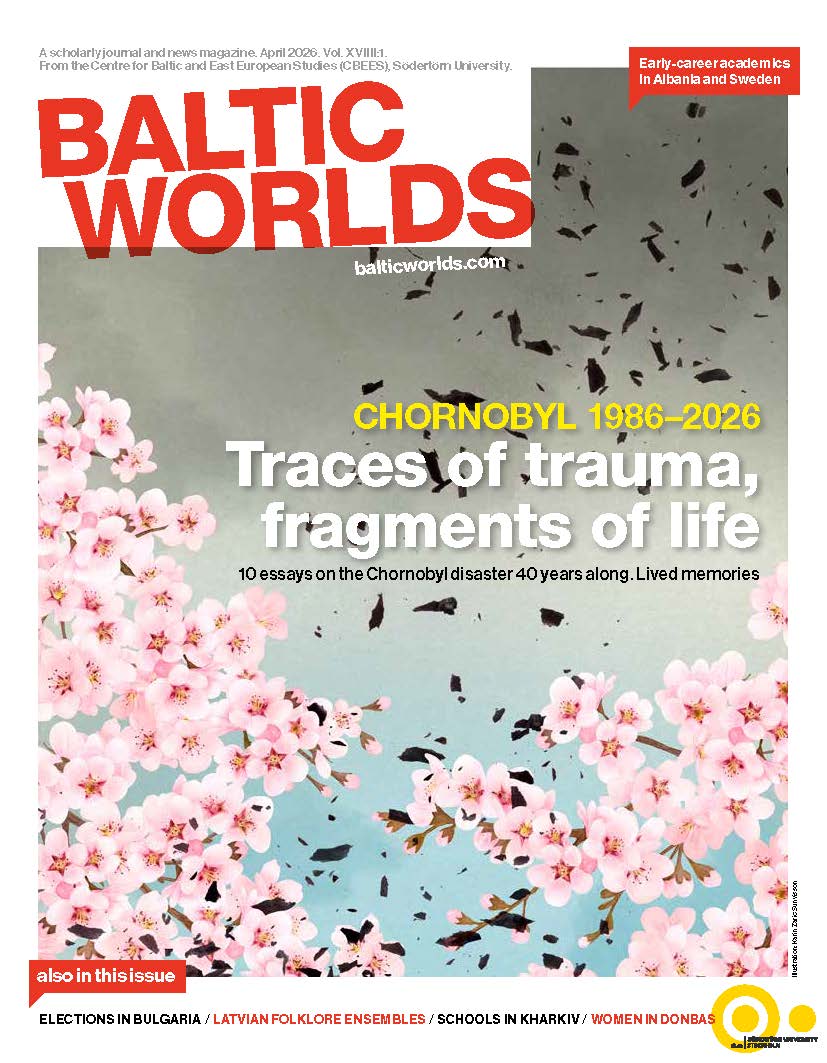
Lia Dostlieva is an Ukrainian artist, essayist, cultural anthropologist and researcher at Adam Mickiewicz University in Poznań, Poland. Focusing on trauma, postmemory, commemorative practices, and agency and visibility of vulnerable groups and how to process “difficult knowledge” and “difficult past”.
Andrii Dostliev is an independent Ukrainian artist, curator, and photography researcher currently based in Poland. His primary areas of interest are memory, trauma, identity – both personal and collective, and various aspects of queerness. Works in various media.
view all contributors
Articles by Lia Dostlieva and Andrii Dostliev
-
A new geopolitical situation in Lithuania has led to a growing need to focus on the purely heroic nature of the partisan war. The ideal picture of the heroic partisan is now in the forefront, while the more problematic aspects of their actions are downplayed. Among the darker side is that at least 9,000 civilians were designated as collaborators and executed by the Forest Brothers.
-
This paper deals with the dilemmas scholars can run into when they encounter the conflict between political activists and what can be proven by evidence. The dispute with historians revolves around what the anthropologist Michel-Rolph Trouillot terms “Silencing the past”. This is certainly true in the case of the Roma and genocide. What complicates the case is that a long-standing memory is part of a still ongoing political activist campaign to build a recognized memory for all of Europe’s Roma.
-
This paper analyzes how the Serbian rapper Marčelo and the Bosnian rappers Edo Maajka and Frenkie have – from their first steps in hip-hop culture – tried to build a common understanding of postwar sentiments and to diagnose newborn societies in the Balkans. It is argued that Balkan hip-hop is a form of cultural activism that mobilizes people for social change. These rappers have become postwar public intellectuals who aim to provoke social change and have contributed to how these societies have moved on after violent conflict.
-
Georgian capital and several buildings that were important parts of the cultural heritage have been demolished in recent years. Repairing is both cross-cultural and culturally relative; it has similarities across the world and differences based on tradition and affordances. In this sense, the specificity of repair is not that it happens but rather that it highlights the values attached and its aesthetics and moral implications.
-
The practice of mandatory recourse to linguistic experts’ opinions in cases pertaining to racial, ethnic, and other types of hatred and hostility, has caused the vast development of different approaches to the analysis of the texts. During last ten years, numerous methods for identifying “verbal extremism” have been recommended. It has been suggested that the evolution of Russian legal linguistics has not yet resulted in a “common theoretical basis for linguistic investigation in court that is shared by all experts”. The current status of the proposed approach to studying texts in order to identify “hostility and hate” demonstrates both the difficulty of establishing a general theoretical basis for forensic linguistics as a whole and the contradictions that arise in applying the numerous methodologies that exist in Russian science for studying “extremist” texts.
-
Even though the EU’s conditionality per se did not make Lithuanian people more tolerant, it may have created the conditions for winning hearts and minds in the long run. Despite the fact that the majority of LGBT persons continue to hide their sexual or gender identity (in 2012, 81% did so at school and 55% at work), the problems they face are no longer invisible, and even backlash-like developments contribute to sparking a debate. On June 18, 2016 a march for LGBT (lesbian, gay, bisexual and transgender) rights, known as the Baltic Pride parade, took place in Lithuania’s capital, Vilnius.
-
Kersti Kaljulaid is the youngest (aged 46) and the first female president of the Estonian republic. According to an opinion poll that the Baltic News Service (BNS) agency conducted throughout the first half of October, the new President enjoyed an approval rate of 73% among the respondents. However, there were also these voices which hinted at the new president’s alleged lack of experience.
-
The European willingness to interact with Belarus at any cost and Lukashenko’s interest in maintaining such interaction can be, and has become already to some extent, some kind of window of opportunity. Even though it does not change the fact that political decision making is only conducted top-down, as such completely inaccessible not only for the general public but for the house of representatives as well this new ‘thaw’ is seemingly bringing with it some more room for maneuvering.
-
The outcome of the 2016 Duma elections further consolidates the Russian authoritarian system. The changes in the electoral legislation resulting in the reintroduction of the mixed voting system could, in theory, have helped open up the system to other parties. This did not prove to be the case, however, as it instead favoured Putin’s current constellation of power.
-
On October 2 at the upcoming Hungarian referendum voters are expected to give a “yes” or “no” answer to the following question: “Do you want to allow the European Union to mandate the obligatory resettlement of non-Hungarian citizens in Hungary without the approval of [the Hungarian] Parliament?”
-

 Issue 2026, 1: