Pēteris F Timofejevs and Louis John Wierenga
Pēteris F Timofejevs
Senior Lecturer at the Department of Political Science, Umeå University. He has written on Europeanization of foreign aid policy in Central and Eastern Europe and European NGOs working with development cooperation.
Currently, his research is focused on radical right parties in the Baltic Sea area, their positions in foreign and environmental policies and their youth organizations.
Louis John Wierenga
Lecturer in International Relations at the Baltic Defence College, PhD fellow at the Johan Skytte Institute of Political Studies, University of Tartu and Research fellow at the Latvian Institute of International Affairs (LIIA). His research interests include populist radical right parties – specifically leadership and party structure, social media and discursive opportunity structures, youth organizations and transnational networks. Currently, Wirenga is part of a project entitled, “Making Tomorrow’s Leaders” which is a Swedish Research Council project analyzing youth organizations of far-right parties.
view all contributors
Articles by Pēteris F Timofejevs and Louis John Wierenga
-
Soviet Design 1950–1980 was shown for two busy winter months and enjoyed great public success. Even if Soviet design was often — but far from always — based on originals borrowed from the West, the individual objects exude a personal charm, variation, and quirkiness that makes them well worth preserving, exhibiting, and discussing.
-
In Albania, its cultural heritage is threatened by tourism. Fairytale castle are being converted to hotels with no respect for their history. Albanians politicians believe that they cannot afford to preserve the past for the future, says reporter Axel Kronblom.
-
What was buried by Balts who were exiled to Siberia, before they were taken away? These finds are now being digged up as examples of modern archaeology. Helga Nõu remembers when, aged nine, she was told where a secret was buried and how she was sworn to never ever tell.
-
Perspectives on the past are charged, not least in Romania. Vladimir Tismaneanu, former chair for the Scientific Council of the Institute for the Investigation of Communist Crimes and the Memory of the Romanian Exile (IICCMER) is here interviewed about the links between history and politics in Romania.
-
Anna Kharkina visits an exhibition about childhood and sees artifacts from the Romanian countryside. The exhibition opens doors to an individual and a shared past for those with common memories of childhood in a country that no longer exists.
-
There is a great deal that we do not yet know about Vasily Grossman’s life. The widely held belief that Grossman lived out his last years in poverty and isolation is probably mistaken.
-
The expert seminar "Labor migration in the Baltic Sea Countries: Trends and prospects" April 25, took a closer look at migration-related challenges. Export of labor and lose of younger people are worrying problems for the Baltic States, noted key-note speaker professor Charles Woolfson. Other problems mentioned on the seminar were the labor migrants’ vulnerable situation, and the growing amount of abandoned children.
-
The impression is that the Armenian politicians are balancing the expectations of the Armenian public and the International Community. Both government and opposition have to show that they are responsible politicians that will not resort to violence and that are ready to accept defeat and continue constructive dialogue with their political opponents.
-
Here it is suggested that the greatest crisis of social consensus that the Pussy Riot action produced, and the deepest collective anxiety that surfaced in the discussion, was the fear of the active and politically conscious woman, a woman who does not hesitate to use violence in claiming her subjectivity from the authority of the church, the family, the establishment, or the state. Concerning one principal issue, the public opinion was especially dramatically polarized, and that is what the three authors want to look closer at, namely, Pussy Riot’s feminist agenda.
-
Miloš Zeman (68) was elected the President of the Czech Republic in the direct election on Saturday, January 26th, 2013. Zeman (Party of Civic Rights, Strana Práv Občanů – Zemanovci, SPOZ) gained 54,80 % of votes. His opponent, Prime minister and the candidate of the TOP06 Party Karel Schwarzenberg (75) gained 45,19 % of votes. The campaign preceding the second round of the election was heated.
-

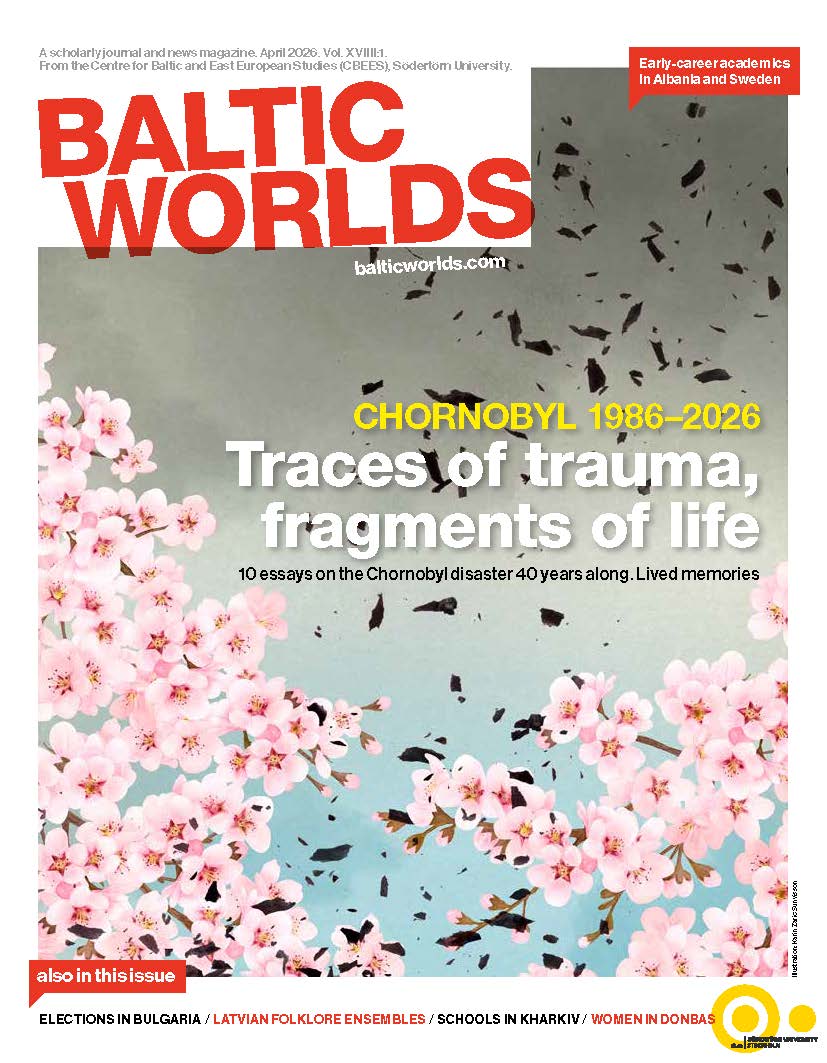 Issue 2026, 1: