Pēteris F Timofejevs and Louis John Wierenga
Pēteris F Timofejevs
Senior Lecturer at the Department of Political Science, Umeå University. He has written on Europeanization of foreign aid policy in Central and Eastern Europe and European NGOs working with development cooperation.
Currently, his research is focused on radical right parties in the Baltic Sea area, their positions in foreign and environmental policies and their youth organizations.
Louis John Wierenga
Lecturer in International Relations at the Baltic Defence College, PhD fellow at the Johan Skytte Institute of Political Studies, University of Tartu and Research fellow at the Latvian Institute of International Affairs (LIIA). His research interests include populist radical right parties – specifically leadership and party structure, social media and discursive opportunity structures, youth organizations and transnational networks. Currently, Wirenga is part of a project entitled, “Making Tomorrow’s Leaders” which is a Swedish Research Council project analyzing youth organizations of far-right parties.
view all contributors
Articles by Pēteris F Timofejevs and Louis John Wierenga
-
While negotiations and controversies about the future of Linnahall in Talinn continue, people, not only traceurs but also beer-drinking youths and lovers, are mounting an opposition to the visions of investors and planners of remaking the space into an attractive enclave for the affluent.
-
János Kornai certainly has been taking risks, and he definitely got his chance to develop in a most unusual way. He started out as a very young journalist in communist Hungary, and he eventually became a professor at Harvard.
-
The referendum on dissolution of Saeima will be held on 23 July and it seems that the voters might support Zatlers’ motion to dissolve Saeima. According to the internet poll by TNS Latvia, 84 % of the respondents replied that they would vote for dissolution, while only 4 % would vote against. If Saeima is dissolved, the parliamentary elections will be held no later than 23 September 2011.
-
On 5 June, 2011, Macedonia held its 7th parliamentary election since the post-communist transition began in 1990. The ruling conservative party, the Internal Macedonian Revolutionary Organization-Democratic Party for Macedonian National Unity, scored another victory.
Political conflicts in Macedonia has eclipsed tension within the Albanian community, which represents a reversal of long-standing patterns of electoral politics in the country.
-
Rationality versus irrationality, emotions versus calculations – these were the main issues to be discussed under a seminar in May, organized by the Aleksanteri Institute (Helsinki). Actually, the emotions theme became a starting point for the participants to approach the nature of Russian foreign policy and decision-making inside the post-Soviet bureaucracy.
-
Alyaksandr Lukashenka arrested all his opponents during the Election Day. Four months after the presidential elections in December 19th last year, one of the mayor oppositional candidates, Andrey Sannikau, has been sentenced to five years in a maximum security prison camp by the court in Minsk.
-
Is Russia part of Europe? Russians answer this question in different ways. For many of them, Russia is not Europe but Eurasia, which is an alternate unit of civilization. I do not share this opinion, writes Adam Michnik here.
-
Drakulić claims that top-down governance, which - she argues - started the war, is also the path to reconciliation in the region: Without the whipping up of nationalist emotions, purposefully and with the political will to do so, it would not be possible to start wars. It is only logical, then, that addressing people’s emotions is equally important as a way out of nationalism.
-
A number of representatives of the opposition in Belarus participated in a seminar “The Way Forward for Belarus”. The seminar addressed such issues as the difficulties experienced by the opposition in working for democracy and human rights in Belarus and what the outside world can do to support their work.
-
The Finnish Parliamentary elections of, which were held on April 17, resulted in a dramatic victory for a populist party, the True Finns, which increased its representation from 4 to 39 seats, and a big defeat for the Center Party of Prime Minister Mari Kiviniemi. The leader of the National Coalition Party, which despite losing six seats, Finance Minister Jyrki Katainen is expected to form the new government.
-

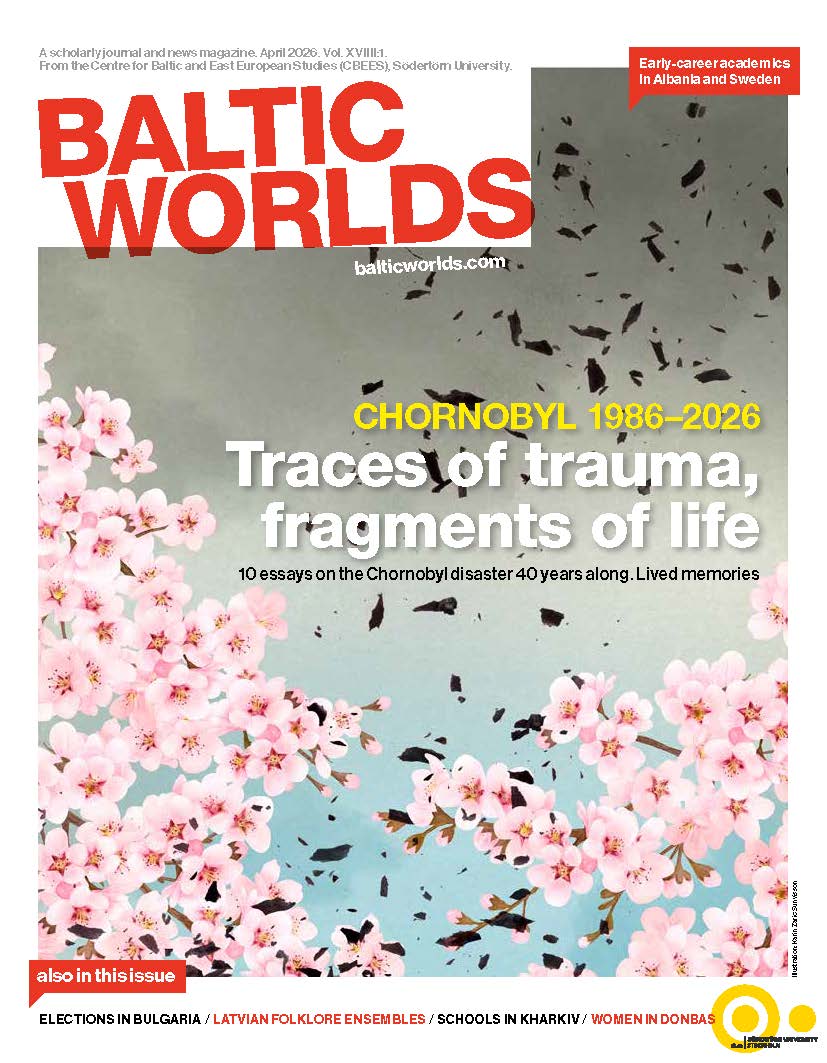 Issue 2026, 1: