Roland Kostić
PhD in Peace and Conflict Studies from Uppsala University, Sweden. He is currently employed as a Research Director for Holocaust and Genocide Studies at the Hugo Valentin Centre, Uppsala University. His research interests include social psychology, transitional justice, knowledge production process in interventions and peace-building processes. His most recent publications include a piece “Transnational think-tanks: foot soldiers in the battlefield of ideas? Examining the role of the ICG in Bosnia and Herzegovina, 2000–01” in Third World Quarterly (2014), and co-edited volume (Li Bennich-Björkman and Branka Likić-Brborić) “Citizens at Heart? Perspectives on integration of refugees in the EU after the Yugoslav war of succession”, Uppsala Multiethnic Papers 56, Uppsala University, 2016.
view all contributors
Articles by Roland Kostić
-
The altruistic act of donating organs is increasingly a financial transaction with the body as a commodity. Poor people are persuaded, tricked, into selling one of their kidneys without receiving adequate care afterwards.
-
Baltic Sea cooperation is a good example of how nations can find forms of collaboration. There is a solidarity between countries and a desire to work on things such as environmental problems.
-
The struggle for control among the Great Powers in the Nordic region during the 19th century focused on the dissolutions of unions and on nation-building. Russia and Napoleon were strong players. Sweden and Finland had a close relationship.
-
Ragni Svensson contribute in each issue of Baltic Worlds with illustrations.
-
Translator Brian Manning Delaney has developed a Style Guide for the magazine based on a modified version of the Chicago […]
-

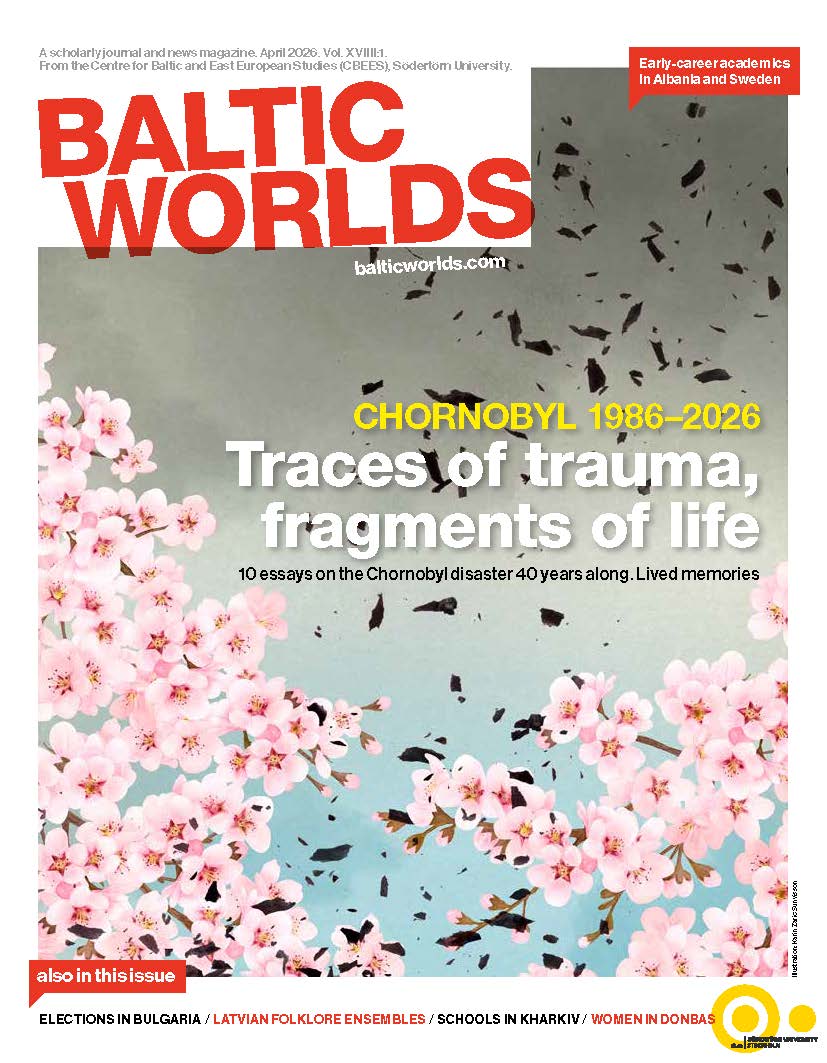 Issue 2026, 1: