Roland Kostić
PhD in Peace and Conflict Studies from Uppsala University, Sweden. He is currently employed as a Research Director for Holocaust and Genocide Studies at the Hugo Valentin Centre, Uppsala University. His research interests include social psychology, transitional justice, knowledge production process in interventions and peace-building processes. His most recent publications include a piece “Transnational think-tanks: foot soldiers in the battlefield of ideas? Examining the role of the ICG in Bosnia and Herzegovina, 2000–01” in Third World Quarterly (2014), and co-edited volume (Li Bennich-Björkman and Branka Likić-Brborić) “Citizens at Heart? Perspectives on integration of refugees in the EU after the Yugoslav war of succession”, Uppsala Multiethnic Papers 56, Uppsala University, 2016.
view all contributors
Articles by Roland Kostić
-
A growing number of architects, artists and academics have been protesting against the rapid transformation of the Old Town in Tbilisi, claiming that World Heritage is demolished. But there is a dilemma: many of the Old Town inhabitants welcome the changes.
-
"Euromaidan is an anti-amnesia action of a postcolonial nation aimed against a restored post-Soviet space", posts Lyudmyla Pavlyuk, professor in journalism in Ukraine.
-
A message on situation in Ukraine from Ukrainian writer Yuri Andrukhovych.
(translated by Vitaly Chernetsky, via Andrij Bondar)
-
Maidan 2.0. Letter from the Ukrainian PEN Club, Kyiv January 22 2014.
-
Maidan 2.0. Letter from Kyiv the 10th of December 2013.
-
Fatherhood in Russia today is a vague institution. The role of the father is developing in several directions at the same time, both in state policies and in the private sphere. The lack of coherence is somewhat surprising since active, engaged fatherhood has proven to be an important factor to reverse declining birth rates, which is a key factor behind Russia's current demographic crisis.
-
Many who migrate are forced to leave their children in their home country. Children being left behind in this way has become a problem in the EU, as Påhl Ruin relates in a report from Lithuania. The children don’t thrive, and there is a risk that they will become social outsiders.
-
The Channel Island of Guernsey was among the first places for Latvians to look for work abroad after the mid-1990s. Over time, an emerging culture of migration has developed on Guernsey among the Latvians.
-
Literary scholar David Williams analyzes Ulrich Seidl’s film Import/Export and criticizes Seidl for using and humiliating amateur actors with the aim of telling a story that ultimately only underscores a stereotypical image of the East: as precisely an object of pleasure for the West.
-
The 13th Annual Aleksanteri Conference “Russia and the World”, which took place in the main building of the University of Helsinki, October 23–25, was dedicated first and foremost to Russian foreign policy.
-

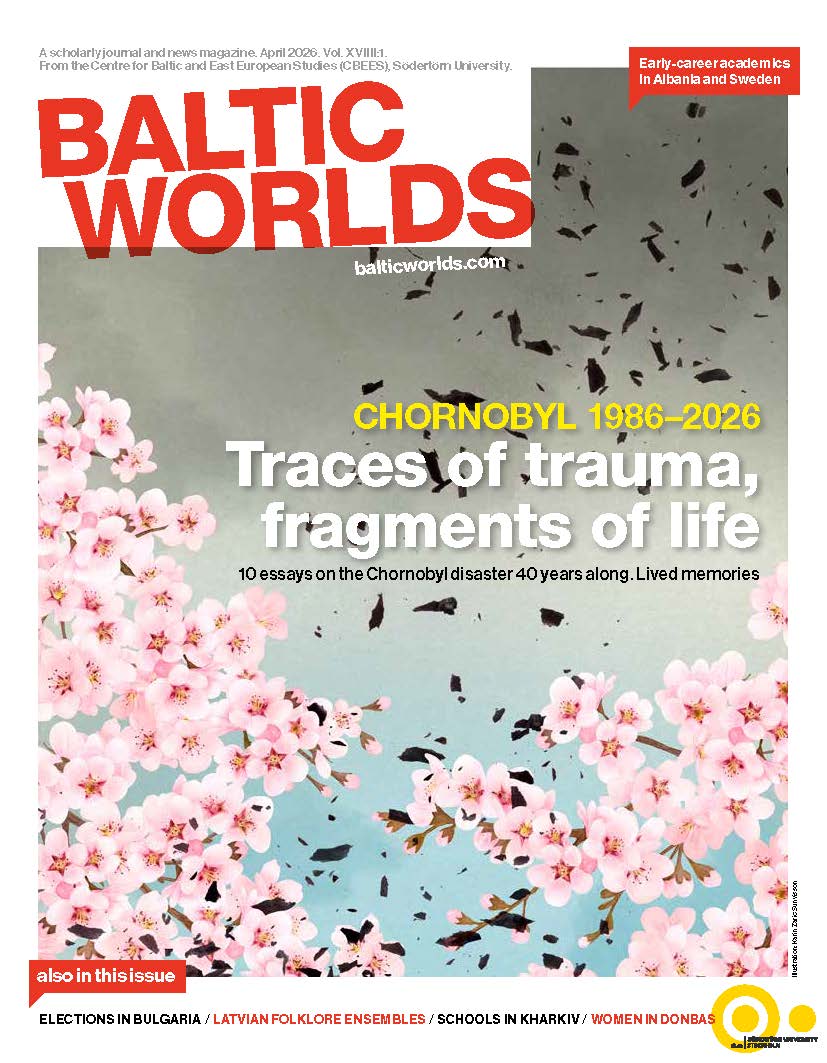 Issue 2026, 1: