Roland Kostić
PhD in Peace and Conflict Studies from Uppsala University, Sweden. He is currently employed as a Research Director for Holocaust and Genocide Studies at the Hugo Valentin Centre, Uppsala University. His research interests include social psychology, transitional justice, knowledge production process in interventions and peace-building processes. His most recent publications include a piece “Transnational think-tanks: foot soldiers in the battlefield of ideas? Examining the role of the ICG in Bosnia and Herzegovina, 2000–01” in Third World Quarterly (2014), and co-edited volume (Li Bennich-Björkman and Branka Likić-Brborić) “Citizens at Heart? Perspectives on integration of refugees in the EU after the Yugoslav war of succession”, Uppsala Multiethnic Papers 56, Uppsala University, 2016.
view all contributors
Articles by Roland Kostić
-
Brasch’s novella does two things: it presents lives smothered by incarceration, and it also places the reader on the other side of the barrier, as a witness to the road movie that crashes into the Wall.
-
The post-Soviet Estonian politics of memory have centered on the themes of national suffering and heroism, which function as a “dominant narrative and state-supported memory regime”. The fixation on victimhood has served as a screen memory18 for avoiding questions about the Holocaust in Estonian territory and the collaboration of Estonians in Soviet rule.
-
This article focuses on the texts of songs, poems, prayers, and jokes created by Lithuanians deported to Eastern Siberia in large-scale relocations from the Lithuanian Soviet Republic in 1948 and 1949.
-
The deportation of children, the elderly, and the sick transformed Łódź from a traditional ghetto to an industrial slave city and established the motto for which Rumkowski would become known: work is our only way out.
-
The crucial matter of creating a Latvian “national” university in the aftermath of World War I may be seen as an example of the way this new nation was structured in both symbolic and practical terms. This academic institution provided an arena for rewriting the nation’s past history and recreating its folklore customs — both essential to Latvian culture.
-
In order to ascend another rung on the development ladder, all three Baltic countries are engaged in higher education reform. Latvia has the furthest to go.
-
The Baltic Sea Library is a web-based literary project run by a group of editors from all the countries surrounding the Baltic Sea, plus Iceland. The website resembles an anthology and contains poetry, novel excerpts, and other genres in all the literatures of the region. The unifying aspect is something the editors call “Balticness”, and each text is accompanied by an explanation of its connection to the Baltic Sea.
-
Edward S. Herman (ed.) The Srebrenica Massacre Evidence, Context, Politics. Foreword by Phillip Corwin, 2011, 300 pages
-
Journal of Baltic Studies, March 2009, Journal of the Association for the Advancement of Baltic Studies
-
Orphanage No. 7 in Taganrog was one of the former Soviet orphanages that came into contact with the new charity early on, in the form of summer vacation exchanges with Swedish host families. The reality Swedish visitors encountered in Taganrog and elsewhere, however, was not always of the dreaded kind — a destitute shelter for desperate children abandoned by the world — although such a description was at times apt, especially in reference to homes for the mentally disabled. What they found instead were tangible traces and elements of entirely different plans and ambitions.
-

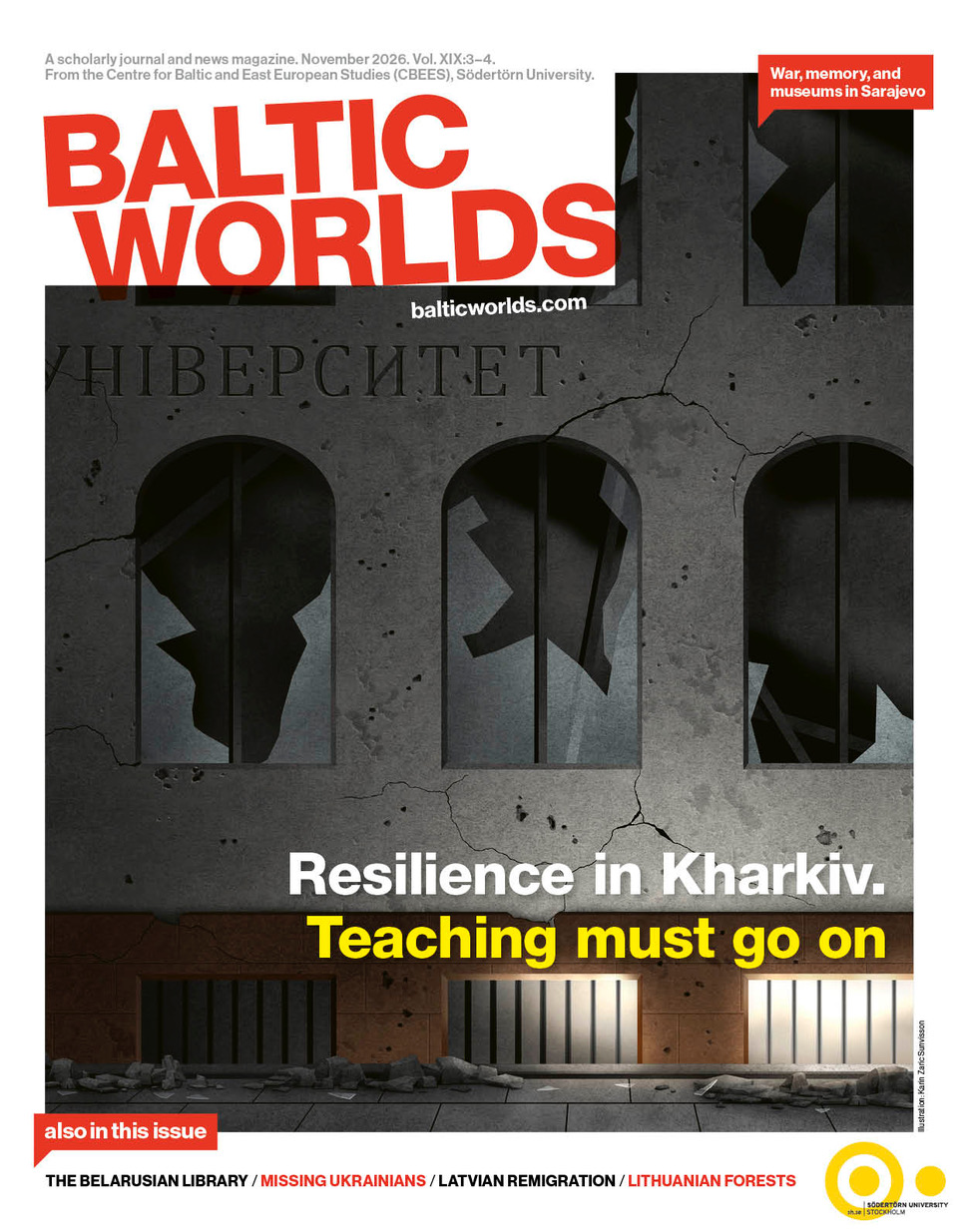 Issue 2026, 3-4: