Valter Bolevics, Jan Sjölin and Tatjana Volkova
Valters Bolevis is PhD Oec. Can. in business administration, Riga International School of Economics and Business Administration. Project manager. MS with distinction cum laude in the field of transport and maritime management from Institute of Transport and Maritime Management (ITMMA), Belgium, 2007.
Jan Sjölin is associate professor at the Baltic International Academy (BIA in Riga) and emeritus at the Technical University of IASI (CETEX). Served within the inner circle of CEEMAN (the Central and Eastern European Management Development Association) dealing with transition and evaluation of academic institutions.
Tatjana Volkova is professor in strategic management and innovation management and former rector of BA School of Business and Finance, Latvia. Her special research interests are design-driven innovations and creative industries. She is among other things a former President of Rector’s Conference of Latvia (2004—2011) and a former member of the European University Association Council.
view all contributors
Articles by Valter Bolevics, Jan Sjölin and Tatjana Volkova
-
The postcommunist concept of transition, as it was in use during the 1990s and early 2000s, is analyzed from the viewpoint of its intellectual prehistory. The concept is partly contrasted with alternative notions, partly relocated to its antithesis of communist ideology, where “transition” actually was an established concept. The reconstruction of the dialectics between communist and postcommunist transitology indicates and responds to a need for historical reflexivity, argues the author here.
-
The belief in technology was fundamental in Soviet culture. When the nuclear reactor exploded and harvested souls and spread illness throughout a vast area, over the course of many years, an image of the collapse of the Soviet Union was thereby created. Chernobyl became an image of the apocalypse of communism.
-
BECAUSE OF THE direct Russian intervention, the territorial integrity and independence of the Ukrainian state is at stake. But as long as business and politics are as intimately intertwined as they are today, any serious reform in Ukraine in line with the ideological foundation of the protest movement will be a an exceptionally challenging task.
-
It is difficult to identify why Maidan took a violent, military turn. Among the main possible reasons we might first note the inability of three opposition leaders (namely Vitaliy Klychko, Arseniy Yatsenyuk, and Oleh Tyahnybok) to settle on just one Maidan leader, and the absence of any visible, concrete accession to the demands of the protesters by the authorities.
-
Irina Sandomirskaja, professor of cultural studies at CBEES, Södertörn University, was awarded the most prestigious Russian prize for literary scholarship, […]
-
Despite the modest albeit important economic recovery in the past 2–3 years Hungary has a number of challenges that can harm its development already in the short and medium term, and these have hardly been addressed in the campaign. The Orbán-regime mostly plans to carry on with its earlier policies.
-
The final run-off, between the country’s prime minister, Robert Fico, and an independent candidate, Andrej Kiska, has ended with a spectacular victory for the latter. As a result, Slovakia shall, for the first time in modern history, have a president who hadn’t been a member of not just the communist, but any political party in his life.
-
+ Fontana, Josep, Por el bien del imperio: Una historia del mundo desde 1945, [For the good of the empire: a history of the world since 1945] , Barcelona 2011, Pasado y Presente ,1 230 pages
-
+ Florence Fröhlig, Painful legacy of World War II: Nazi forced enlistment: Alsatian/Mosellan prisoners of war and the Soviet prison camp of Tambov, Stockholm University 2013, Acta Universitatis Stockholmiensis, 242 pages
-
+ Paweł Jaworski, Marzyciele i oportuniści: Stosunki polsko-szwedzkie w latach 1939–1945, [Dreamers and opportunists: Polish-Swedish relations in 1939–1945], Warsaw 2009: IPN, 448 pages
-

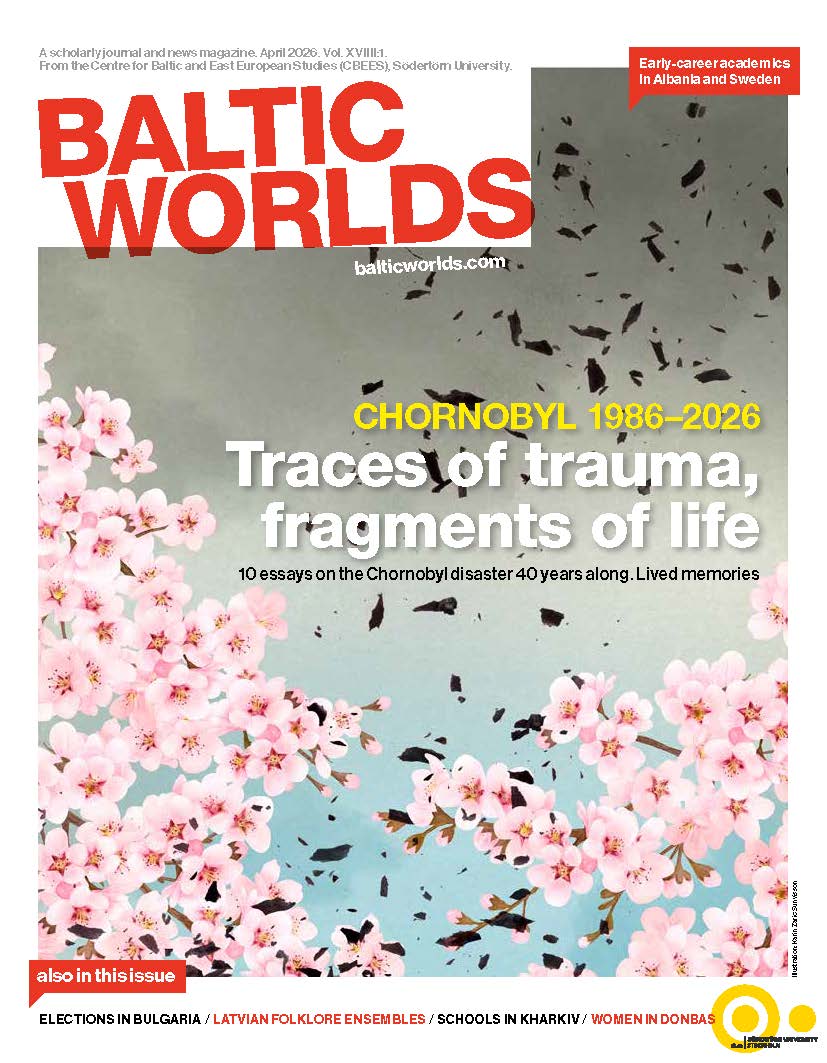 Issue 2026, 1: