
Download back issue of Baltic Worlds
 Issue 2026, 1: Download.
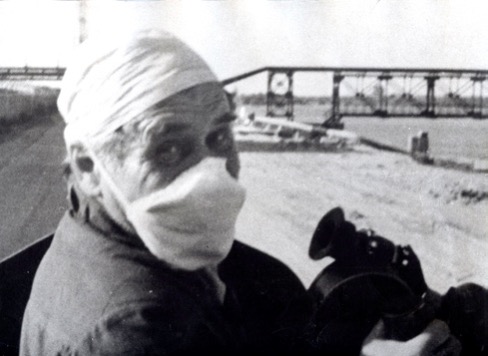
Essays Peaceful atom, haunted legacy. ECHOES OF WAR(S) IN CHORNOBYL DOCUMENTARIES
From a cinematic perspective, the Chornobyl accident became one of the most generative episodes in Ukrainian film history. The explosion of Reactor No. 4 triggered an unprecedented surge in film production: between 1986 and 1998, around forty documentaries were produced, alongside only one feature film. This essay examines one of the earliest attempts to represent the disaster, Volodymyr Shevchenko’s Chornobyl. Chronicle of the Hard Weeks (1987), now regarded as a key Chornobyl film. Focusing on its pervasive militarized rhetoric, the essay investigates how wartime language and memory structure the film’s interpretation of what was fundamentally a civilian, technological catastrophe.
Published in the printed edition of Baltic Worlds BW 2026:1, pp 49-56
Published on balticworlds.com on April 23, 2026


abstract
From a cinematic perspective, the Chornobyl accident became one of the most generative episodes in Ukrainian film history. The explosion of Reactor No. 4 triggered an unprecedented surge in film production: between 1986 and 1998, around forty documentaries were produced, alongside only one feature film. This essay examines one of the earliest attempts to represent the disaster, Volodymyr Shevchenko’s Chornobyl. Chronicle of the Hard Weeks (1987), now regarded as a key Chornobyl film. Focusing on its pervasive militarized rhetoric, the essay investigates how wartime language and memory structure the film’s interpretation of what was fundamentally a civilian, technological catastrophe.
KEYWORDS: Chornobyl accident, Ukraine, cinema, war, chronicle, Shevchenko
Full article as a pdf for free download, see upper right corner.