
Download back issue of Baltic Worlds
 Issue 2026, 1: Download.
Conference reports Rethinking Politics, Society and Identity in Belarus: A CBEES Workshop for an Upcoming Edited Volume
The workshop served as an intermediate stage in the preparation of the volume and provided an opportunity for contributors to present and discuss draft chapters before the final revision process.
Published on balticworlds.com on May 22, 2026


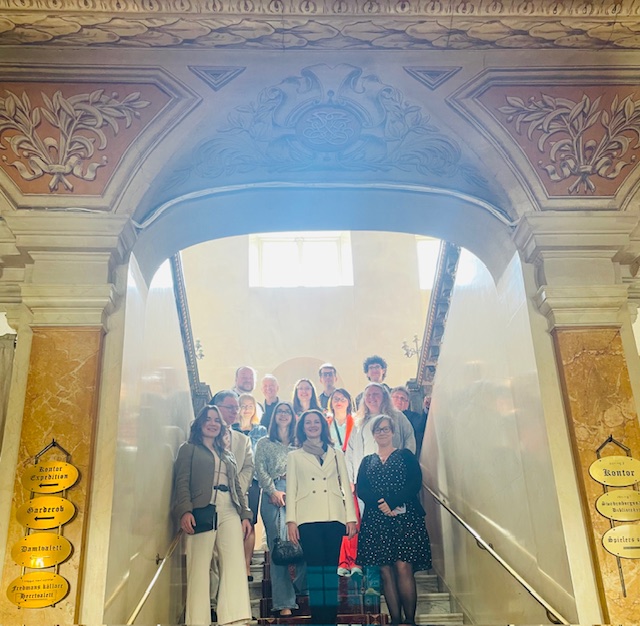
On May 22, 2026, the Centre for Baltic and East European Studies (CBEES) at Södertörn University hosted the workshop Between Continuity and Change: Rethinking Politics, Society and Identity in Belarus. The workshop was funded by the Foundation for Baltic and East European Studies and organized by Dr Victoria Leukavets and Professor Joakim Ekman. It brought together contributors to a forthcoming edited volume, members of the editorial board, and invited scholars working on Belarus from a range of disciplinary backgrounds. The volume is being prepared within the Belarus Voicesbook series at Ibidem Press.
The workshop served as an intermediate stage in the preparation of the volume and provided an opportunity for contributors to present and discuss draft chapters before the final revision process. The overarching theme of the project – continuity and change – reflects an attempt to understand how recent developments in Belarus relate to longer-term political, social, and cultural processes. While the events of 2020, subsequent repression, large-scale political exile, and Belarus’s growing dependence on Russia have transformed the country, many debates continue to revolve around questions of identity, historical memory, language, statehood, and geopolitical orientation.
The programme was organized around four thematic panels. The first session, devoted to language, media, and cultural foundations of Belarusian identity, examined questions of cultural production, language use, and identity formation. The second session focused on authoritarian governance and everyday politics, bringing together papers on social divisions within Belarusian society, Russian ideological influence, and public attitudes towards the state and political change. The third session addressed historical legacies, protest, and transnational Belarus, including discussions of the 2020 protests, and the experiences of Belarusians in exile. The final session explored culture, resistance, and political transformation, highlighting the role of cultural actors and civic initiatives in responding to authoritarian rule. Throughout the day, each paper was discussed by designated discussants and benefited from feedback from participants.
Several themes emerged repeatedly across the discussions. One concerned the relationship between political developments after 2020 and longer historical trajectories in Belarus. Participants debated the extent to which recent developments should be understood as a break with the past or as a continuation of existing trends. Another recurring issue was the growing importance of transnational perspectives. A number of contributions examined developments beyond Belarus itself and reflected on how exile has become an increasingly significant dimension of Belarusian political, cultural, and intellectual life.
The workshop also demonstrated the breadth of contemporary Belarusian studies. Bringing together scholars from different disciplines created opportunities to identify common questions between research on politics, society, culture, and history.
The discussions in Stockholm will now feed into the next stage of work on the volume, with contributors revising their chapters and the editors refining the broader conceptual framework of the project. More information about the Belarus Voices book series and its aims can be found in an earlier interview for Baltic Worlds here>>