
Download back issue of Baltic Worlds
 Issue 2025, 4: Download.
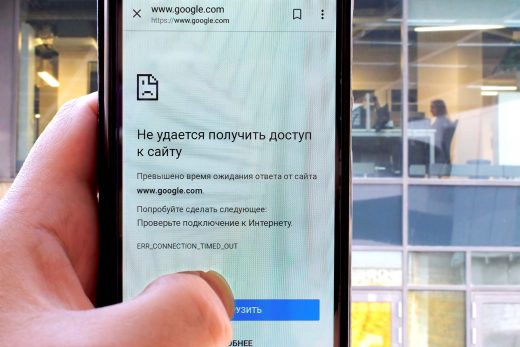
Reports about confrontation with Roskomnadzor. Russia 2018. Photo: Shutterstock
Peer-reviewed articles Russian internet news sites, 2008–2018. RHETORIC IN TEXT AND INFORMED AUDIENCES
The short-lived apex of journalistic freedom that took place after Perestroika in the late 1980s and early 1990s has been followed by setbacks and stagnation of press freedom, in particular since Putin’s accession to power in 2000. Despite this, qualitative text analysis of commentary articles in some of the most important current Russian news sites strongly indicates that during 2008–2018, readers of news sites were increasingly addressed as active and knowledgeable citizens. Four case studies are examined to cast light on the period, using the following methods: focusing on argumentation analysis, exploring whether arguments are valid, and the means of persuasionused. The findings imply that a number of Russian Internet outlets have strengthened their role as advocates of the Fourth Estate. The results further indicate a sharp distinction between news sites utilizing traditional Western journalistic devices, and those employing a traditional Russian/Soviet journalistic approach. Thus, the social roles of the audiences were to a certain extent reinforced during the period investigated, 2008–2018.
Published in the printed edition of Baltic Worlds BW 2025:2, pp 49-63
Published on balticworlds.com on September 23, 2025


abstract
The short-lived apex of journalistic freedom that took place after Perestroika in the late 1980s and early 1990s has been followed by setbacks and stagnation of press freedom, in particular since Putin’s accession to power in 2000. Despite this, qualitative text analysis of commentary articles in some of the most important current Russian news sites strongly indicates that during 2008–2018, readers of news sites were increasingly addressed as active and knowledgeable citizens. Four case studies are examined to cast light on the period, using the following methods: focusing on argumentation analysis, exploring whether arguments are valid, and the means of persuasionused. The findings imply that a number of Russian Internet outlets have strengthened their role as advocates of the Fourth Estate. The results further indicate a sharp distinction between news sites utilizing traditional Western journalistic devices, and those employing a traditional Russian/Soviet journalistic approach. Thus, the social roles of the audiences were to a certain extent reinforced during the period investigated, 2008–2018.
KEYWORDS: Russian news sites, argumentation analysis, journalism roles, citizen roles.
DOWNLOAD THE FULL PAPER OA (see upper right corner)