
Download back issue of Baltic Worlds
 Issue 2026, 1: Download.
Election Essays To vote or not to vote? And how to vote? Strategies and divergent views among Russian anti-war civil society and politicians in exile
The Russian parliamentary and regional elections of September 2026 took place amid tightening state control over the electoral process and severe restrictions on dissent. This essay examines how anti-war civil society and opposition politicians responded through diverse strategies, from “smart voting” to boycotts and symbolic protests. In particular, it considers the role of independent media in helping voters make more informed choices. Although these initiatives do not signal the emergence of a broader political force capable of challenging the regime in the long term, they point to the persistence of limited forms of political agency within a narrowing political space.
Published on balticworlds.com on October 1, 2026


Abstract
The Russian parliamentary and regional elections of September 2026 took place amid tightening state control over the electoral process and severe restrictions on dissent. This essay examines how anti-war civil society and opposition politicians responded through diverse strategies, from “smart voting” to boycotts and symbolic protests. In particular, it considers the role of independent media in helping voters make more informed choices. Although these initiatives do not signal the emergence of a broader political force capable of challenging the regime in the long term, they point to the persistence of limited forms of political agency within a narrowing political space.
Keywords: Russia; elections; electoral authoritarianism; anti-war opposition; Russian diaspora.
Introduction
The parliamentary and regional elections held in Russia in September 2026 confirmed the state’s control over the electoral process. Nevertheless, Russian anti-war civil society and opposition politicians found themselves confronted with the question of how to participate in a democratic ritual lacking real political competition. Although the space for dissent was severely restricted and the results were largely predictable, various actors devised strategies aimed at making their dissent visible and influencing, to the extent possible, the election of some candidates, while others have criticised these approaches and boycotted the elections.
Elections in contemporary Russia: the institutional context
Over the past two decades, Russia’s legal and institutional order has progressively been transformed in ways that weakened democratic institutions. During its initial phase, Vladimir Putin’s regime was characterised by a gradual strengthening of state capacity, which was also facilitated by the persistence of the Soviet institutional legacies that enabled an authoritarian consolidation without requiring significant changes to the constitutional order[1]. The “For Fair Elections” protest movement of 2011-2012 constituted a turning point, as it was followed by the adoption of a series of laws aimed at curbing dissent.[2] The 2020 constitutional amendments, which enabled Putin to stay in power until 2036,[3] marked a further step towards the personalisation of the regime.
Following the beginning of the full-scale invasion of Ukraine, the 2024 presidential elections were characterised by a reduction of the number of candidates as a result of further restrictions on eligibility and the exclusion of opposition politicians on the grounds of alleged irregularities, the most significant case being that of Boris Nadezhdin.[4]Furthermore, the use of electronic voting was expanded, raising concerns about the increased potential for electoral manipulation[5]. With Vladimir Putin securing an overwhelming majority of the vote, the elections served to legitimise both the regime and the ongoing war, while further consolidating the autocratisation of the country[6].
2026 parliamentary and regional elections: strategies and disagreements
The 2026 elections have been marked by several shifts from the management of previous elections in the country. The number of parties and candidates admitted by the Central Election Commission, as well as the number of those seeking to register, have declined. The principal innovation, however, has been the exclusion of parties and candidates that had already been registered, which has occurred both after court rulings and as a result of parties themselves removing previously registered candidates from their lists[7].
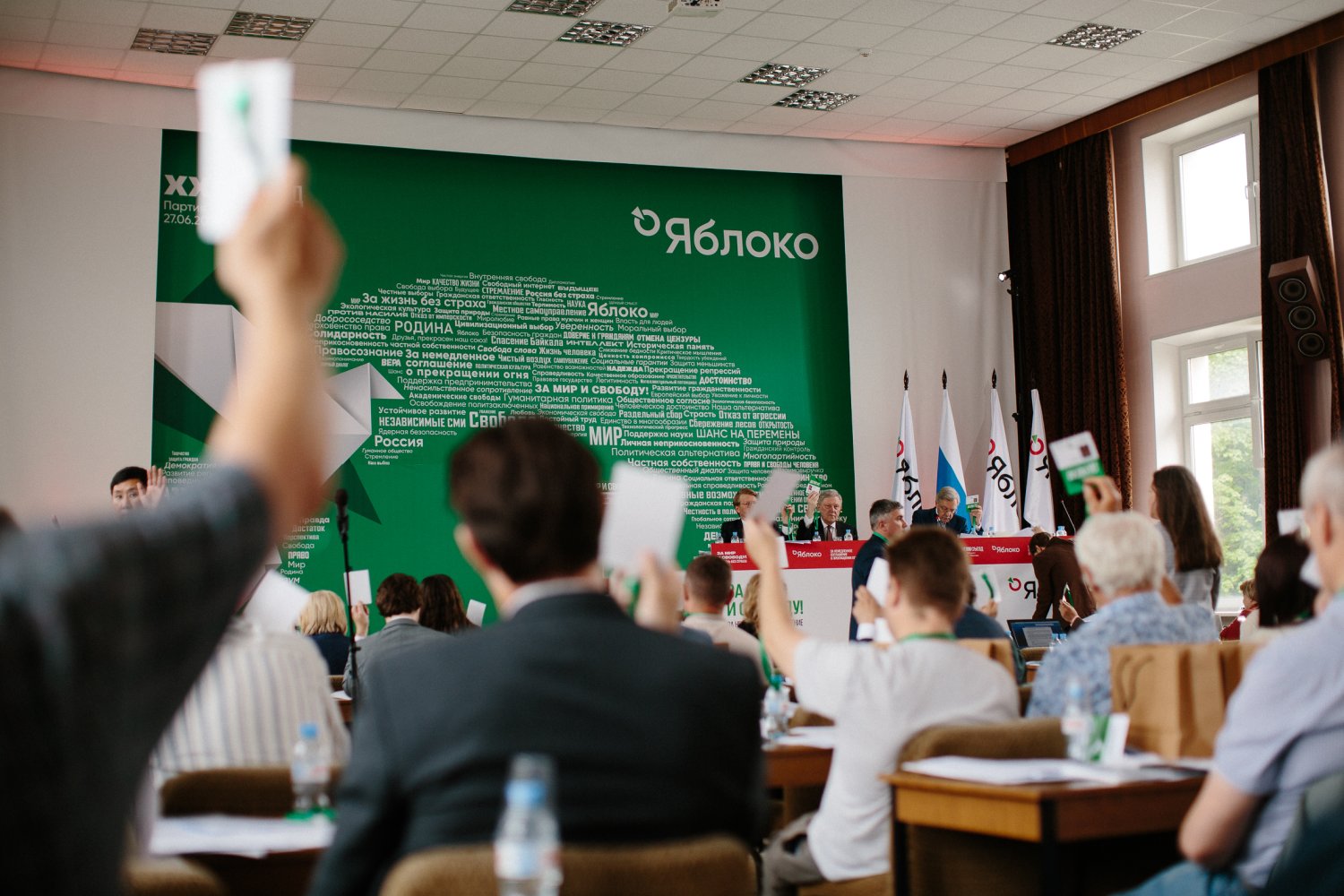
The most prominent example has been the removal of the party Yabloko following a lawsuit filed by the Rodina party. Yabloko was excluded from elections on the grounds that it had received donations from Russian citizens living abroad, which was deemed to constitute illegal foreign financing, as well as due to alleged copyright infringements and publications supporting the party on social media platforms blocked or restricted in Russia. In particular, Rodina argued that these publications bore the characteristics of electoral campaigning, and alleged that Yabloko had paid for them outside its electoral fund[8]. The presence of the only party with an anti-war stance had sparked strong support on social media and among opposition politicians in exile, who called on Russians to vote for it[9]. This prompted the distancing of Yabloko’s own leadership, out of concern that these initiatives could be used as grounds for its exclusion[10]. During the court hearing on Rodina’s lawsuit, hundreds of people, mostly young, gathered in front of the Supreme Court building in Moscow to support Yabloko[11], and the solidarity continued after its exclusion, as on election day itself some voters reportedly brought apples to polling stations[12].
The exclusion of Yabloko further narrowed the possibilities for freely expressing political preferences, which has led to a recalibration of strategies among opposition politicians in exile, as well as diverging views on how to act in a context of such limited political freedom. The debate has focused on the main positions: (i) those, such as Yulia Navalnaya, advocating the strategy of “smart voting”, that is, the selection, in each single-member constituency, of the candidate considered most likely to defeat the United Russia candidate[13]; (ii) those, such as Yabloko, which have called on voters to vote for their candidate where present, while refusing to support any of the other parties in the party-list vote, invalidating the ballot by marking more than one box[14]; and (iii) those who questioned the utility of participating in the elections in any form[15].
Alongside these diverging political views, various actions have sought to make dissent visible through symbolic gestures that circumvent restrictions on political expression and the prohibition of demonstrations at polling stations abroad[16]. The most widespread initiative was the invitation to attend polling stations on 20 September at noon, which was promoted by several politicians and activists, and built on the “Noon against Putin” initiative organised for the 2024 presidential elections. In the case of Ilya Yashin’s Peaceful Russia party, the initiative was renamed “Noon for a Peaceful Russia”[17]. In particular, voting on the last day was encouraged as it was considered more likely to reduce the possibility of vote manipulation.
While some of these appeals proceeded in parallel, it is noteworthy that the common objective of challenging United Russia led to an unexpected collaboration between the Anti-Corruption Foundation and the activist Maksim Katz, who had previously collaborated but subsequently became involved in several public disputes[18]. On 14 September, they proposed a joint voting strategy, which Navalnaya commented on as follows: “It was not easy to reach a compromise, but we are proud of what we managed to achieve.”[19]
Other initiatives were aimed at preventing the election of specific candidates, as in the case of Natalya Moskvitina, a politician who promotes a federal law that would ban “incitement to abortion”[20]. To hinder her election, the Feminist Anti-War Resistance, one of the most organized grassroots movements to emerge after the beginning of the full-scale invasion of Ukraine, launched the initiative “Beauties against Moskvitina”. The movement published a guide on its social media accounts explaining the functioning of the electoral system through a metaphor in which parties are represented as groups of people and electoral mandates as apples to be distributed, and indicated a strategy to keep her from winning a seat by backing other candidates. In the post, the movement proposed turning the moment of voting into “a celebration of women’s rights, our solidarity, beauty and strength”, inviting women voters to go to the polls with relatives and friends, wearing nice clothes, glitter and feathers[21].
On the other hand, some of these initiatives, or even participation in the elections as a whole, have been criticised by other anti-war actors. Those advocating an electoral boycott argue that the five parties represented in the State Duma have all supported repressive legislation adopted since 2022, and that choosing one of them would constitute an acceptance of the status quo[22]. The Russian Antiwar Committee published a statement criticising what it defined as attempts to “dictate to people a specific line of conduct”, such as urging them to vote or not to vote, spoil their ballots, indicate which candidates to choose, or when to go to the polls[23]. The committee rejected the legitimacy of the elections, stating that citizens were denied the possibility of making a free political choice, while acknowledging that they nevertheless constituted an important social event, and argued that the only fundamental criterion that should transcend any disagreement is one’s position on the war. For this reason, it published a dossier stating that it does not call on citizens to participate in the elections and does not endorse any candidate, while providing information on each candidate’s attitude towards the war, their campaign activity, and their chances of winning.[24]
After the exclusion of Yabloko, the politician Vladimir Kara-Murza chose to cross out all the parties[25], while the Free Russia Forum, co-founded by Garry Kasparov and Ivan Tyutrin, advocated a complete boycott of the elections, which it considered illegitimate also because they were also held in occupied territories[26].
Guides in the dark: the role of Russian independent media
In this context, independent media have helped guide voters by providing information on the possible courses of actions depending on their preferences, thereby offering a useful compass for navigating the electoral process and making more informed decisions. Outlets such as Meduza, Verstka, Novaya Gazeta Europe, 7×7 and Vazhnye Istoriihave published guides mapping the divergent opinions of opposition politicians and explaining how to invalidate a ballot correctly, why a boycott is ineffective, the advantages of voting with a paper ballot rather than electronically, the possibility of reporting irregularities at polling stations, and how to resist pressure in the workplace[27]. In covering the elections, these projects have not only fulfilled a counter-informational function, but have also provided a means of orientation within a political landscape dominated on the one hand by propaganda and repression, and on the other by a fragmented political opposition and civil society.
In particular, leaving a ballot blank was often discouraged because it makes it easier to falsify, while invalidating it (a practice that increased from 1.57 per cent to 2.08 per cent in parliamentary elections held since 2011) was described as a gesture that could at least make one’s protest more visible. However, for those wishing to invalidate their ballot, some projects explained how to do so correctly. As for boycott, Meduza explained that it has no effect on the results, as it solely lowers turnout, without making it possible to formally identify the reason for the decrease[28]. Other media advocated voting in person rather than choosing remote electronic voting, a service available in 33 regions for the September elections, and whose verifiability has often been contested. Furthermore, citizens were encouraged to report any irregularities observed at polling stations, and suggestions on how to assert their rights even after the elections were also provided[29]. Despite constituting an illegal practice, cases have been documented in the past in which employers and supervisors pressured employees to provide evidence of how they had voted, particularly among categories such as public-sector employees[30]. Those encountering similar situations were therefore invited to perform actions that, in the case of electronic voting, ranged from using bots to create fake screenshots[31] to documenting the selection of the requested option and then changing it before confirming the vote. For those voting in person, media outlets suggested photographing a blank ballot and subsequently editing the image, while other techniques even included placing a piece of sewing thread shaped like a check mark on the ballot, photographing it, and then removing it to cast the actual vote, or doing the same with a piece of transparent film marked with a pen or gel pen[32].
These guides show that, despite the persistent difficulty in turning scattered forms of political orientation and coordination into a stronger political force, independent media have succeeded in providing readers with the information needed to evaluate the possibilities and modalities of political participation in a context of electoral authoritarianism[33].
How it went: Civil society and the limits of anti-war mobilization
The official election results showed that United Russia won the largest parliamentary faction in the State Duma in the party’s history[34]. Independent analyses, however, paint a different picture, attributing the reported increase to extensive electoral irregularities. This appears to be consistent with the claims of some Yabloko electors and politicians, who reported having voted for the party at several polling stations in St. Petersburg where its candidates received zero votes.[35]
As for the initiative to vote on September 20 at noon, it is interesting to note that, according to eyewitness reports, only a few people participated in Russia, while long queues formed in several cities abroad, although participants were less than during the 2024 “Noon against Putin” action[36]. This raises important questions about the nature and effectiveness of strategies primarily developed by political actors in exile, as some, such as the political analyst and journalist Fёdor Krasheninnikov, argue that actions conceived from a “beautiful afar” might not be well suited to those who remain in Russia and therefore face greater risks[37].
Conclusion
The 2026 elections demonstrated a further tightening of state control over the electoral process, to which opposition politicians and civil society actors have had to respond. Anti-war political actors expressed different stances on how to participate in the elections, with some rejecting participation altogether. Most forms of participation among the anti-war segment of the electorate showed a fragmented nature and took the form of low-risk, largely symbolic acts of protest that did not pose a direct threat to the regime. These acts do not in themselves provide evidence of the emergence of a broader political force capable of challenging the regime in the long term. Nevertheless, part of the Russian electorate demonstrated a willingness to express its position and engaged in small-scale actions to make its dissent visible under increasingly restrictive conditions, pointing to the persistence of limited forms of political agency within a narrowing space for political freedom.
References
[1] Stanislav Klimovich, “From failed democratization to the war against Ukraine: what happened to Russian institutions under Putin?,” Zeitschrift für Politikwissenschaft vol. 33 (2023):103–120. Accessed September 29, 2026. Available at: https://doi.org/10.1007/s41358-023-00345-7
[2] Margarita Zavadskaya; Emil Kamalov; Ivetta Sergeeva, “Voice After Exit? Exploring Patterns of Civic Activism Among Russian Migrant Communities in Eurasia After 24 February 2022,” Global Migration and Illiberalism in Russia, Eurasia, and Eastern Europe, eds. Anna-Liisa Heusala et al. (Helsinki: Helsinki University Press, 2024).
[3] Stanislav Klimovich, “From failed democratization to the war against Ukraine: what happened to Russian institutions under Putin?,” Zeitschrift für Politikwissenschaft vol. 33 (2023):103–120. Accessed September 29, 2026. Available at: https://doi.org/10.1007/s41358-023-00345-7
[4] Tom Casier, “Russia’s 2024 Presidential Elections in a Context of War: A New Step in the Autocratisation of the Regime,” Journal of Common Market Studies vol. 63 (2025): 268–276. Accessed September 29, 2026. Available at: doi:10.1111/jcms.70008
[5] Novaya Gazeta Europe, “Голос пропал” [“The vote disappeared”], September, 5, 2024. Available at: https://novayagazeta.eu/articles/2024/09/05/golos-propal
[6] Tom Casier, “Russia’s 2024 Presidential Elections in a Context of War: A New Step in the Autocratisation of the Regime,” Journal of Common Market Studies vol. 63 (2025): 268–276. Accessed September 29, 2026. Available at: doi:10.1111/jcms.70008
[7] Re: Russia, Putin Has Made The People’s Choice: What the State Duma campaign reveals about the Kremlin’s intentions, September, 18, 2026. Available at: https://re-russia.net/en/analytics/0457/
[8] Meduza, “За что «Яблоко» сняли с выборов” [“Why was Yabloko removed from the elections”], August, 12, 2026. Available at: https://meduza.io/feature/2026/08/12/za-chto-yabloko-snyali-s-vyborov
[9] Meduza, “«Яблоко» допустили на выборы, и тут началось” [“Yabloko was admitted to the elections, and then it all started”], August, 7, 2026. Available at: https://meduza.io/feature/2026/08/07/yabloko-dopustili-na-vybory-i-tut-nachalos
[10] Verstka, “«Яблоко» оказалось под угрозой снятия с выборов после всплеска поддержки в соцсетях” [“‘Yabloko’ came under threat of being removed from the elections following a surge of support on social media”], August, 7, 2026. Available at: https://verstka.media/yabloko-okazalos-pod-ugrozoj-snyatiya-s-vyborov-posle-vspleska-podderzhki-v-soczsetyah
[11] Meduza, “«Яблоко» — самая обсуждаемая партия лета. Как ей удалось дойти до регистрации на выборах (которую, впрочем, уже отменили) и кто ее поддерживает?” [“‘Yabloko’ is the most discussed party of the summer. How did it manage to reach the registration stage of the elections (which, however, has already been revoked) and who supports it?”], August, 10, 2026. Available at: https://meduza.io/feature/2026/08/10/yabloko-samaya-obsuzhdaemaya-partiya-leta-kak-ey-udalos-doyti-do-registratsii-na-vyborah-i-kto-ee-podderzhivaet
[12] Verstka, “Россияне рассказали, что пришли на избирательные участки с яблоками ” [“Russians repoted going to polling stations with apples”], September, 20, 2026. Available at: https://verstka.media/rossiyane-rasskazali-chto-prishli-na-izbiratelnye-uchastki-s-yablokami
[13] Meduza, “Юлия Навальная призвала голосовать за «Яблоко» на выборах в Госдуму ” [“Yulia Navalnaya called for voting for ‘Yabloko’ in the State Duma elections”], August, 6, 2026. Available at: https://meduza.io/news/2026/08/06/yuliya-navalnaya-prizvala-golosovat-za-yabloko-na-vyborah-v-gosdumu
[14] Yabloko, “План «Б». Как голосовать на выборах 20 сентября 2026 года” [“Plan ‘B’. How to vote in the 20 September2026 elections” ] Available at: https://www.yabloko.ru/plan-b-2026
[15] Garry Kasparov(@garrykasparov_official), “Заявление Форума свободной России о так называемых «выборах»” [“Statement of the Free Russia Forum on the so called ‘elections’”] Telegram, August 9, 2026, https://t.me/garrykasparov_official/334
[16] The Insider, “Russia demands all countries ban protests outside its embassies during parliamentary elections”, August, 24, 2026. Available at: https://theins.press/en/news/296382
[17] Mirnaya Rossiya, “Полдень за мирную Россию” [“Noon for a peaceful Russia”]. Available at: https://mirparty.org/ru/party/2026-polden-announcement/
[18] Igor Gretskiy, Not Quite Agents of Change. Russian Anti-War Grassroots Initiatives in Europe, Report (Tallinn: International Centre for Defence and Security, October 2025), https://icds.ee/en/not-quite-agents-of-change-russian-anti-war-grassroots-initiatives-in-europe/
[19] Yulia Navalnaya (@yulia_navalnaya_channel), “Голосование на выборах в Госдуму начнется меньше, чем через пять дней. На каждые выборы наша команда готовит рекомендации — за кого голосовать. Но в этот раз мы…” [“Voting in the State Duma elections will begin in less than five days. For every election, our team prepares recommendations on whom to vote for. But this time we…] Telegram, September 14, 2026, https://t.me/yulia_navalnaya_channel/295
[20] Novaya Gazeta Europe, “«Легко звездеть и растить четверых, когда есть бабки»” [“’It’s easy to talk big and raise four children when you have the money’”], June, 6, 2026. Available at: https://novayagazeta.eu/articles/2026/06/21/legko-zvezdet-i-rastit-chetverykh-kogda-est-babki
[21] Feminist Anti-War Resistance (@fem_antiwar_resistance), “Красотки против Москвитиной: как проголосовать против Москвитиной навыборах в Госдуму” [“Beauties against Moskvitina: how to vote against Moskvitina in the State Duma elections”], Instagram, September 1, 2026, https://www.instagram.com/p/DcvmmFOjNGD/?hl=it&img_index=8
[22] Novaya Gazeta Europe, “Выбор из трех тупиков” [“A choice between three dead ends”], July, 28, 2026. Available at: https://novayagazeta.ru/articles/2026/07/28/vybor-iz-trekh-tupikov
[23] Russian Anti-War Committee (@RussianAntiWarCommittee), “Заявление Антивоенного комитета России о голосовании 18–20 сентября2026 года” [“Statement of the Russian Anti-War Committee on the 18–20 September 2026 elections”] Telegram, September 13, 2026, https://t.me/RussianAntiWarCommittee/7699
[24] “Досье на объекты голосования” [“Dossier on the voting options”], Anti-War Committee, accessed September 29, 2026. https://gd2026.antiwarcommittee.info
[25] Vladimir Kara-Murza (@vkaramurza2022), “До «выборов» в Госдуму остаётся неделя, но их главный итог можно подвести уже сегодня. Миф о «всенародной поддержке» войны в Украине…” [“A week is left until the State Duma ‘elections’, but their main outcome can already be summed up today. The myth of ‘nationwide support’ for the war in Ukraine…”] Telegram, September 11, 2026, https://t.me/vkaramurza2022/2462
[26] Garry Kasparov(@garrykasparov_official), “Заявление Форума свободной России о так называемых «выборах»” [“Statement of the Free Russia Forum on the so called ‘elections’”] Telegram, August 9, 2026, https://t.me/garrykasparov_official/334
[27] Meduza, “Серьезно повлиять на исход выборов в России невозможно. Но протестное голосование все еще имеет смысл”[“It is impossible to significantly influence the outcome of the elections in Russia. But protest voting still makes sense”], September, 14, 2026. Available at: https://meduza.io/feature/2026/09/14/seriezno-povliyat-na-ishod-vyborov-v-rossii-nevozmozhno-no-protestnoe-golosovanie-vse-esche-imeet-smysl ; Verstka, “«В итоге мы не охотимся на голоса, а сторожим тайгу». Скоро в России пройдут выборы — есть ли смысл на них голосовать?” [“‘In the end we are not hunting for votes, but guarding the taiga’. Elections will soon be held in Russia – is there any point in voting?”], September, 3, 2026. Available at: https://verstka.media/skoro-v-rossii-projdut-vybory-est-li-smysl-na-nih-golosovat ; Novaya GazetaEurope, “Выборы в Госдуму-2026: как лучше проявить антивоенную позицию?” [“2026 State Duma elections: what is the best way to express an anti-war stance?”], September, 12, 2026. Available at: https://novayagazeta.eu/articles/2026/09/12/vybory-v-gosdumu-2026-kak-luchshe-proiavit-antivoennuiu-pozitsiiu ; 7×7, “Защитить свой голос на выборах: семь правил от «7х7»” [“Protect your vote in the elections: seven rules from ‘7×7’”], September, 4, 2026. Available at: https://semnasem.org/articles/2026/09/04/zashitit-svoj-golos ; Vazhnye Istorii, “«Там жульничество, я с этим не согласен»” [“‘There is cheating there, I don’t agree’”], September 9, 2026. Available at: https://istories.media/opinions/2026/09/09/tam-zhulnichestvo-ya-s-etim-ne-soglasen/
[28] Meduza, “Серьезно повлиять на исход выборов в России невозможно. Но протестное голосование все еще имеет смысл”[“It is impossible to significantly influence the outcome of the elections in Russia. But protest voting still makes sense”], September, 14, 2026. Available at: https://meduza.io/feature/2026/09/14/seriezno-povliyat-na-ishod-vyborov-v-rossii-nevozmozhno-no-protestnoe-golosovanie-vse-esche-imeet-smysl
[29] 7×7, “Защитить свой голос на выборах: семь правил от «7х7»” [“Protect your vote in the elections: seven rules from ‘7×7’”], September, 4, 2026. Available at: https://semnasem.org/articles/2026/09/04/zashitit-svoj-golos
[30] Holod Media, “От миллионов россиян требуют проголосовать за Путина” [“Millions of Russians are being pressured to vote for Putin”], March, 8, 2024. Avaiable at: https://holod.media/2024/03/08/soprotivlenie-putinu/
[31] Vazhnye Istorii, “«Там жульничество, я с этим не согласен»” [“‘There is cheating there, I don’t agree’”], September 9, 2026. Available at: https://istories.media/opinions/2026/09/09/tam-zhulnichestvo-ya-s-etim-ne-soglasen/
[32] 7×7, “Защитить свой голос на выборах: семь правил от «7х7»” [“Protect your vote in the elections: seven rules from ‘7×7’”], September, 4, 2026. Available at: https://semnasem.org/articles/2026/09/04/zashitit-svoj-golos
[33] Vladimir Gel’man, “The Rise and Decline of Electoral Authoritarianism in Russia,” Demokratizatsiya, vol. 22 (2014), 503–522. Available at: doi:10.30570/2078-5089-2012-67-4-65-88
[34] Meduza, “«Единая Россия» получила самую большую фракцию в Госдуме в своей истории”, [“’United Russia’ got the largest State Duma faction in its history”], September, 21, 2026. Available at: https://meduza.io/short/2026/09/21/edinaya-rossiya-poluchila-samuyu-bolshuyu-fraktsiyu-v-gosdume-v-svoey-istorii
[35] Meduza, “На нескольких участках в Петербурге кандидаты от «Яблока» получили 0 голосов. Их избиратели и однопартийцы говорят, что голосовали за них ” [“At some polling in St. Petersburg, Yabloko candidates got 0 votes. Their electors and fellow party members say that they voted for them”], September, 23, 2026. Available at: https://meduza.io/news/2026/09/23/na-neskolkih-uchastkah-v-peterburge-kandidaty-ot-yabloka-poluchili-0-golosov-ih-izbirateli-i-odnopartiytsy-govoryat-chto-golosovali-za-nih
[36] Meduza, “В Москве на избирательных участках из-за сбоя несколько часов не выдавали бумажные бюллетени” [“At polling stations in Moscow, paper ballots were not issued for several hours due to a technical glitch”], September, 20, 2026. Available at: https://meduza.io/news/2026/09/20/po-vsey-moskve-na-izbiratelnyh-uchastkah-iz-za-sboya-perestali-vydavat-bumazhnye-byulleteni
[37] Fёdor Krasheninnikov (@fyodork), “Я так понимаю, что акция “Полдень против Путина” в России если и прошла, то очень точечно. Это совсем не удивительно, к сожалению. Мне прямо писали люди из России…” [“As far as I understand, the action ‘Noon against Putin’ in Russia, if it took place at all, was very limited. It’s not surprising at all, unfortunately. Some people wrote to me from Russia…”] Telegram, September 20, 2026, https://web.telegram.org/a/#-1001709372470_619530