
Download back issue of Baltic Worlds
 Issue 2026, 3-4: Download.
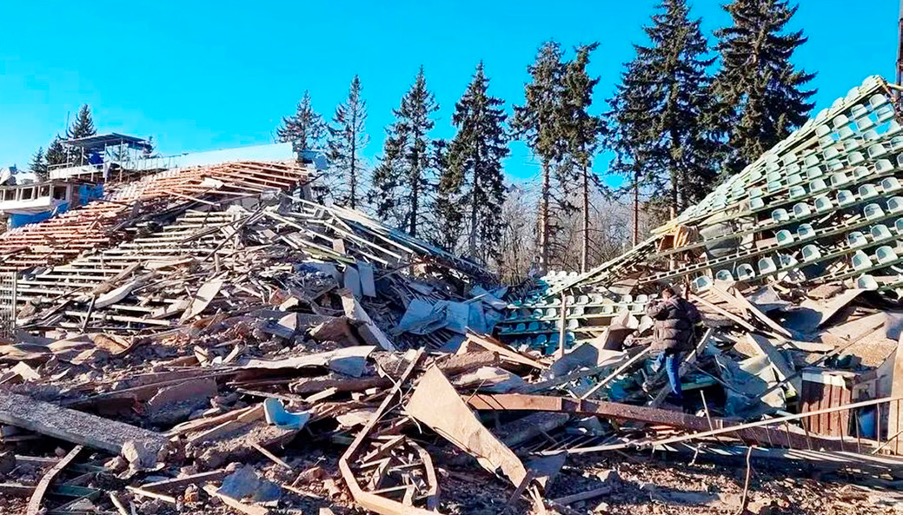
Essays The transformation of youth sport education in Ukraine under war. Perspectives on recovery
This study systematizes the transformative impacts of the full-scale military invasion on Ukraine’s youth sport education systems and substantiates multilevel recovery strategies within the Long-Term Athlete Development (LTAD) framework. The analysis focuses on how macrosystemic disruptions affect the pedagogical continuity and developmental pathways of young learners. A qualitative analytical approach was employed and Bronfenbrenner’s ecological systems theory provides the theoretical lens. The findings reveal a critical disintegration of the “talent pipeline” due to the destruction of educational infrastructure, the forced migration of the pedagogical core (coaching staff), and the militarization of sports-based learning in occupied territories. The results extend LTAD theory by demonstrating its structural vulnerability under prolonged crises and identifying primary pathways of institutional and educational erosion. Recovery requires a transition from emergency management to a resilient educational model that integrates psychosocial support into athletic training.
Published in the printed edition of Baltic Worlds BW 2026 vol. 19 no. 3-4, pages 56-63
Published on balticworlds.com on November 6, 2026


abstract
This study systematizes the transformative impacts of the full-scale military invasion on Ukraine’s youth sport education systems and substantiates multilevel recovery strategies within the Long-Term Athlete Development (LTAD) framework. The analysis focuses on how macrosystemic disruptions affect the pedagogical continuity and developmental pathways of young learners.
A qualitative analytical approach was employed and Bronfenbrenner’s ecological systems theory provides the theoretical lens. The findings reveal a critical disintegration of the “talent pipeline” due to the destruction of educational infrastructure, the forced migration of the pedagogical core (coaching staff), and the militarization of sports-based learning in occupied territories. The results extend LTAD theory by demonstrating its structural vulnerability under prolonged crises and identifying primary pathways of institutional and educational erosion. Recovery requires a transition from emergency management to a resilient educational model that integrates psychosocial support into athletic training.
KEYWORDS: Youth sport education, ecological systems analysis, LTAD, pedagogical continuity, psychosocial rehabilitation, sportswashing.