
Download back issue of Baltic Worlds
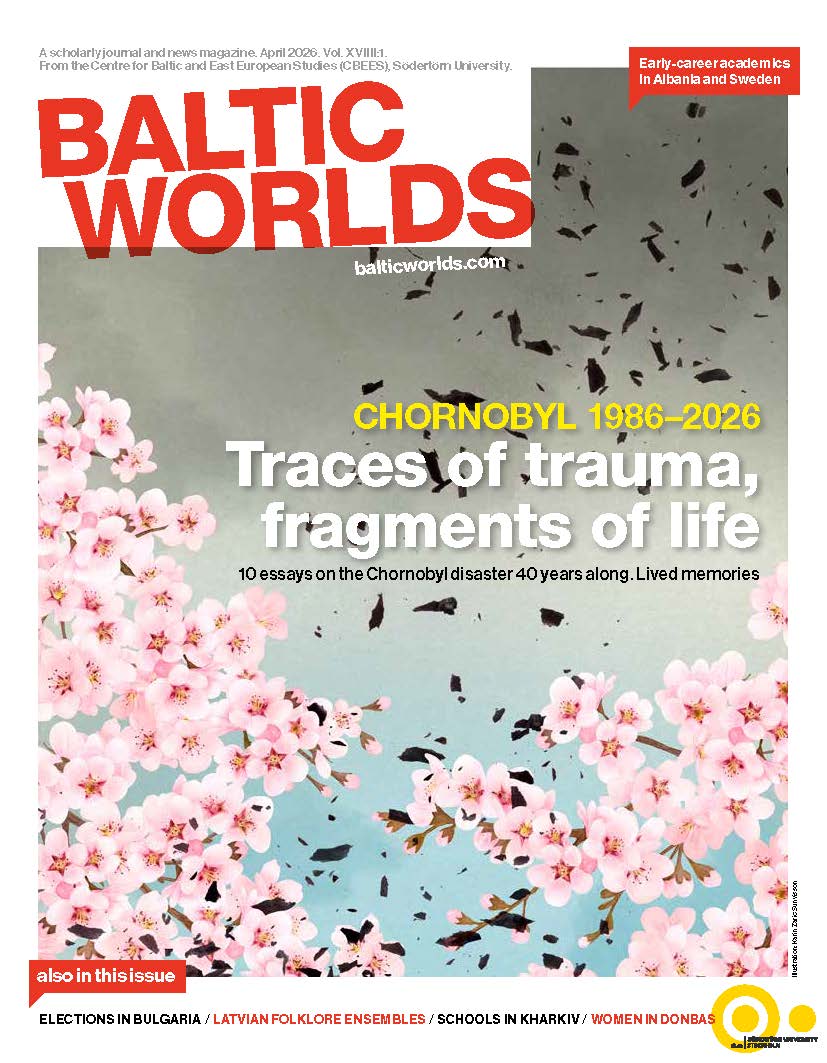 Issue 2026, 1: Download.

Election Hungary before the Change?
I have been monitoring academic freedom and institutional autonomy in the region for the past few decades. Hungary stood out […]
Published on balticworlds.com on April 20, 2026


I have been monitoring academic freedom and institutional autonomy in the region for the past few decades. Hungary stood out as an underperformer. I understand the sense of relief so many feels in Hungary and beyond after the devastating defeat of Orban. At the same time, I would be cautious about expecting a straightforward improvement. Even if Orbán and Fidesz were decisively weakened, Peter Magyar himself comes from a nationalist-conservative milieu, and his politics and rhetoric are inspired by Poland’s PiS and, more importantly, by FIDESZ voters, and the Fidesz-built infrastructure of power stays. The expectations are as high as they were in 1989 for a “system change”. What is to be changed in the field of higher education and research?
The illiberal system
Over the past decade and a half, Hungarian higher education has undergone a profound illiberal transformation[1] These changes[2] have affected not only the operation of universities but also students’ life trajectories, the freedom of research, academic authorization, and the social prestige of knowledge.[3] Although these changes were often bold and unprofessional solutions to real, existing structural problems and were communicated as “reforms to increase competitiveness,” on closer inspection, what emerges instead is the conscious impoverishment of public higher education and the building up of a parallel, centralized, well-funded, politically controlled system.
The most visible institutional change has been the transfer of universities into foundation‑based management. A significant share of state‑funded, public universities was placed under the control of asset‑management foundations. These foundations are formally “private” actors, and their boards of trustees are often populated by active or former political figures with long‑term, entrenched mandates. In theory, this model promised greater flexibility; in practice, however, it blurred the boundary between the public and private character of universities, while control over public funds did not diminish but was instead shifted to a less transparent level.
Consequently, Hungary was excluded from the Horizon programs, and the illiberal government launched its own so-called HU-rizont program, which failed miserably in terms of professional autonomy, as the ministry overruled the jury’s decisions.
Illiberal Hungary became a key factor in building up an alternative model for internationalization. The founding of the Mathias Corvinus Collegium[4] opened a new era. The institution gained access to an extraordinary volume of state and private foundation resources, together with “dark money”, [5]both domestically and internationally. Its educational and research activities have created a parallel system that does not fit within traditional higher education structures yet has a significant impact on them.
Trust in higher education has eroded as, over the past 16 years, key decisions on leadership, strategy, and budgets have increasingly required external political or trustee approval. As a result, self-censorship has become a dominant survival strategy within institutions.
Autonomy has not vanished entirely, but it has become conditional: it is tolerated only when it does not conflict with political or ideological priorities. Competitive, professionally reviewed grant funding has largely been replaced by centralized decisions, targeted subsidies, and designated “national priority institutions,” weakening both academic competition, trust, and, more importantly, excellence. Funding decisions are now often driven more by connections than by scholarly merit, contributing to the declining competitiveness of Hungarian science.
At the same time, Hungarian higher education faces a self-reinforcing spiral of emigration: talented students leave early to study abroad, while young researchers see no predictable academic future at home. These dynamics are compounded by demographic decline. Fewer university-age students, combined with an oversized institutional network, have pushed universities to lower admission standards to maintain enrollment. The social value of a university degree for social mobility has declined, both because it no longer reliably leads to secure careers and because intellectual work itself has lost public value due to the conscious anti-intellectualism of illiberal politics.
What to expect?
Gender politics
There is little to suggest that TISZA would suddenly embrace a progressive, feminist agenda on women’s rights. The program published by TISZA concerns care and motherhood and resembles the Polish PiS’s women’s politics. More likely, any change would be indirect and incremental rather than programmatic: a softening of tone, less aggressive anti‑gender rhetoric,[6] and perhaps a re‑opening of spaces for debate that were tightly closed and controlled under Fidesz.
There might even be an attempt to start rebuilding some form of functioning gender‑equality mechanisms—though probably not under that name, since the term “gender” was not mentioned even once during the campaign—but rather framed in terms of recognizing differences and combating discrimination.
That said, this distinction matters. The damage of the past decade was not only about normalizing hate speech and exclusionary policies, but about the construction of a dense illiberal and anti‑gender ecosystem, closely tied to the state, to funding streams, and to transnational networks. This transnational illiberal international has supported other illiberal politicians when they had to leave their own country, like in the case of Poland or North Macedonia, or supported the disgraced former President of the country, Katalin Novak. This illiberal international, which has unlimited access to “dark money,” will and should support disgraced Fidesz politicians. Losing state backing (and unlimited access to taxpayers` money) would significantly reduce the reach and confidence of the illiberal Fidesz‑driven anti‑gender networks, both domestically, within the EU, and beyond.
Academic freedom
Following the end of a long period of single‑party dominance, the implications for academic freedom and democratic institutions[7] in Hungary would likely be significant, yet contingent on the depth of institutional reform. A change in government could open the way to reassessing governance structures that have concentrated authority over universities, research funding, media regulation, and the judiciary, potentially restoring greater pluralism and institutional autonomy.
In higher education, this might mean revisiting the composition of politically appointed governing boards, revising institutional structures, and reaffirming protections for critical scholarship. However, this latter point was missing from the TISZA program so far. At the same time, the legacy of a prolonged hegemonic period—entrenched legal frameworks, loyalist appointments without professional standing —would likely constrain rapid change, making the consolidation of academic freedom and democratic norms a gradual and contested process rather than an immediate outcome.
Foresight
This serious political shift could weaken the previous illiberal mechanisms of influence, especially the pro-Russian influence, even if the new TISZA leadership remains socially conservative in many respects. In other words, continuity at the level of value, explained in the introductory chant, does not automatically imply continuity at the levels of power and practice. So I would not expect spectacular progress on women’s rights and academic freedom in the short term, but I do see the possibility of a less hostile environment, with fewer symbolic attacks, fewer institutional barriers, and even a chance for a professional discussion. That is not a victory, but it is a change of terrain – and one that could make future struggles more viable for a fair society than they have been in recent years.
Note this text was previously published in https://substack.com/@andreapeto
Andrea Pető, Member of the Advisory Board of Baltic Worlds, is a Professor in the Department of Gender Studies at Central European University (CEU), Vienna, Austria.
References
[1] Andrea Pető, “Current Comment: The Illiberal Academic Authority. An Oxymoron?”, Ber. Wissenschaftsgesch, vol. 44, no. 4 (2021): 461-469. https://doi.org/10.1002/bewi.202100013
[2] Jo-Anne Dillabough and Andrea Pető, “New deceptions: How illiberalism is hijacking the university”, University World News, May 4, 2024. Available at: https://www.universityworldnews.com/post.php?story=20240501143215958
[3] Zsuzsanna Balázs and Andrea Pető, Viktor Orbán’s Affairs with Women: The Illiberal Playbook: Gender, Power, and Control (Ceeol Press, 2026).
[4] Valerie Hopkins, “Campus in Hungary is Flagship of Orban’s Bid to Create a Conservative Elite”, New York Times, June 28, 2021. Available at: https://www.nytimes.com/2021/06/28/world/europe/hungary-orban-university.html
[5] Isaac Kamola, “Dear Administrators: To Protect Your Faculty from Right-Wing Attacks, Follow the Money”, Journal of Academic Freedom, (AAUP) American Association of University Professors, vol 10 (2019), Available at: https://www.aaup.org/sites/default/files/kamola.pdf
[6] Balázs and Pető, Viktor Orbán’s Affairs.
[7] Andrea Pető, “After Collapse. Rebuilding Higher Education After Illiberal Transformation”, April 12, 2026. See https://andreapeto.substack.com/p/after-collapse?r=rpms0
-
by Andrea Petö

Professor at the Department of Gender Studies at Central European University in Budapest, Hungary, a Doctor of Science of Hungarian Academy of Sciences. Her works have appeared in 16 different languages. In 2005, she was awarded the Officer’s Cross Order of Merit of the Republic of Hungary by the President of the Hungarian Republic and the Bolyai Prize by the Hungarian Academy of Sciences in 2006.
- all contributors