
Download back issue of Baltic Worlds
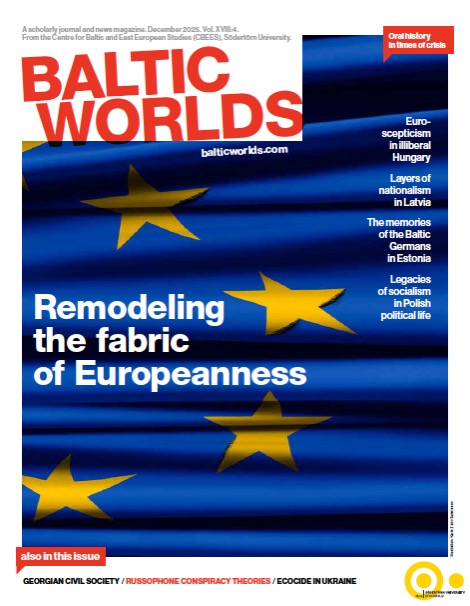 Issue 2025, 4: Download.
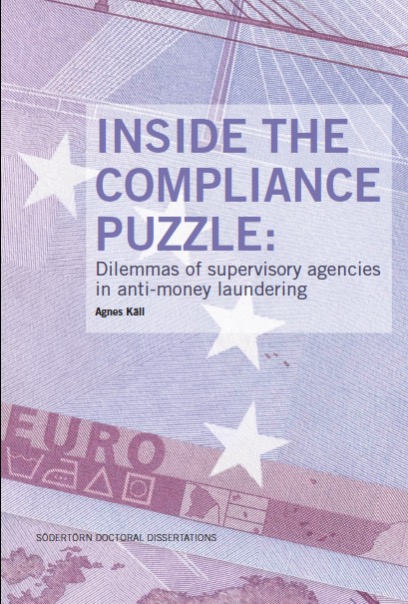
Okategoriserade Agnes Käll (143) Inside the compliance puzzle: Dilemmas of supervisory agencies in anti-money laundering
Abstract [en] This thesis unpacks the empirical puzzle that banks suspected of involvement in money laundering may nevertheless be deemed […]
Published on balticworlds.com on December 16, 2025


Abstract [en]
This thesis unpacks the empirical puzzle that banks suspected of involvement in money laundering may nevertheless be deemed compliant with anti-money laundering (AML) regulations by supervisory agencies. To analyse this contradiction, I draw on legal endogeneity scholarship, which extends neo-institutional organization theory into the legal domain. Research in this vein holds that law becomes endogenous within organizations in a regulated field as actors interpret legal rules and embed those interpretations in organizational activities. Previous studies have focused on how interpretations managerially defined by regulated organizations become accepted as evidence of compliance. This thesis adds to that research by exploring the role of supervisory agencies in legal endogeneity. Understanding endogenous law as co-constructed by organizations within a socio-legal field, I ask: How do supervisory agencies co-construct AML regulation? To answer this question, I study the development of AML supervision of financial supervisory authorities (FSAs) in Denmark, Estonia, and Sweden. During the studied 1991–2021 period, these contexts were in a double sense marked by “Baltic money laundering cases”: first as immediate realities and later as mediatized scandals.
Based on a thematic analysis of archival material and qualitative interviews, three distinct phases of AML supervision are identified, characterized by reactive, vulnerable, and proactive modes of organizing respectively. I show how these modes reflected the positioning of supervisory agencies within the socio-legal field. When AML was constructed as a peripheral regulatory concern, large banks were influential in shaping the meaning of compliance. As the scandals escalated, AML evolved into a high-stakes issue demanding legal authority and normative alignment from the FSAs, fostering a more traditional regulator–regulatee relationship. Meanwhile, AML regulation grew increasingly transnational, culminating in centralized supranational oversight that once again recast the role of the supervisory agencies as legal actors. Analysing this shifting institutional environment, this thesis offers three theoretical contributions: (1) legal endogeneity is not only a social order, but also a temporal process; (2) it is not merely a local concept, but also entails the transnationalization of regulation and the redistribution of legal authority; and (3) not only law, but also actors, become endogenously co-constructed within the socio-legal field.
Subject: Business studies
Public defence of thesis: 21 November 2025
https://www.diva-portal.org/smash/get/diva2:2007272/FULLTEXT03.pdf
-
by Florence Fröhlig

An Associate Professor in Ethnology at the School of Contemporary and Historical Studies and Director of studies of the Baltic and East European Graduate School (BEEGS) at Södertörn University, Sweden. Besides her research interests concerning memory and mourning processes, counter-memories, resilience and the transmission of memory (PhD "Painful legacy of World War II: Nazi forced enlistment: Alsatian/Mosellan Prisoners of War and the Soviet Prison Camp of Tambov” 2013), she is interested in the memorialization’s and heritagization’s processes of industrial sites. Her research has also expanded to ecological issues in the Baltic and Eastern European regions. Currently, she is involved in a research project on Russian and Belarusian migrants and their identity construction in Lithuania and Poland following Russia’s invasion of Ukraine.
- all contributors