Alexander Abramov, Maria Chernova and Alexander Radygin
Alexander Radygin, Director at the Institute of Applied Economic Research, the Russian Presidential Academy of National Economy and Public Administration (RANEPA), Moscow. He is also head of the Research Department and a board member at the Gaidar Institute for Economic Policy, Moscow.
Alexander Abramov, Professor at the Institute of Applied Economic Research, RANEPA. His main research interests span over the development of financial markets in Russia, with a special focus on institutional investors including pension and mutual funds.
Maria Chernova, Researcher at the Laboratory of Institutions and Financial Markets Analysis at the Institute of Applied Economic Research, RANEPA. Financial markets and financial risk management are her main research filed.
view all contributors
Articles by Alexander Abramov, Maria Chernova and Alexander Radygin
-
Professor Andrzej Leder, psychoanalyst and professor of philosophy, in a conversation with Aleksandra Reczuch about the history and social transformations in the region, the threat of Russia, and the historical memory embodied in buildings, symbols, commemorations, and family albums.
-
According to the databases of Ukrainian Cultural Foundation and of Ministry of Culture and Information Politics in Ukraine, there were 389 crimes against cultural heritage on June 10, 2022. In the conditions of an ongoing war, it is impossible to be certain of any further damage; this general insecurity and vulnerability adds to general losses. In many towns in Ukraine people made efforts to secure their monuments, covering them physically and digitalizing them in databases.
-
In most post-communist countries after the breakdown of the USSR, memory legislation often aimed at constructing an identity of suffering under Nazism and the totalitarian Soviet regime, which relativized itself according to a cosmopolitan understanding of victimhood centered on the Holocaust memory. Regulations of memory, in this sense, were considered an indicator of democratic transition and an entry ticket to the European Union.
-
I would like to offer this remnant of a futuristic halo of the Soviet space program as a possible way to comprehend why April 12 never managed to become a full-fledged fantasy world of what Boym terms “restorative nostalgia” like May 9th, and to see which alternative ways to understand nostalgia it may open up.
-
Before the war, Ukraine was the main trade partner of Belarus, after Russia. Imports of Belarusian goods to Ukraine in 2021 are estimated at 5.4 billion US dollars. Therefore, Belarus has a great economic interest in stopping the war.
-
The outbreak of the war on February 24, 2022, was a real shock for the Russian science and higher education, and completely turned the situation upside down, even in comparison with the negative trends of the previous years.
-
Like Stefan Zweig writing about the sophisticated idyll of Central Europe in the 1930s, I clutch at these memories like straws, at the same time that the Russian army is continuing to attack Ukraine, pulverizing its cities and killing its people. Although I have spent very little time in Ukraine, I have spent a lot of time with Ukraine.
-
A military endgame is taking place in Mariupol that could be an omen for Europe’s future to come.
-
On March 24, I visited the military hospital in Kyiv together with my colleagues from one Kyiv publishing house. That was very important for me as I saw the “inner” world of the war of young soldiers injured. Many of them suffer in terrible pain after surgery as there is a shortage of painkiller medication.
-
During the first month of the war, more than half of the children in Ukraine left their homes. Many of those who came out of hell arrived in the relatively calmer west of Ukraine as well as to neighboring European countries. Some were displaced after weeks of hiding in basements, dilapidated houses, in cars or even lines of vehicles under the enemy fire.
-

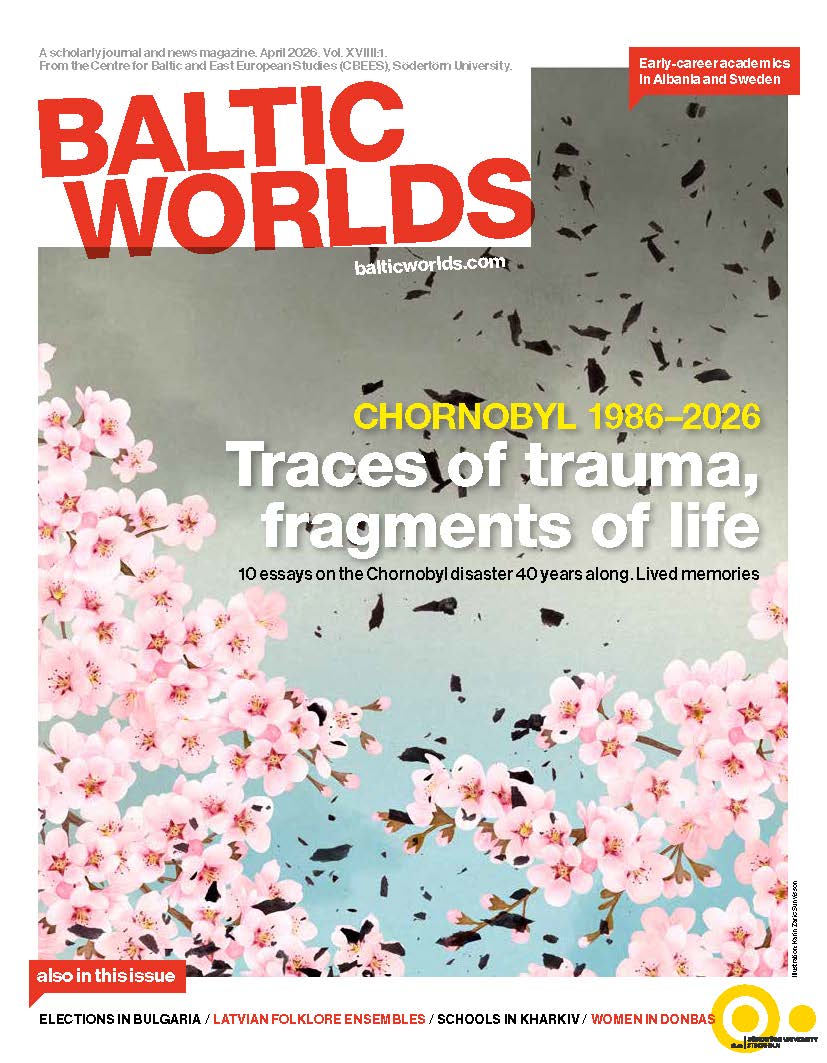 Issue 2026, 1: