Barbara Törnquist-Plewa & Magdalena Góra
Barbara Törnquist-Plewa is Professor of Eastern and Central European Studies; director for the Centre for European Studies, Lund University, Sweden. She specializes in cultural studies and contemporary history, focusing on studies of identities, collective memory, and nationalism.
Magdalena Góra is Assistant professor at the Institute of European Studies, Jagiellonian University, Cracow. PhD in political science. Her focus is on the EU role in international relations, Polish foreign policy and processes of collective identity formation in the context of the EU enlargement.
view all contributors
Articles by Barbara Törnquist-Plewa & Magdalena Góra
-
This Special Issue include eight articles that endeavor to analyze more deeply different aspects of the influence of transnational “soft power” aimed at coopting youth in authoritarian and hybrid regimes through radical and nationalist youth organizations, patriotic education, and youth wings of ruling parties. By means of such activities, governments try to distract the youth from countercultural movements and opposition politics as well as to educate an obedient and loyal generation. The purpose is to “vaccinate” such generations with illiberal or authoritarian values in order to eliminate potential threats to regimes’ stability.
-
June 19-23, 2023, a summer school of the international project “Europast” took place at Lund university. “Europast” is short for the project’s title “Facing the Past: Public History for a stronger Europe” and is an international project financed by the EU within Horizon Europe program that started in December 2022 and will end in November 2025.
-
On March 27—30, the Baltic University Programme (BUP) organized the BUP Master Thesis Training 2023. 22 master students from the BUP participating universities attended the event, which took place at the Geocentrum at Uppsala University.
-
Kulturarv: en begreppspolitik [Cultural Heritage: the politics of the concept], Johan Hegardt and Marcia Sá Cavalcante Schuback, (Södertörn philosophical studies, 2022), 124 pages.
-
Bakom och bortom järnridån. De sovjetiska åren och frigörelsen i Baltikum och Ukraina [Behind the Iron Curtain and Beyond. The Soviet Years and the Emancipation in the Baltics and Ukraine]. Li Bennich Björkman. Stockholm: Appell förlag. 465 pages
-
The Kaliningrad Region. A Specific Enclave in Contemporary Europe Eds., Arkadiusz Żukowski and Wojciech T. Modzelewski (Paderborn: Brill Schöningh, 2021) 336 pages
-
A Taste for Oppression — A Political Ethnography of Everyday Life in Belarus Ronan Hervouet: (New York, Oxford: Berghahn, 2021) 254 pages. (Original: Ronan Hervouet: Le Goût Des Tyrans. Une Ethnographie Politique Di Quotidien En Biélorussie (Lormont: Le Bord de l’eau, 2020) 281 pages
-
The conference From the grassroots to policy and back: Putting just transition to practice gathered social scientists
who in different ways struggled with the tensions implied in the concept of “just transition”. The conference took place in Katowice, Poland, in many ways at the epicenter of the transition.
-
Referendums have been extensively analyzed from multiple perspectives and different studies have discussed their various features and types and how different actors use them. However, little attention has been paid to investigating the reasons why political elites (i.e., European presidents) initiate referendums. Thus, this article explores the intentions and aims by analyzing 18 referendums called by European presidents from 2000 to 2020. Secondary sources, such as media reporting, official documents, and scientific works, have been analyzed using a
comparative case study approach. The results indicate that presidents usually have strategic objectives when they call referendums, and that the initiation of a referendum is influenced by the anticipated short- or long-term effects that could result from the referendum.
-
This article compares Swedish and German social work, including policy documents, and discusses the policies of these two countries regarding the implementation of children’s rights in social work practice. The analysis focuses on two main concepts that are used in social work practice: the concept of a child perspective in Sweden and the concept of participation in Germany. This study aims to investigate the ideas, values and guidelines mediated by political institutions to social workers in the field. The results showed that both the Swedish and German policy documents gave the distinct impression that the concepts had been properly implemented and formed part of child welfare practice. In the Swedish context, the idea of both making children visible and the formal aspects were highlighted, whereas in Germany, participation was related to an educational discourse. However, it is argued here that the discourses suggest that there is unequal relationship between children and adults, and we conclude that social workers must contribute to the child’s status as an active subject.
-

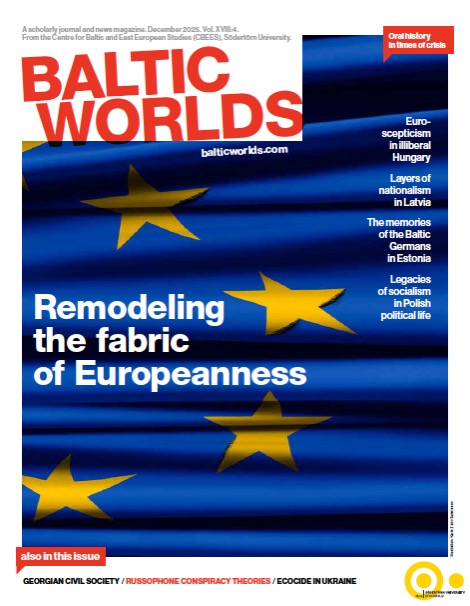 Issue 2025, 4: