Elena Marushiakova and Vesselin Popov
Elena Marushiakova is a holder of ERC Advanced Grant 2015, “Roma Civic Emancipation Between the Two World Wars”, and President of the Gypsy Lore Society. She is affiliated to the School of History at the University of St. Andrews. She has published widely on Roma in Bulgaria, Balkans and Central and Eastern Europe.
Vesselin Popov works at the School of History at the University of St. Andrews. Conducts research in frames of ERC Advanced Grant 2015, “Roma Civic Emancipation Between the Two World Wars”. Has published widely on Roma in Bulgaria, Balkans and Central and Eastern Europe.
view all contributors
Articles by Elena Marushiakova and Vesselin Popov
-
The 13th Annual Aleksanteri Conference “Russia and the World”, which took place in the main building of the University of Helsinki, October 23–25, was dedicated first and foremost to Russian foreign policy.
-
From the discussions at the “Frameworks for University Cooperation in the Baltic Sea Region” conference, the new EU-level interest in the region as well as increased Russian attention to the Baltic Sea sent a strong signal regarding the contemporary relevance and future importance of Baltic Sea cooperation.
-
VNIITE, once the world’s largest institute of design research, ceased to exist on June 14, 2013. It was once conceived as a marriage of engineering and aesthetics. Intellectual abilities and sensitivity were to be respected rather than viewed as problems.
-
+ Mary Hilson, Pirjo Markkola and Ann-Catrin Östman (eds.) Co-operatives and the Social Question: The Co-operative Movement in Northern and Eastern Europe (1880—1950), Cardiff 2012: Welsh Academic Press, 226 pages
-
+ Henrik Stenius, Mirja Österberg, and Johan Östling (eds.), Nordic Narratives of the Second World War: National Historiographies Revisited, Lund 2011: Nordic Academic Press, 173 pages
-
It is impossible to overestimate the importance of the deportees’ memoirs in the revision of the history of deportations, especially since the memoirs were collected in different ways in the different countries.
-
The results of the present study, the first of its kind in Bulgaria, demonstrate the scope of the historical memory of Bulgarian citizens. The work reveals how consolidated and coherent the historical memory of the majority group is, and at the same time how fragmented the memories of the minority groups can be.
-
The presidential elections of October 27th changed the political landscape of Georgia and showed signs of a mature democracy. The elections marked the end of Mikheil Saakashvilli’s ten year presidency. Giorgi Margvelashvili of the Georgian Dream (GD) won the presidential elections. It was a well administrated election, and the transition of power were peaceful.
-
The present article presents the results of a synthesis of the literature on port authority governance models worldwide. Our aim is to make a comparative analysis of existing governance models in four major seaports in the Baltic states — Tallinn, Estonia; Klaipeda, Lithuania; and Riga and Ventspils, Latvia — to identify key challenges and propose possible solutions for sustainable port authority governance.
-
The wish to ethnically classify everything found in the Viking Age trading locations has led archaeologists to neglect the fact that material in those ethnic categories displays not only similarities but also frequent variations, argues the author. She calls for acknowledgment of the differences and variations within those presupposed ethnic categories.
-

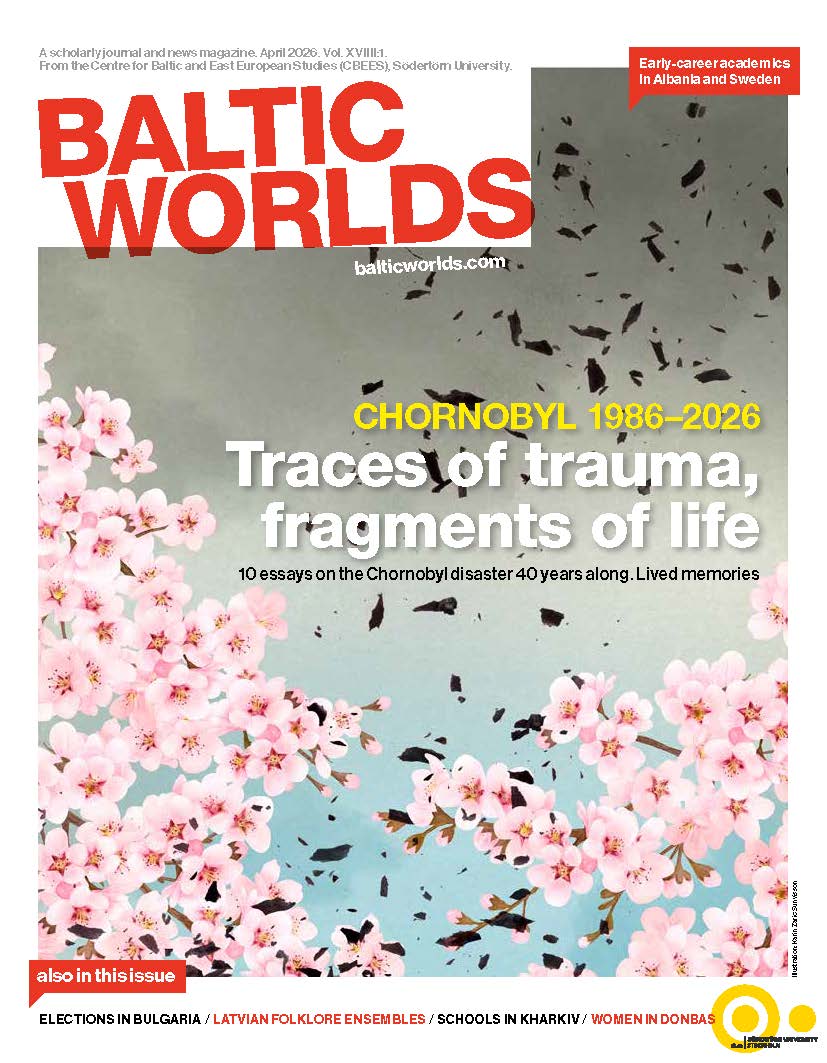 Issue 2026, 1: