
Editor-in chief, Baltic Worlds.
Ninna Mörner
Editor-in-chief since 2009 for the journal Baltic Worlds and its’ web site balticworlds.com .
She is a graduated journalist and did report from East Europe in the early 90s. She has been teaching in journalism and also worked at several publishing houses and magazines. She holds a MA in Economic History. She has published peer-reviewed articles as well as articles of numerous other genres, including books.
She is today also an expert in human trafficking and a human right activist and has as such participated in numerous EU-projects, reported on the issue internationally, and in Sweden developed a support programme for victims. In 2013 she took initiative to the network Swedish Platform Civil Society Against Human Trafficking (later a formalized organization).
She is a frequent lecturer in human trafficking and is during 2019, besides, being a editor for Baltic Worlds, teaching at DiS a course on Human Trafficking and the Sex Trade. She is also during 2019-2020 coordinating a project regarding empowerment for formal child victims of human trafficking (Ecpat Norway, sponsored by CBSS).
Since 2013 she has been involved in “Dream Business”, a theater/film project around human trafficking that has been performed in Sweden, Norway and now runs in Finland. She is also engaged in promoting cultural activities for people living at the margins, and is board member at Skådebanan Stockholm.
view all contributors
Articles by Ninna Mörner
-
ERANOS has taken place from 1933.The ERANOS Tagung (Conference) 2013 on "The Virtues of Tolerance" was held at Neamt Monastery in Romania on July 14-20, 2013. Here we publish a contribution from one of this years' speakers, Anders Björnsson.
-
Dehumanization of groups of people is a prerequisite for human trafficking. The very same factor that make vulnerable groups target of discrimination also make people vulnerable to human trafficking. The link between discrimination and human trafficking was the theme on OSCE:s 12th "Alliance against Trafficking in Persons" Conference.
-
Baltic Worlds will be monitoring the European Football Championship in June here on Baltic Worlds’ website. A number of articles […]
-
“Why is there no happiness in the East?” was the, according to many, provocative title of a conference put on by CBEES and Södertörn University September 8–10 of this year.
The organizers of the conference, Teresa Kulawik, Renata Ingbrant and Youlia Gradskova, wanted to bring together feminist scholars for a discussion about conditions facing feminism in the East and in the West after the Berlin Wall, as well as the role of the EU and politics in the development of feminism.
-
Natalia Zubarevich, Department of Geography, Moscow State University, is keynote speaker at Baltic Worlds Annual Roundtable: Market Reform and Socio-Economic Change in Russia, October 6. She notes a growing polarization between people and regions. Modernization is necessary.
-
Baltic Worlds Roundtable illuminates the tremendous changes that Russian social and economic life has undergone due to the introduction of market economy after the fall of state socialism. The Rondtable takes place October 6, 2011.
-
A number of representatives of the opposition in Belarus participated in a seminar “The Way Forward for Belarus”. The seminar addressed such issues as the difficulties experienced by the opposition in working for democracy and human rights in Belarus and what the outside world can do to support their work.
-
Balkan experts attending the symposium “Memory and Manipulation: Religion as Politics in the Balkans", agree that the war was directed from the top, and that “top-down” is the key to understanding how the war began in the region.
-
The Russian energy strategy for the next few years includes lofty goals. While other countries are investing 1.5 percent of their GDP in the energy sector, Russia is spending 5 percent. This was noted at the Norwegian Institute of International Affairs (NUPI) Annual Conference on Russian and Eurasian Studies.
-
Professor Shelley was the keynote speaker at the “Human Trafficking: The Nexus Between Research and Operative Work” conference in Uppsala, Sweden on November 25, 2010. She noted that human trafficking always grows where there are large social gaps and little opportunity for poor people to improve their situation. However the organization, manifestation and methods used in the combat are culturally distinctive.
-

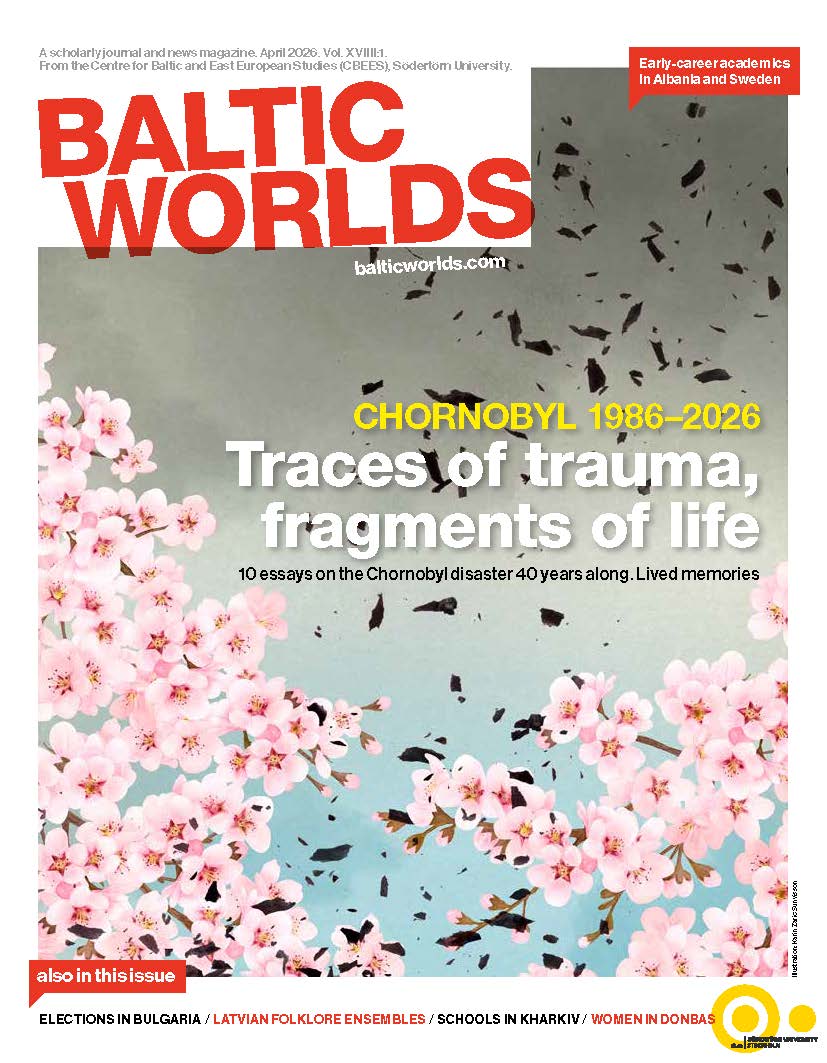 Issue 2026, 1: