Pēteris F Timofejevs and Louis John Wierenga
Pēteris F Timofejevs
Senior Lecturer at the Department of Political Science, Umeå University. He has written on Europeanization of foreign aid policy in Central and Eastern Europe and European NGOs working with development cooperation.
Currently, his research is focused on radical right parties in the Baltic Sea area, their positions in foreign and environmental policies and their youth organizations.
Louis John Wierenga
Lecturer in International Relations at the Baltic Defence College, PhD fellow at the Johan Skytte Institute of Political Studies, University of Tartu and Research fellow at the Latvian Institute of International Affairs (LIIA). His research interests include populist radical right parties – specifically leadership and party structure, social media and discursive opportunity structures, youth organizations and transnational networks. Currently, Wirenga is part of a project entitled, “Making Tomorrow’s Leaders” which is a Swedish Research Council project analyzing youth organizations of far-right parties.
view all contributors
Articles by Pēteris F Timofejevs and Louis John Wierenga
-
Södertörn University held a conference on the legacies of 1989, “Recasting the Peaceful Revolution”. The predominating
perspective during the entire conference: the fall of communism was the result of popular pressure and protest from below, not of great-power politics. Much was to be celebrated the automn of 2009.
-
At the exact time that voices in the Swedish public debate increasingly questioned obstacles to women’s participation in professional work on an equal footing with men, the opposite tendency could be observed in Soviet Russian debates. Here an excerpt from a paper presented at the Aleksanteri Institute’s ninth annual conference.
-
During the Cold War each side produced propaganda which highlighted the differences between the two systems and peoples, “the others”.
There were, however, also conceptions of “the other” derived from sporadic but real meetings, meetings which awoke curiosity and a willingness to establish closer relations.
The Aleksanteri Institute’s ninth annual conference, “Cold War: Interactions Reconsidered”, held in Helsinki fall 2009, examined these more low-key contacts and varying interpersonal relations and attitudes.
-
In the Baltic countries, there is a great need for energy. The Nord Stream project is a power game in which Russia may come to strengthen its role.
-
Joachim Gauck was 50 years old when he first voted in a free, democratic election in the GDR. A conversation about power and powerlessness, culpability, and reconciliation. The opposite of Communism is individualism, he states.
-
István Rév opens the door to the Open Society Archives for a discussion about bloodshed as a poor gauge of a revolution, about honesty and decency as rare commodities, and about populism and utopianism.
-
One result of efforts to halt trafficking is that the situation of those at risk becomes more difficult. So say NGOs and researchers. When women are sent home, they end up in a more vulnerable position – often they go back to trafficking.
-
Thomas Acton describes how Romanies are always outsiders. He contends that it is impossible to be engaged in Romani Studies without also becoming part of the Romanies’ struggle.
-
Poles in Lithuania are a minority who want to strengthen their identity. They are now demanding to have their names spelled correctly in official records.
-
Joanna Mizelienska, lecturer in gender and queer studies, argues that it is difficult to apply queer theory in Poland. Can one speak of constructed sexual identities where gay rights are disregarded or violated?
-

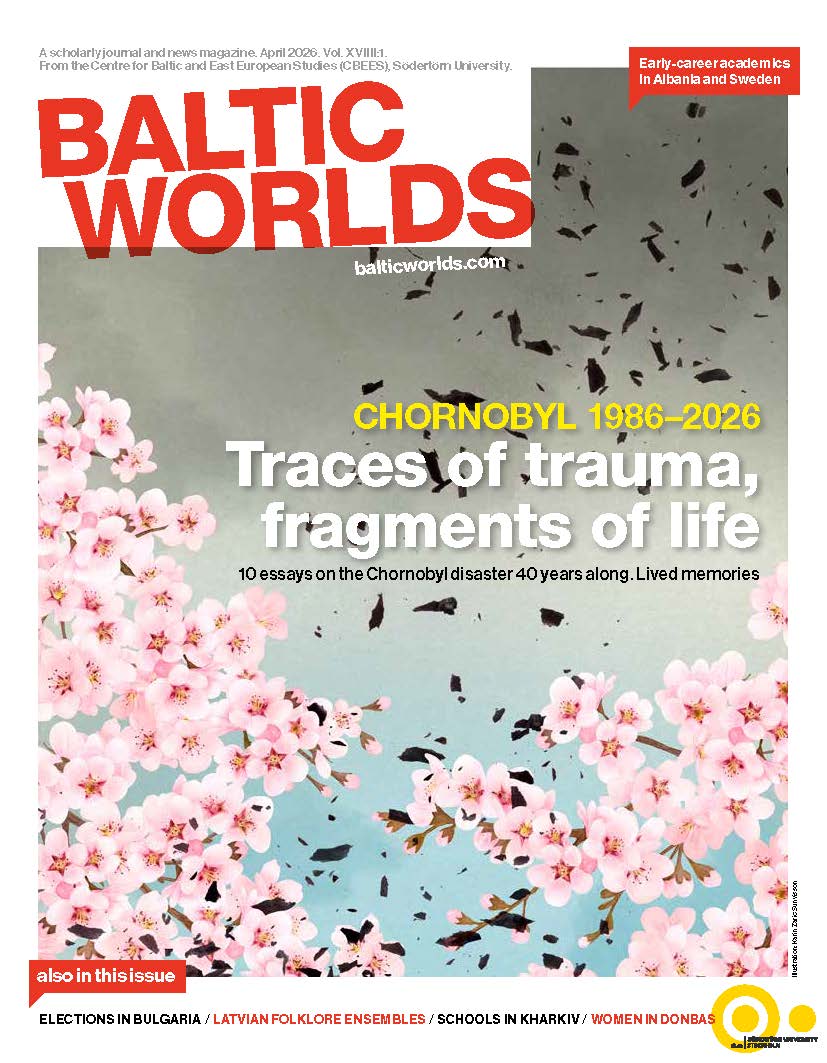 Issue 2026, 1: