Pēteris F Timofejevs and Louis John Wierenga
Pēteris F Timofejevs
Senior Lecturer at the Department of Political Science, Umeå University. He has written on Europeanization of foreign aid policy in Central and Eastern Europe and European NGOs working with development cooperation.
Currently, his research is focused on radical right parties in the Baltic Sea area, their positions in foreign and environmental policies and their youth organizations.
Louis John Wierenga
Lecturer in International Relations at the Baltic Defence College, PhD fellow at the Johan Skytte Institute of Political Studies, University of Tartu and Research fellow at the Latvian Institute of International Affairs (LIIA). His research interests include populist radical right parties – specifically leadership and party structure, social media and discursive opportunity structures, youth organizations and transnational networks. Currently, Wirenga is part of a project entitled, “Making Tomorrow’s Leaders” which is a Swedish Research Council project analyzing youth organizations of far-right parties.
view all contributors
Articles by Pēteris F Timofejevs and Louis John Wierenga
-
+ Lennart Samuelson Tankograd. Den ryska hemmafrontens dolda historia 1917–1953 [Tankograd: The Secret History of the Russian Home Front, 1917–1953]. Stockholm: SNS Publisher 2007. 368 pp., illustrated.
-
In Hungary, there were several active women fascists. In the People’s Tribunals after World War II, however, few of the women were convicted. There was an unwillingness to think of women as capable of such evil deeds.
-
Political development in the three Baltic countries has not been equal. The development of democracy and the degree of corruption depends, among other things – it is argued here – on how the resistance against the Soviet Union was organized.
-
World leaders discussed things behind the scenes. Thatcher but also Mitterrand were against German reunification. An analysis of documents shows how Kohl managed to get the EU’s acceptance.
-
The geopolitical situation shaped life on the islands of Gotland, Rügen, and Saaremaa. They became garrison islands and the presence of the military transformed daily life. After the Cold War, the military left the islands.
-
An analysis of the film The Reader, based on the book of the same name. The film’s perspective on individuals’ behavior during the Holocaust makes coming to terms with acts of the past impossible – which itself invalidates the entire film.
-
In the 1960s Hungarian intellectuals listened to jazz as a protest against the system. Symbols united them in the fight. In 1989 they returned to lead the revolution.
-
Cybernetics was created in the Soviet Union in the ’50s; it celebrated technical progress as the future of mankind. Cybernetics proceeded from the encounter between human and machine.
-
Pomerania flew the Swedish flag during the years 1630–1815. The province became a coveted badge in the great political power game of Northern Europe.
-
The altruistic act of donating organs is increasingly a financial transaction with the body as a commodity. Poor people are persuaded, tricked, into selling one of their kidneys without receiving adequate care afterwards.
-

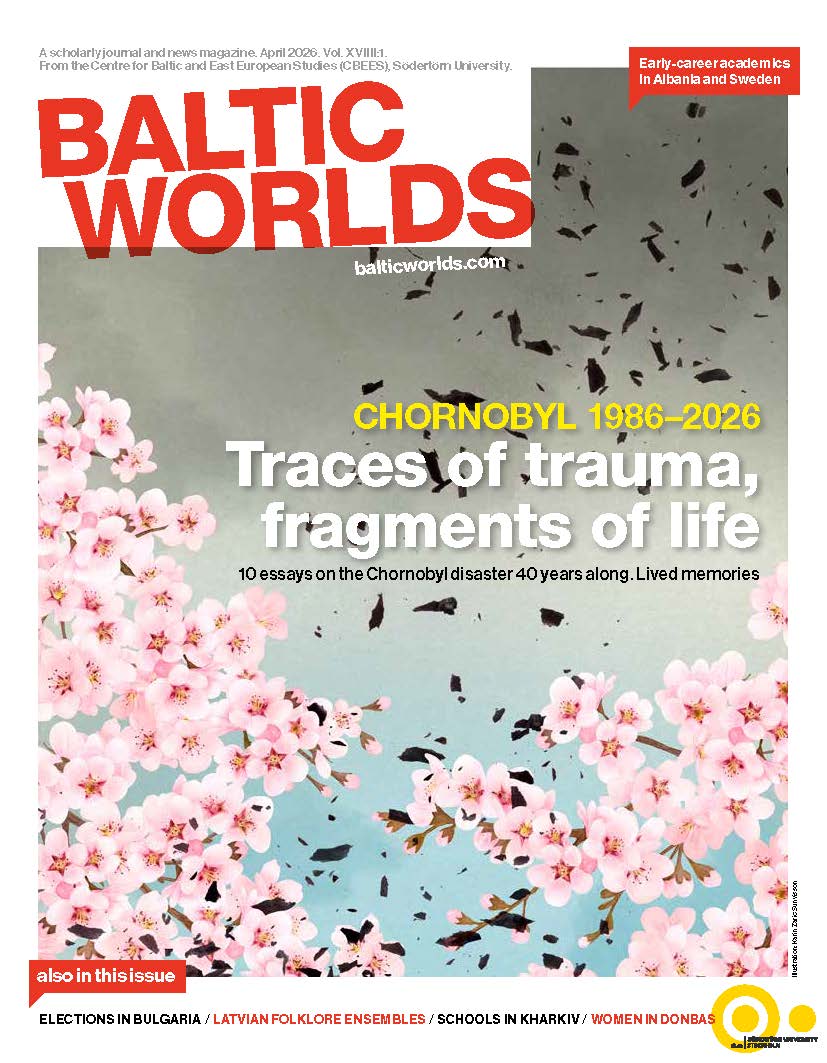 Issue 2026, 1: