Roland Kostić
PhD in Peace and Conflict Studies from Uppsala University, Sweden. He is currently employed as a Research Director for Holocaust and Genocide Studies at the Hugo Valentin Centre, Uppsala University. His research interests include social psychology, transitional justice, knowledge production process in interventions and peace-building processes. His most recent publications include a piece “Transnational think-tanks: foot soldiers in the battlefield of ideas? Examining the role of the ICG in Bosnia and Herzegovina, 2000–01” in Third World Quarterly (2014), and co-edited volume (Li Bennich-Björkman and Branka Likić-Brborić) “Citizens at Heart? Perspectives on integration of refugees in the EU after the Yugoslav war of succession”, Uppsala Multiethnic Papers 56, Uppsala University, 2016.
view all contributors
Articles by Roland Kostić
-
After World War II, researchers in a number of scholarly fields, particularly literary criticism and history, have investigated the various activities of emigrant and exile groups. Leading scholars of East European history have long sought to direct their focus to the decisive importance of exiled intellectuals in 20th century East European history-writing and nation-building. It is gratifying that this research area has become the subject of a conference, “East and Central European History Writing in Exile — International Dissemination of Knowledge”, held December 3–5 at Södertörn University, arranged by CBEES, within the framework of the research theme “cultural theory”.
-
Södertörn University held a conference on the legacies of 1989, “Recasting the Peaceful Revolution”. The predominating
perspective during the entire conference: the fall of communism was the result of popular pressure and protest from below, not of great-power politics. Much was to be celebrated the automn of 2009.
-
At the exact time that voices in the Swedish public debate increasingly questioned obstacles to women’s participation in professional work on an equal footing with men, the opposite tendency could be observed in Soviet Russian debates. Here an excerpt from a paper presented at the Aleksanteri Institute’s ninth annual conference.
-
During the Cold War each side produced propaganda which highlighted the differences between the two systems and peoples, “the others”.
There were, however, also conceptions of “the other” derived from sporadic but real meetings, meetings which awoke curiosity and a willingness to establish closer relations.
The Aleksanteri Institute’s ninth annual conference, “Cold War: Interactions Reconsidered”, held in Helsinki fall 2009, examined these more low-key contacts and varying interpersonal relations and attitudes.
-
In the Baltic countries, there is a great need for energy. The Nord Stream project is a power game in which Russia may come to strengthen its role.
-
Joachim Gauck was 50 years old when he first voted in a free, democratic election in the GDR. A conversation about power and powerlessness, culpability, and reconciliation. The opposite of Communism is individualism, he states.
-
István Rév opens the door to the Open Society Archives for a discussion about bloodshed as a poor gauge of a revolution, about honesty and decency as rare commodities, and about populism and utopianism.
-
One result of efforts to halt trafficking is that the situation of those at risk becomes more difficult. So say NGOs and researchers. When women are sent home, they end up in a more vulnerable position – often they go back to trafficking.
-
Thomas Acton describes how Romanies are always outsiders. He contends that it is impossible to be engaged in Romani Studies without also becoming part of the Romanies’ struggle.
-
Poles in Lithuania are a minority who want to strengthen their identity. They are now demanding to have their names spelled correctly in official records.
-

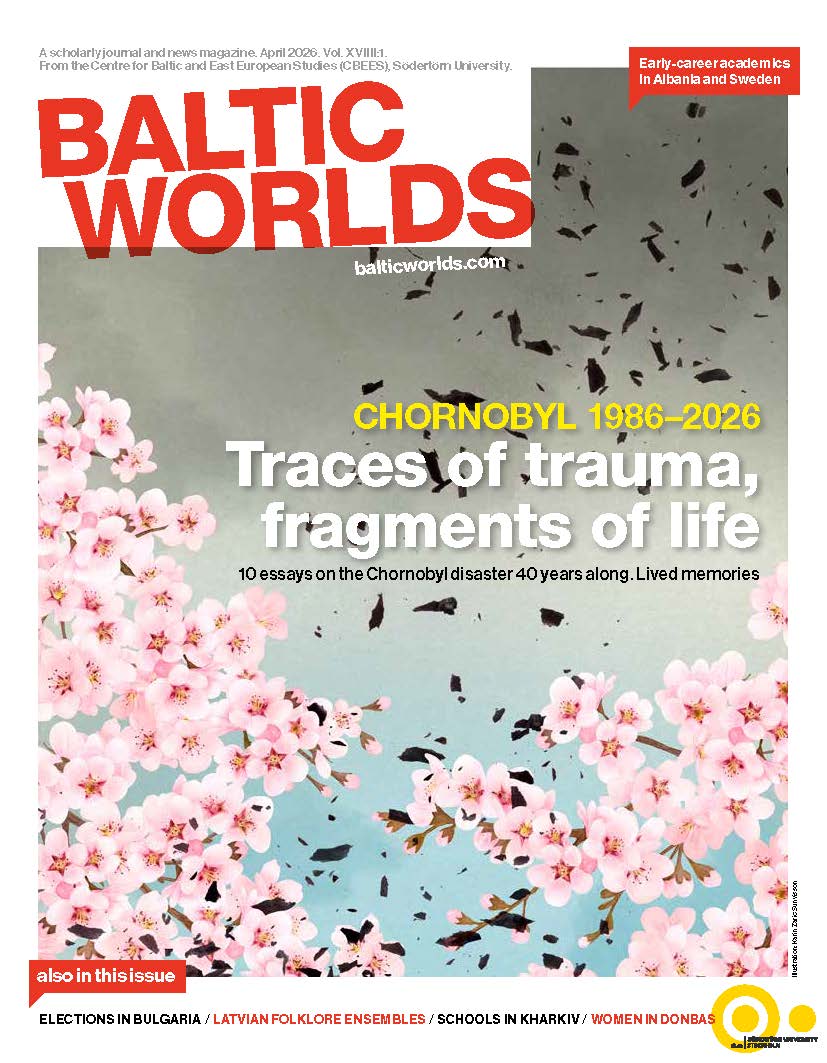 Issue 2026, 1: