Roland Kostić
PhD in Peace and Conflict Studies from Uppsala University, Sweden. He is currently employed as a Research Director for Holocaust and Genocide Studies at the Hugo Valentin Centre, Uppsala University. His research interests include social psychology, transitional justice, knowledge production process in interventions and peace-building processes. His most recent publications include a piece “Transnational think-tanks: foot soldiers in the battlefield of ideas? Examining the role of the ICG in Bosnia and Herzegovina, 2000–01” in Third World Quarterly (2014), and co-edited volume (Li Bennich-Björkman and Branka Likić-Brborić) “Citizens at Heart? Perspectives on integration of refugees in the EU after the Yugoslav war of succession”, Uppsala Multiethnic Papers 56, Uppsala University, 2016.
view all contributors
Articles by Roland Kostić
-
The government will be a centre-right government including three of the four large political parties: the Centre party, the True Finns and the National Coalition party. This is the first time the True Finns are in government and as in several European states a case of when a populist radical right parties contributes to the making of a centre-right government.
-
An international solidarity cum discussion conference concerning the Maidan revolution and its effects, took place in Kiev during five sunny days in May 2014. ”Ukraine: Thinking Together” was arranged by the Krytyka Institute in Kiev in cooperation with American historian Timothy Snyder and American news magazine New Republic.
-
The conference on “Moomins and the Others”, was held in honor of the 100th anniversary of Tove Jansson, the creator of the Moomin magic.
-
The roundtable at CBEES 27 March, provided the space for an academic debate in which scholars and experts could present the findings of their research and share their views on the current events in Ukraine with a broader audience.
-
The economic recession characterises the Finnish parliamentary elections that are held on Sunday April 19. The political parties compete about the support of the voters by promising economic austerity during the upcoming legislature.
-
The Estonian electorate rewarded the incumbents granting the Prime Minister Taavi Rõivas' Estonian Reform Party approximately the same amount of support as in the latest election 2011. The foreign affairs certainly played a role in the electoral campaign, but we should not forget about the government’s economic record.
-
The referendum on family initiated by a group of Conservative NGOs has divided the Slovak citizenry into two opposing camps. Despite the conflictual nature of the campaign, the referendum has demonstrated that Slovakia is ready to handle civil-society deliberations on a large scale, which could be a sign indicating the gradual maturing of Slovak civil society.
-
There were two disparate and somehow polemic tendencies, or overarching discourses, among the parental movements presented at the workshop on Södertörn University in May 2014. The first was the nationalist discourse, whilst the other predominated discourse was concentrated on promoting new norms in parenting.
-
+ Cecilia Notini Burch, A Cold War Pursuit: Soviet Refugees in Sweden, 1945–54. Stockholm: Santérus Academic Press Sweden, 2014. 359 pages.
-
+ Peter Balogh, Perpetual Borders: German-Polish Cross-border Contacts in the Szczecin Area, Meddelanden från Kultur-geografiska institutionen vid Stockholms Universitet, [Reports of the Department of Human Geography, Stockholm University, Number 145] Stockholm: University of Stockholm Press, 2014, 204 pages.
-

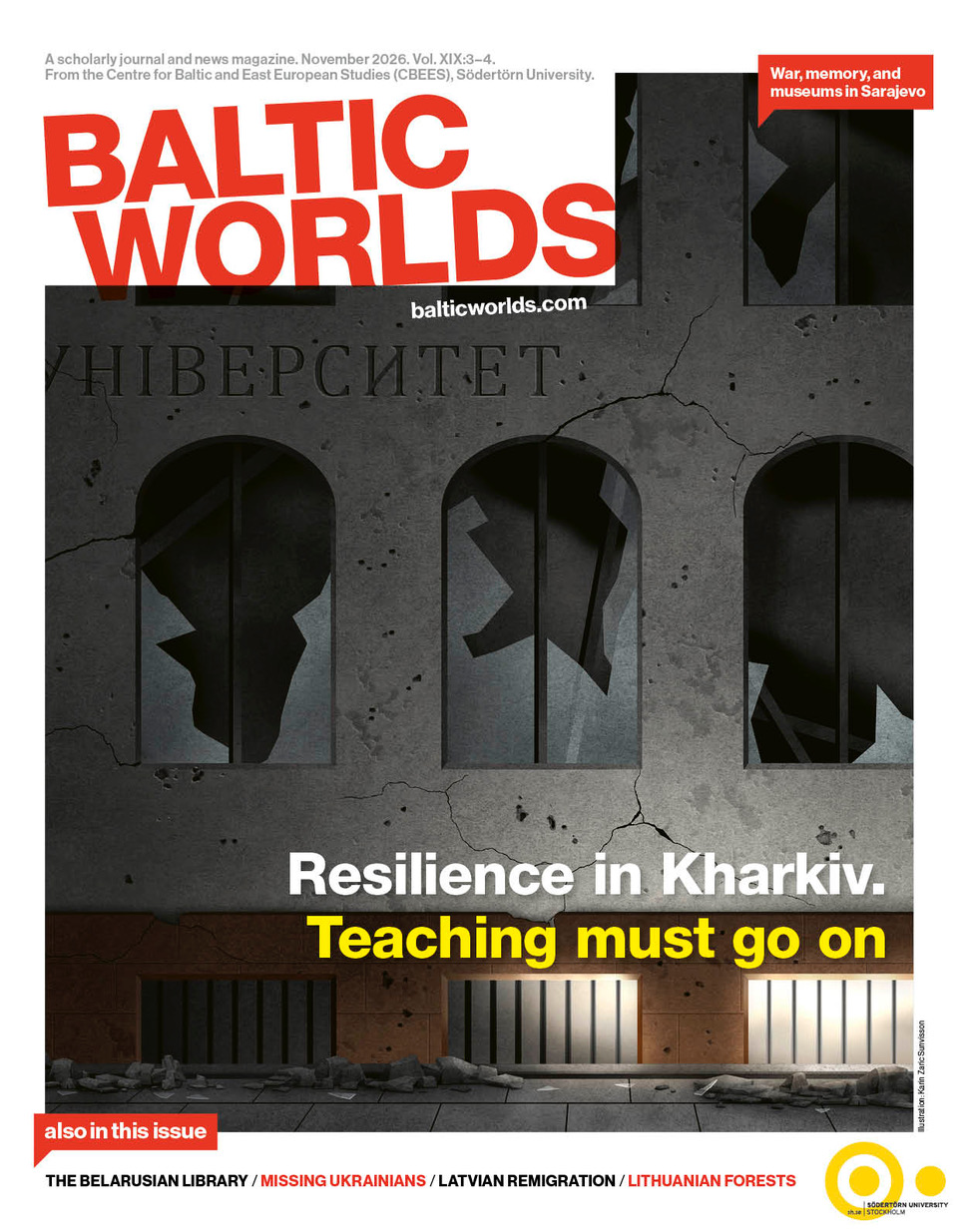 Issue 2026, 3-4: