Roland Kostić
PhD in Peace and Conflict Studies from Uppsala University, Sweden. He is currently employed as a Research Director for Holocaust and Genocide Studies at the Hugo Valentin Centre, Uppsala University. His research interests include social psychology, transitional justice, knowledge production process in interventions and peace-building processes. His most recent publications include a piece “Transnational think-tanks: foot soldiers in the battlefield of ideas? Examining the role of the ICG in Bosnia and Herzegovina, 2000–01” in Third World Quarterly (2014), and co-edited volume (Li Bennich-Björkman and Branka Likić-Brborić) “Citizens at Heart? Perspectives on integration of refugees in the EU after the Yugoslav war of succession”, Uppsala Multiethnic Papers 56, Uppsala University, 2016.
view all contributors
Articles by Roland Kostić
-
This year’s Baltic Sea Festival, held for nine days in late summer in Stockholm and focusing on music and the environment, was true to form with Esa-Pekka Salonen at the helm. Not only that: the thematic threads were unusually well intertwined.
-
The 2011 election will differ from the previous elections in two important ways: First, there is a real likelihood for a change in government with Social Democratic leader Helle Thorning-Schmidt taking over as prime minister. Second, the campaign so far has been dominated by debates about the state of the economy while immigration and health care, the major themes of the three previous campaigns, have played only a minor role.
-
Populist temptation has always haunted Latvia. Not less now, when voters are struggling to recover from Europe´s deepest GDP-fall.
“People want change”, says professor Runcis who fears that Zatlers can not deliver that, and so distrust of politicians might grow. The political scientist is worried about the ex-presidents lack of competence in the economic field, and he is critical of Zatler´s political ambitions.
-
Baltic Worlds Roundtable illuminates the tremendous changes that Russian social and economic life has undergone due to the introduction of market economy after the fall of state socialism. The Rondtable takes place October 6, 2011.
-
For various reasons, Ukraine’s relationship to the Holocaust and the Jews has been overshadowed by the similar, but more striking […]
-
In literature, the opposition between Russian Christians and Muslims was established early on in the folk epics, in the “historical songs” told by the bards in the oral tradition. Several of them deal with the capturing of the khanate of Kazan, the northernmost Tatar realm. From the “Tatars” conquered by Ivan the Terrible in Kazan and depicted in Russian folk songs to Tolstoy’s thistle called “the Tatar” (tatarin) there is a winding line of literary works.
-
On March 11, 1990, Lithuania declared its independence. The Soviet Union reacted by threatening economic sanctions. Lithuania needed support. Its hopes were directed at the West, and particularly at France. How did France react? What was its foreign policy regarding the “Baltic question”, that is, the demands of the Baltic States for the restoration of their sovereignty, which they had lost in their forced annexation by the Soviet Union in 1940?
-
Immediately after the Finnish parliamentary elections on April 17, which resulted in a smashing victory for the populist True Finns Party, but left the National Coalition Party with the largest number of seats in Parliament, most observers had expected that the three largest parties would form the new government. But after a couple of weeks it became evident that this would not work.
-
Roosa Vihavainen, Homeowners’ Associations in Russia after the 2005 Housing Reform, Helsinki: Kikimora , Publications Series A 20, 2009, 274 pages
-
Kean Birch & Vlad Mykhnenko (eds.) The Rise and Fall of Neoliberalism: The Collapse of an Economic Order? London & New York Zed Books 2010, 280 pages
-

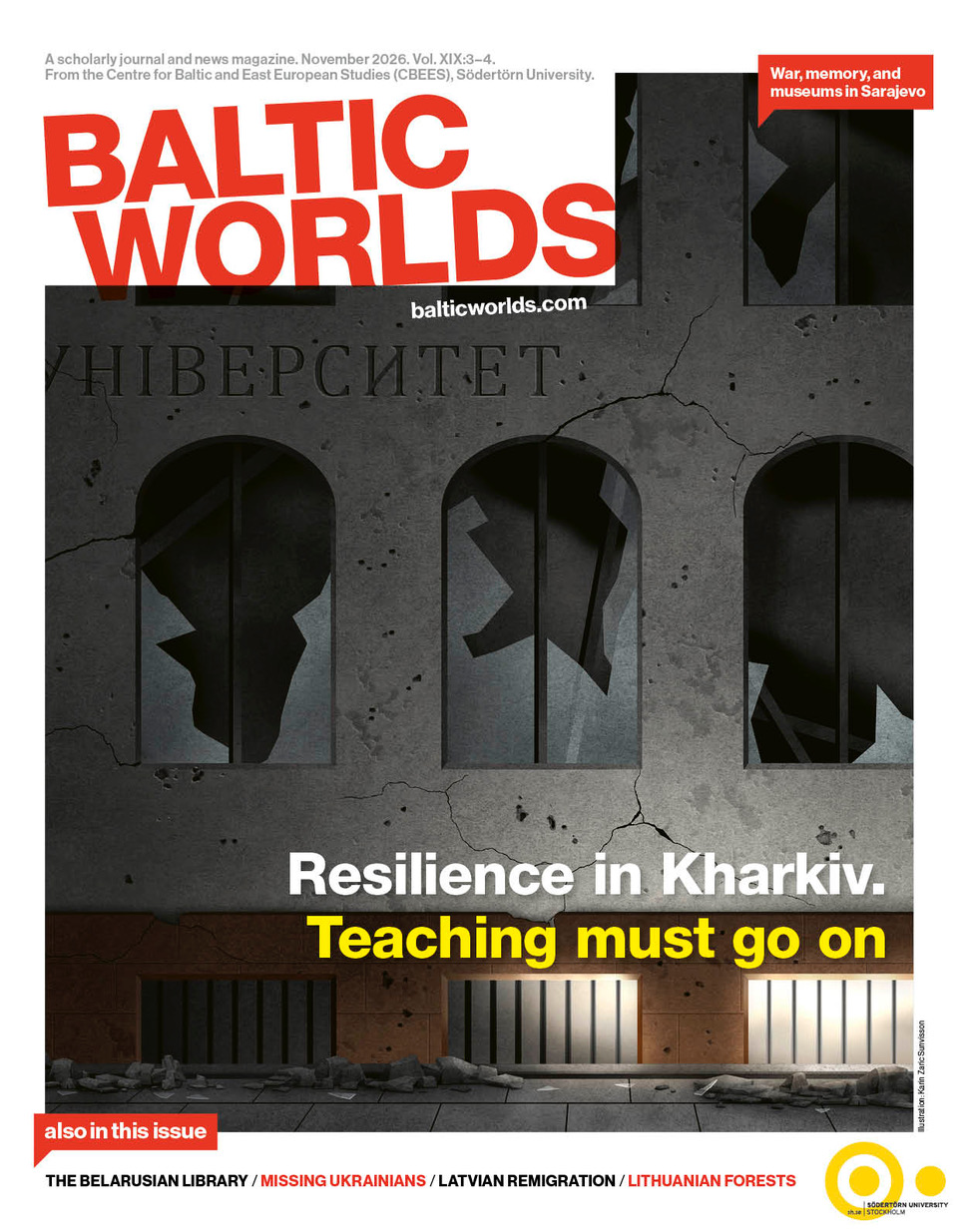 Issue 2026, 3-4: