Valter Bolevics, Jan Sjölin and Tatjana Volkova
Valters Bolevis is PhD Oec. Can. in business administration, Riga International School of Economics and Business Administration. Project manager. MS with distinction cum laude in the field of transport and maritime management from Institute of Transport and Maritime Management (ITMMA), Belgium, 2007.
Jan Sjölin is associate professor at the Baltic International Academy (BIA in Riga) and emeritus at the Technical University of IASI (CETEX). Served within the inner circle of CEEMAN (the Central and Eastern European Management Development Association) dealing with transition and evaluation of academic institutions.
Tatjana Volkova is professor in strategic management and innovation management and former rector of BA School of Business and Finance, Latvia. Her special research interests are design-driven innovations and creative industries. She is among other things a former President of Rector’s Conference of Latvia (2004—2011) and a former member of the European University Association Council.
view all contributors
Articles by Valter Bolevics, Jan Sjölin and Tatjana Volkova
-
Andrei Zubov, (ed. and author), Istoriia Rossii, XX vek. 1894–1939, Istoriia Rossii, XX vek. 1939–2007, [The history of Russia:
The 20th century. 1894– 1939; The history of Russia: The 20th century. 1939–2007] Moscow: Astrel 2009, 1,023+829 pages
-
Bernd Henningsen, Dänemark C H Beck. 2009, 229 pages (From the series: Die Deutschen und ihre Nachbarn)
-
Einar Maseng, Utsikt over de nord-europeiske staters utenrikespolitikk i de siste århundrer
[An overview of the Northern European States’ foreign policy during the last centuries]. I–III
Oslo: Universitets-forlaget 2005: 323, 291, 353 pages
-
The Fourth Stakeholders’ meeting gathered more than 400 delegates from government, industry, and labor, as well as consumer, environmental, health, and animal welfare groups and non-governmental organizations. The hottest discussion focused on the issue of information sharing.
-
Working-class neighborhoods in post-communist countries have often been depicted as unable to adapt to the new economic situation. Stefan Bouzarovski has studied urban development and reached the conclusion that residents in working-class areas may, in fact, display considerable resilience and adaptability to the new housing market. One coping mechanism has been to enlarge apartments by building so-called vertical building extensions.
-
+ Oddmund Løkensgard Hoel, Målreising og modernisering i Noreg 1885–1940, [The New Language Movement and Modernization in Norway 1885–1940], Trondheim: Noreg’s University of Science and Technology, NTNU, 2009, 589 pages
-
+ Michail Kasianov, Bez Putina: Politicheskiye dialogi s Yevgenyem Kiselyovym, [Without Putin: Political Dialogues with Yevgeny Kiselyov] Moscow: Novaya gazeta 2009, 320 pages
-
+ Estonian Life Stories, Edited and translated by Tiina Kirss, Compiled by Rutt Hinrikus Budapest: Central European University Press 2009, 539 pages
-
+ Julia Obertreis & Anke Stephen (eds.) Erinnerungen nach der Wende: Oral History und (post)sozialistische Gesellschaften, Essen: Klartext Verlag 2009, 401 pages.
-
In this interview professor Birgitta Almgren discusses her study on Nazi-German infiltration in Sweden and the offshoots, in Cold War Sweden, of the GDR’s policies. She is now requesting that the Swedish law courts make it possible for her to continue her research by granting her access to the so-called Rosenholz files.
In a comment professor Åmark argues for a release of the Stasi-material.
-

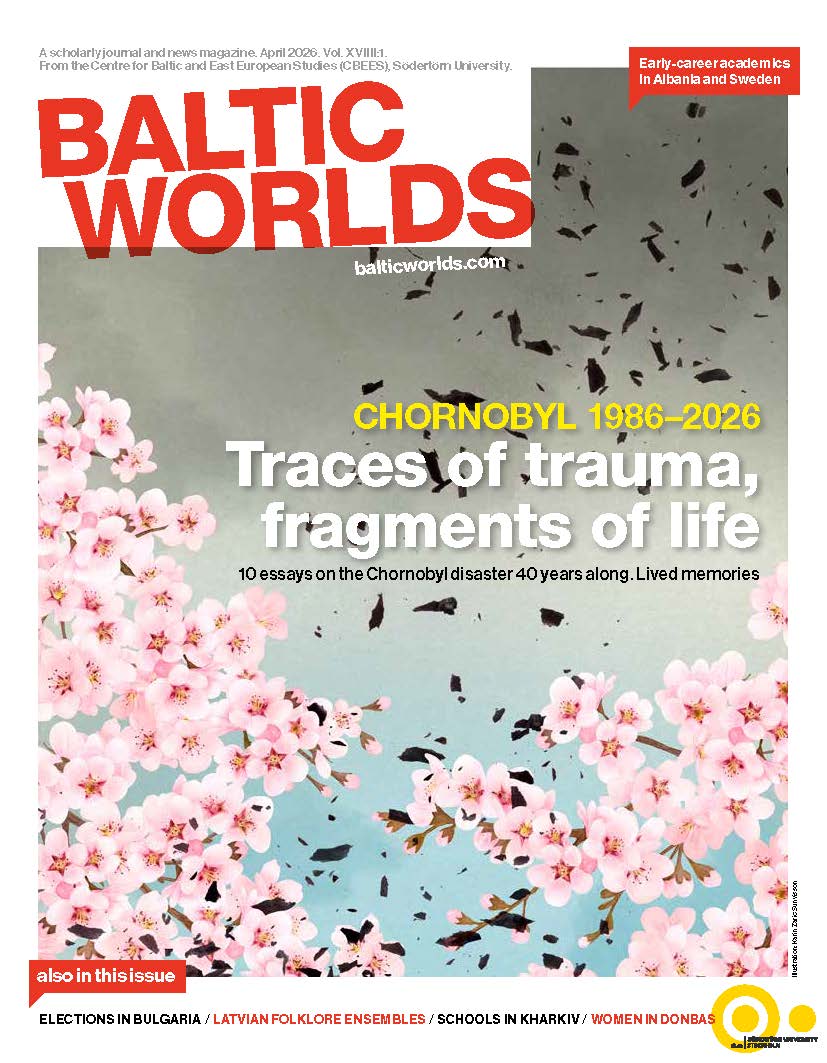 Issue 2026, 1: