
Download back issue of Baltic Worlds
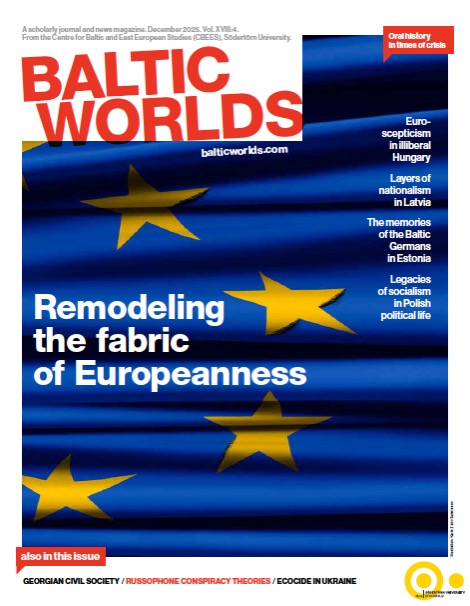 Issue 2025, 4: Download.
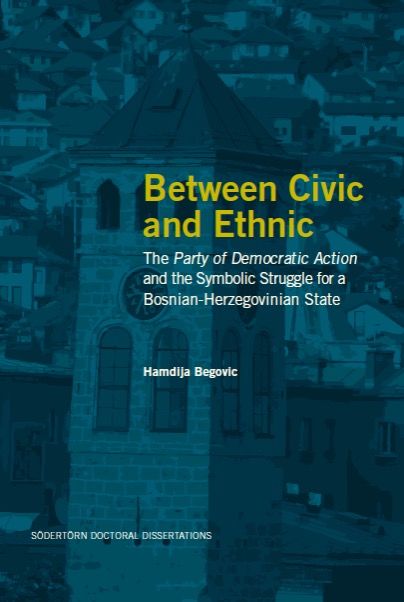
Okategoriserade Hamdija Begovic (145) Between Civic and Ethnic: The Party of Democratic Action and the Symbolic Struggle for a Bosnian-Herzegovinian State
Abstract [en] This thesis examines the persistent political fragmentation of post-war Bosnia and Herzegovina, focusing on the role of the […]
Published on balticworlds.com on December 16, 2025


Abstract [en]
This thesis examines the persistent political fragmentation of post-war Bosnia and Herzegovina, focusing on the role of the Party of Democratic Action (SDA) and the strategies of Bosniac political actors from the 1995 Dayton Agreement to the 2022 elections. Situated within the complex legacy of the Ottoman millet system and post-communist state-building, the study investigates how SDA activists conceptualise the relationship between Bosniac national identity and the Bosnian-Herzegovinian state amidst ethnic rivalries and external influences. Employing Pierre Bourdieu’s political field theory, adapted to account for the political idiosyncrasies of Bosnia and Herzegovina, the research addresses the central question: How have the political strategies and interactions of the Party of Democratic Action (SDA), as a key Bosniac political actor, with other influential political actors, shaped Bosnia and Herzegovina’s persistent status as a disintegrated post-war nation-state from 1995 to 2022? Through qualitative fieldwork, including interviews and participant observation with current and former SDA activists, the study reveals how Bosniacs navigate a contested political landscape marked by alliances with Western powers (as the meta-power) and tensions with Serb and Croat counterparts (as the meta-analysts). The findings highlight a patron–client dynamic with external actors, internal debates over civic versus ethnic nationalism and the enduring impact of historical communal structures on modern statehood. By offering new empirical insights into the SDA’s activist perspectives and a sociological framework for understanding fragmented states, this thesis contributes to the scholarship on post-Ottoman nation-building and political field theory, illuminating broader patterns of political disintegration in diverse societies.
Subject: Sociology
Public defence of thesis: 26 November 2025
https://www.diva-portal.org/smash/get/diva2:2008999/FULLTEXT02.pdf
-
by Florence Fröhlig

An Associate Professor in Ethnology at the School of Contemporary and Historical Studies and Director of studies of the Baltic and East European Graduate School (BEEGS) at Södertörn University, Sweden. Besides her research interests concerning memory and mourning processes, counter-memories, resilience and the transmission of memory (PhD "Painful legacy of World War II: Nazi forced enlistment: Alsatian/Mosellan Prisoners of War and the Soviet Prison Camp of Tambov” 2013), she is interested in the memorialization’s and heritagization’s processes of industrial sites. Her research has also expanded to ecological issues in the Baltic and Eastern European regions. Currently, she is involved in a research project on Russian and Belarusian migrants and their identity construction in Lithuania and Poland following Russia’s invasion of Ukraine.
- all contributors