
Download back issue of Baltic Worlds
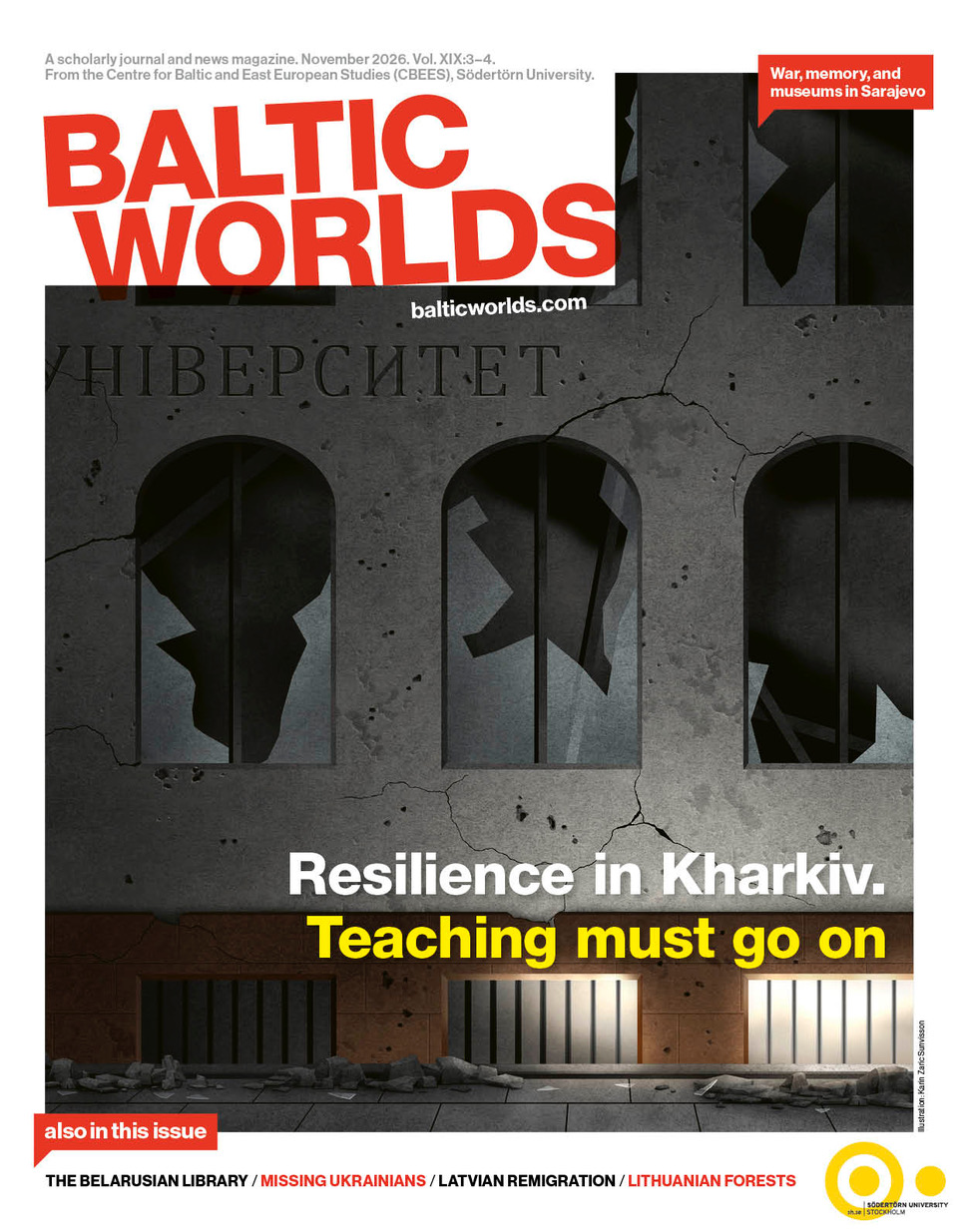 Issue 2026, 3-4: Download.
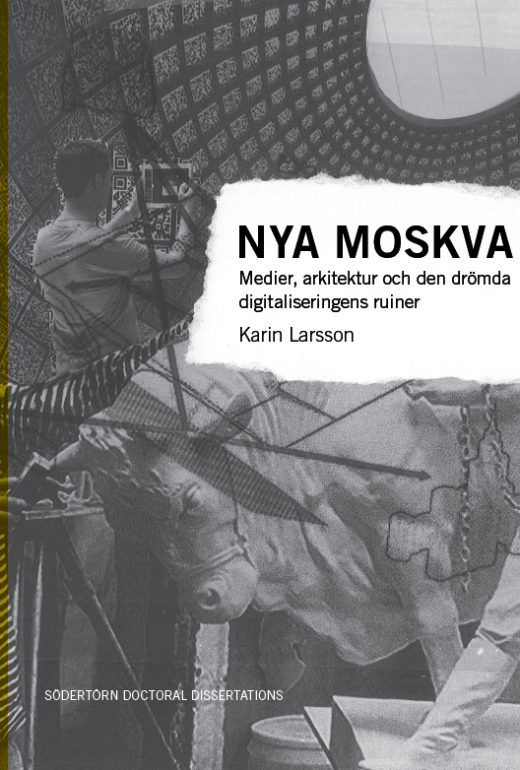
Okategoriserade KARIN LARSSON
This dissertation examines the architectural renewal of Moscow during the 2010s as the dream of the world’s political, economic, technological, and aesthetic progress after the end of the Cold War. The study places particular emphasis on the role that digitalization and digital technologies have played in Moscow’s renewal, as well as on the actors within the sphere of global architecture who have contributed to sustaining this dream by participating in the creation of what was envisioned as a more beautiful, smarter, and more comfortable Moscow.
Published on balticworlds.com on October 20, 2026


Medier, arkitektur och den drömda digitaliseringens ruiner [Media, Architecture and the Ruins of a Digital Dreamworld]
Södertörn University, School of Culture and Education, Media and Communication Studies. Södertörn University, Centre for Baltic and East European Studies (CBEES), Baltic & East European Graduate School (BEEGS).
Huddinge: Södertörns högskola, 2026. , p. 198, Södertörn Doctoral Dissertations, ISSN 1652-7399 ; 257
Abstract [en]
This dissertation examines the architectural renewal of Moscow during the 2010s as the dream of the world’s political, economic, technological, and aesthetic progress after the end of the Cold War. The study places particular emphasis on the role that digitalization and digital technologies have played in Moscow’s renewal, as well as on the actors within the sphere of global architecture who have contributed to sustaining this dream by participating in the creation of what was envisioned as a more beautiful, smarter, and more comfortable Moscow.
The investigation is based on the assumption that architecture has a close relationship with visual media, and that architecture itself can be regarded as a visual medium. This is a central precondition for studying the new Moscow in the manner undertaken by the dissertation: the analysis is grounded in a montage of mediated fragments from architectural exhibitions at the Venice Architecture Biennale and international architectural competitions in Moscow, as well as interviews, videos, articles, and visual renderings produced primarily for a Western, English-speaking audience. Theoretically and methodologically, the material is approached as a dialectical image, inspired by Walter Benjamin’s The Arcades Project and Susan Buck-Morss’s further development of Benjamin’s philosophy of history, in which dream and awakening are central concepts.
Through the analysis of the new Moscow emerges the dream of a world of code, the dream of programmable cities, the dream of a globalized, borderless world embodied in magnificent, iconic, and widely mediated architecture, and the dream of a comfortable urban life. At the same time, the analysis shows how political developments in Russia during the 2010s – moving in an increasingly authoritarian, nationalist, and militarized direction – did not appear to provoke an awakening from the dreams of the new Moscow before Russia’s full-scale invasion of Ukraine became a reality. In the aftermath of the invasion in February 2022, the dream of the new Moscow instead appears as ruins. The dissertation’s historicizing perspective on Moscow’s renewal constitutes a critique of the faith in history’s natural development and progress that made the new Moscow possible, while also questioning whether the ruins of the new Moscow are to be thought of as an awakening from the dream of progress as such.
Keywords: Architecture and media, digitalization, nation branding, Moscow, the smart city, dreamworld.
Public defence
2026-05-29, MA636, Alfred Nobels allé 7, Huddinge, 13:00 (Swedish)
Opponent Jansson, André, Professor vid Centrum för geomediastudier
Supervisors Lundgren, Lars, Professor Åker, Patrik
Funder The Foundation for Baltic and East European Studies
Fulltext: https://www.diva-portal.org/smash/get/diva2:2055912/FULLTEXT01.pdf
-
by Ninna Mörner

Editor-in chief, Baltic Worlds.
- all contributors