
Download back issue of Baltic Worlds
 Issue 2026, 1: Download.
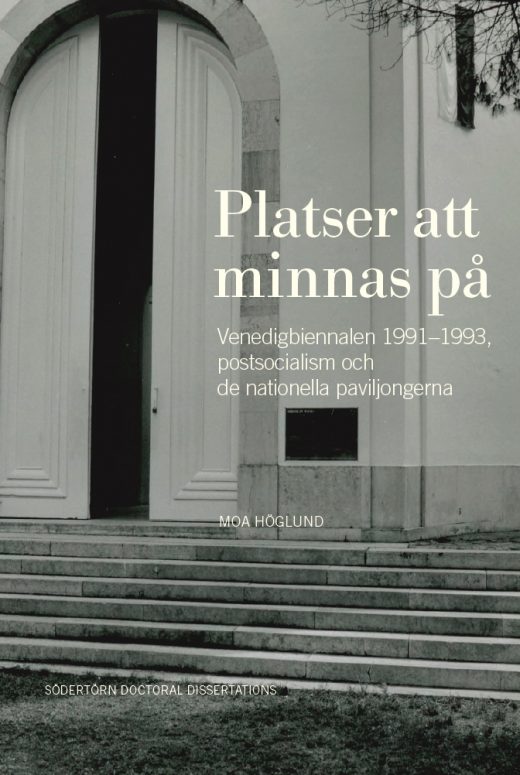
Okategoriserade Moa Höglund (150) Platser att minnas på. Venedigbiennalen 1991-1993, postsocialism och de nationella paviljongerna [Places of Remembrance. The Venice Biennale 1991–1993, post-socialism and the national pavilions]
Places of Remembrance examines the cultural functions served by the Hungarian (1909–), Polish (1932–), and Czech-Slovak (1926–) pavilions in the Venice […]
Published on balticworlds.com on April 14, 2026


Places of Remembrance examines the cultural functions served by the Hungarian (1909–), Polish (1932–), and Czech-Slovak (1926–) pavilions in the Venice Biennale’s Giardini during the early 1990s. Concentrated on the years 1991 and 1993, the study closely investigates biennials in which the “biennial boom”, globalisation, and the fall of European state socialism (1989–1991) intersected. By focusing on ostensibly national exhibition histories, the dissertation offers a deeper understanding of the political processes that shaped exhibition practices in the Giardini at a moment when the Biennale’s leaders sought to adapt it to an art scene amid globalisation. Against the backdrop of post-socialist renegotiations and the 1993 artistic director’s vision of transnational pavilions, it argues that the pavilions under study gained increased relevance at a time when national pavilions were identified as problematic.
Through close interpretations, the study shows how seven exhibitions used the pavilions to activate specific events or periods in the nations’ pasts. It also demonstrates how these materialised pasts were employed to support political visions of democracy and European integration, to repress or process state socialism, and to foster unity within national and regional projects. Drawing on these functions, the dissertation argues that the pavilions were useful during the nations’ transitions from dictatorship to democracy. As realms of memory, they offered spaces in which the post-socialist political visions of the 1990s could be shaped in dialogue with the past. By demonstrating the pavilions’ relevance for nations undergoing post-socialist renegotiation, the dissertation further suggests that the Biennale’s contemporary identity was shaped not only by globalisation, often foregrounded in biennial studies, but also by the renewal processes taking place in post-socialist Europe. From these dynamics emerges a more nuanced portrait of what the Venice Biennale of the early 1990s was—namely, a place where far-reaching renewal unfolded alongside equally strong cultures of memory.
Subject: History of Art
Public defence of thesis: 13 Mars 2026
-
by Florence Fröhlig

An Associate Professor in Ethnology at the School of Contemporary and Historical Studies and Director of studies of the Baltic and East European Graduate School (BEEGS) at Södertörn University, Sweden. Besides her research interests concerning memory and mourning processes, counter-memories, resilience and the transmission of memory (PhD "Painful legacy of World War II: Nazi forced enlistment: Alsatian/Mosellan Prisoners of War and the Soviet Prison Camp of Tambov” 2013), she is interested in the memorialization’s and heritagization’s processes of industrial sites. Her research has also expanded to ecological issues in the Baltic and Eastern European regions. Currently, she is involved in a research project on Russian and Belarusian migrants and their identity construction in Lithuania and Poland following Russia’s invasion of Ukraine.
- all contributors