
Download back issue of Baltic Worlds
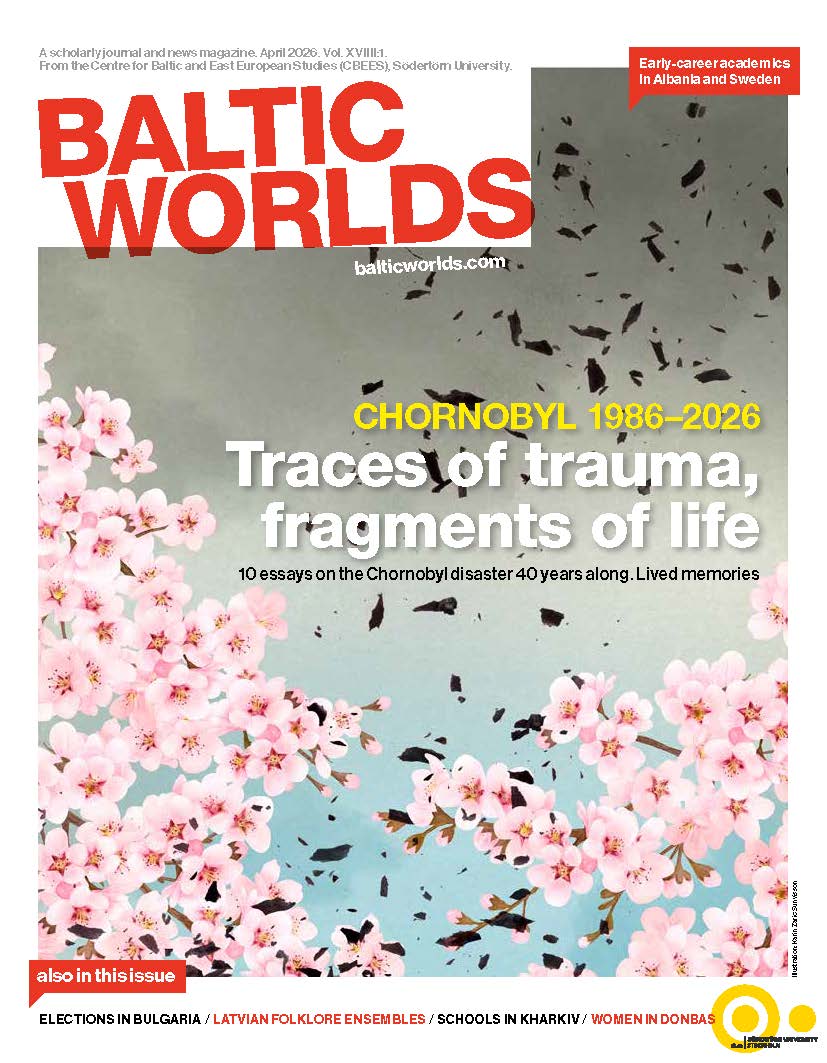 Issue 2026, 1: Download.
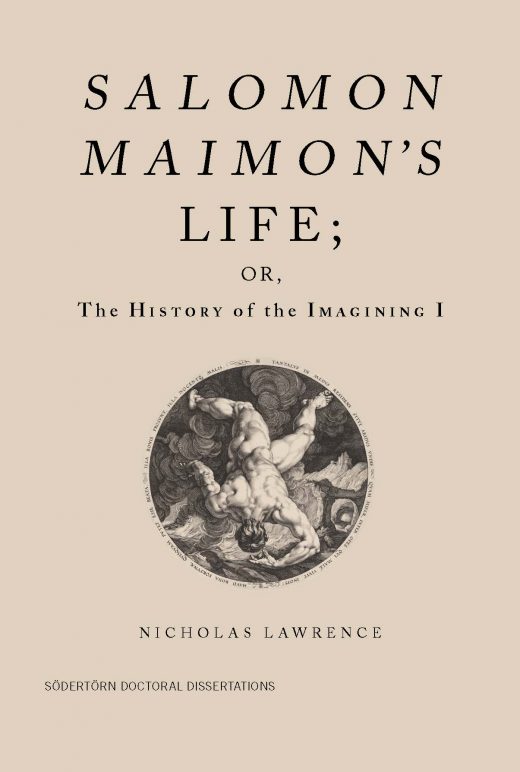
Okategoriserade Nicholas Lawrence (149) Salomon Mainmon’s Life; or, the History of the Imagining I
Abstract [en] This thesis breaks with tradition by reading Salomon Maimon’s Lebensgeschichte as a work of philosophy. Rather than the mere re-telling […]
Published on balticworlds.com on April 14, 2026


Abstract [en]
This thesis breaks with tradition by reading Salomon Maimon’s Lebensgeschichte as a work of philosophy. Rather than the mere re-telling of a story, Maimon’s pragmatic treatment of his own life history is interpreted as a philosophical act grounded in his own system of thought. The many – seemingly digressive and regressive – stages of Maimon’s life are revealed by the writing of their history as having been transformations in the development of an idea coming to expression in various degrees of perfection. In and through writing the history of a life, which stretches from fanaticism to philosophy, Maimon recognises himself as an instance of a supra-individual imagining I that is productive, pragmatic and free. The notion of a universal I of this kind, or a world soul considered as the efficient cause of nature, is something that, in his psychological writings, Maimon argues can be fruitfully presupposed as ground in the explanation of the deeds and actions of all human beings. As such, Maimon establishes his life as having had led to him inventing the very idea which grounds, and thus determines, the course of that same life leading up to its invention. The thesis supports this reading by offering an interpretation of the ten chapters of Lebensgeschichte devoted to the writings of Maimonides – subsequently showing how the idea of a universal imagining I can be developed out of the work of Maimon’s greatest teacher. It demonstrates, as well, how the psychological fragments, which had previously been written in the third-person singular in the experiential psychological journal of which Maimon was co-editor, exhibit a process of perfection guided by the very same idea. In writing his history, Maimon is thus discerning the idea of a universal poetic faculty, and the ideal path towards perfection accompanying it, in and amongst the minutest of details of his life. This presupposes a capacity for spontaneously grasping the very idea that the systematic ordering of his history would show his life to have been the ongoing manifestation and realisation of. Because this is the kind of operation that Maimon claims is only possible for an imagination that is free, it would mean that Maimon’s life was the history of a poetic faculty culminating in the highest degree of perfection at the very moment of writing that same history. The new perspective which this reading offers shows Maimon to be a thinker of the imagination to a larger extent than has previously been appreciated. It also demonstrates that he was tackling problems concerning the historical development of ideas and knowledge in ways traditionally associated with subsequent thinkers.
Subject: Philosophy
Public defence of thesis: 27 February 2026
https://sh.diva-portal.org/smash/record.jsf?pid=diva2%3A2030784&dswid=-1023
-
by Florence Fröhlig

An Associate Professor in Ethnology at the School of Contemporary and Historical Studies and Director of studies of the Baltic and East European Graduate School (BEEGS) at Södertörn University, Sweden. Besides her research interests concerning memory and mourning processes, counter-memories, resilience and the transmission of memory (PhD "Painful legacy of World War II: Nazi forced enlistment: Alsatian/Mosellan Prisoners of War and the Soviet Prison Camp of Tambov” 2013), she is interested in the memorialization’s and heritagization’s processes of industrial sites. Her research has also expanded to ecological issues in the Baltic and Eastern European regions. Currently, she is involved in a research project on Russian and Belarusian migrants and their identity construction in Lithuania and Poland following Russia’s invasion of Ukraine.
- all contributors