Baltic Worlds will be commenting on the parliamentary and presidential elections taking place in countries around the Baltic Sea region and in Eastern Europe. The comments and analyses, written by researchers and in a few cases by expert journalists, present the parties, the candidates and the main issues of the election, as well as analyze the implications of the results.
First out: a report from the election in Poland this summer.
By
Ninna Mörner
September 10, 2010
ICCEES’ (International Council for Central and Eastern European Studies) Eight World Congress “Eurasia: Prospects for Wider Communication” took place in Stockholm, Sweden in July 2010. Host was the Swedish Society for the Study of Russia, Central and Eastern Europe and Central Asia (Sällskapet ). Here you may read Mikhail Gorbachev´s speech, presented at the Opening Ceremony by Pavel Palazhchenko, advisor and interpreter to Mikhail Gorbachev. Also available is an essay based on Professor Archie Browns key note lecture “Gorbachev and Perestroika: a 25th Anniversary Perspective”. The Opening Ceremony and a discussion between Archie Brown, Jack Matlock, author and US ambassador in Moscow 1987‐1991 and Pavel Palazhchenko is published as video films here.
By
Ninna Mörner
August 25, 2010
During the Cold War each side produced propaganda which highlighted the differences between the two systems and peoples, “the others”.
There were, however, also conceptions of “the other” derived from sporadic but real meetings, meetings which awoke curiosity and a willingness to establish closer relations.
The Aleksanteri Institute’s ninth annual conference, “Cold War: Interactions Reconsidered”, held in Helsinki fall 2009, examined these more low-key contacts and varying interpersonal relations and attitudes.
By
Ninna Mörner
February 24, 2010
One result of efforts to halt trafficking is that the situation of those at risk becomes more difficult. So say NGOs and researchers. When women are sent home, they end up in a more vulnerable position – often they go back to trafficking.
By
Ninna Mörner
February 19, 2010
Thomas Acton describes how Romanies are always outsiders. He contends that it is impossible to be engaged in Romani Studies without also becoming part of the Romanies’ struggle.
By
Ninna Mörner
February 19, 2010
Joanna Mizelienska, lecturer in gender and queer studies, argues that it is difficult to apply queer theory in Poland. Can one speak of constructed sexual identities where gay rights are disregarded or violated?
By
Ninna Mörner
February 19, 2010

 Issue 2026, 1:
 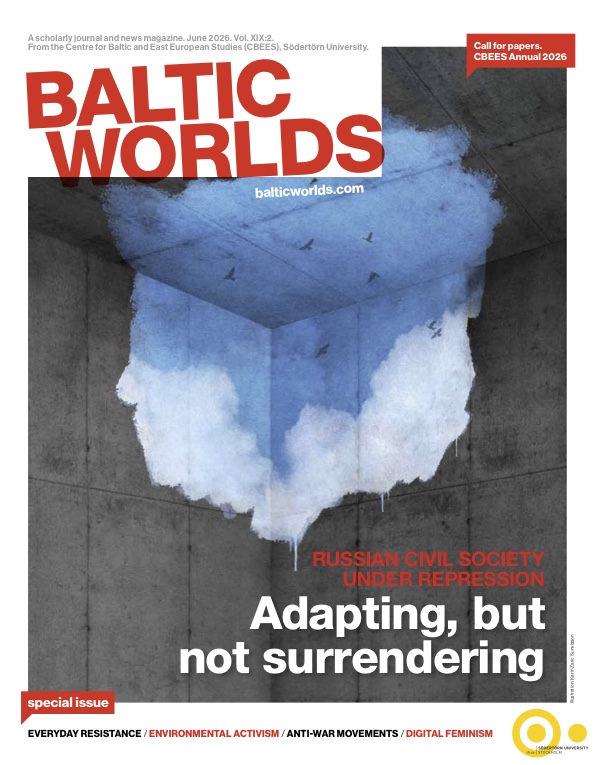 Issue 2026, 2:
  Baltic Worlds covers; the Baltic Sea Region, Eastern Europe, Russia, CentralAsia, Caucasus and the Balkan area.