Lia Dostlieva and Andrii Dostliev
Lia Dostlieva is an Ukrainian artist, essayist, cultural anthropologist and researcher at Adam Mickiewicz University in Poznań, Poland. Focusing on trauma, postmemory, commemorative practices, and agency and visibility of vulnerable groups and how to process “difficult knowledge” and “difficult past”.
Andrii Dostliev is an independent Ukrainian artist, curator, and photography researcher currently based in Poland. His primary areas of interest are memory, trauma, identity – both personal and collective, and various aspects of queerness. Works in various media.
view all contributors
Articles by Lia Dostlieva and Andrii Dostliev
-
The article discusses the writing of architectural history in Soviet Estonia in the late socialist period as a particular form of historiographic practice in which the contact between “history” and “reality” is pursued through avant-gardist practices of merging art and life. The case is built on the “historical depictions” or the short texts on the history of Estonian modern architecture written by Leonhard Lapin.
-
Following the 1934 establishment of socialist realism as the main “method” to be applied in all spheres of Soviet artistic production, more particular discourses evolved addressing the issue of how the concept was to be interpreted and defined in the various fields of culture. Literary translation was no exception. This paper explores the significance of the discourse on socialist realism for Soviet translation practices and translation theory during late Stalinism.
-
Arkadii Gaidar (1904–1941) is one of the most popular Soviet children’s writers and an undisputed part of the Soviet literary canon. The Pioneer organization used him as a symbol to mold young Soviet citizens, the characters from his books entered Soviet folklore, and generations of Soviet children have been brought up on his books. Nonetheless, his path from military commander to a classic of Soviet literature was far from ordinary. This paper reviews Gaidar’s work, focusing especially on the analysis of his short story The Blue Cup as the most representative of his oeuvre and of the political and literary context of the 1930s.
-
The aim of this article is to show to what extent Nabokov’s relations to the two phenomena Soviet art and cinematic art were interrelated and subtly intertwined. Focusing on a cinematic scene in Nabokov’s first novel, Mary (1926), the analysis traces how the themes of cinematic deception techniques and mimetic violence are developed by Nabokov. It is shown how cinematic effects in Nabokov addresses the violence inherent in socialist realist aesthetics: political censorship and manipulation on the one hand, and the programmatic extinction of artists labeled as “bourgeois” on the other.
-
Adorno’s understanding of realism in the present is often taken to have been simply negative. In the posthumously published Aesthetic Theory, too, the negative view is predominant; there are, however, traces of another conception of realism. Adorno proposes, although with some caveats, that what he calls an adequate conception of realism is not only possible, but also something that art in the present cannot and must not avoid.
-
Although agencies involved in drug control and regulation are important for the reproduction of differentiated practices of drug use, they formulate a rather homogeneous image of a drug user as an unhealthy deviant and criminal, and an unequivocal threat to society. In the process of policy realization, the most vulnerable groups of users become the main target of public intervention. As a result, stigmatization and violence against these groups becomes institutionalized and legitimized.
-
In the fall, 2016, Färgfabriken organized the symposium “In Search for the Baltic Dimensions”, where researchers, artists, media practitioners, designers, urban planners, and art students outlined some of the burning social and cultural issues related to the Baltic Sea region.
-
In this interview, Laura Sintija Černiauskaitė shares her experience of becoming a writer in the post-Soviet conditions of 1990s Lithuania. Her development as a writer coincided with a drastic change in what it meant to be a writer: from being a political spokesperson to being an economic entity.
-
Although the elections were on the large respecting international standards and fundamental freedoms, the process has showed that Montenegro’s democracy is fragile and deeply divided along two lines, where NATO membership and ultimate geopolitical allegiance is strongly contested. The Montenegrin democracy may face important challenges from within, and is seemingly standing with few defenders among the established political actors.
-
The December 11th 2016 Romanian Parliamentary elections witnessed a dramatic redrawing of the Romanian political map, and confirmed the inability of the radical right populist parties to be serious contenders in parliamentary politics for the coming mandate. The elections also marked the return to a system of proportional electoral representation on party lists.
-

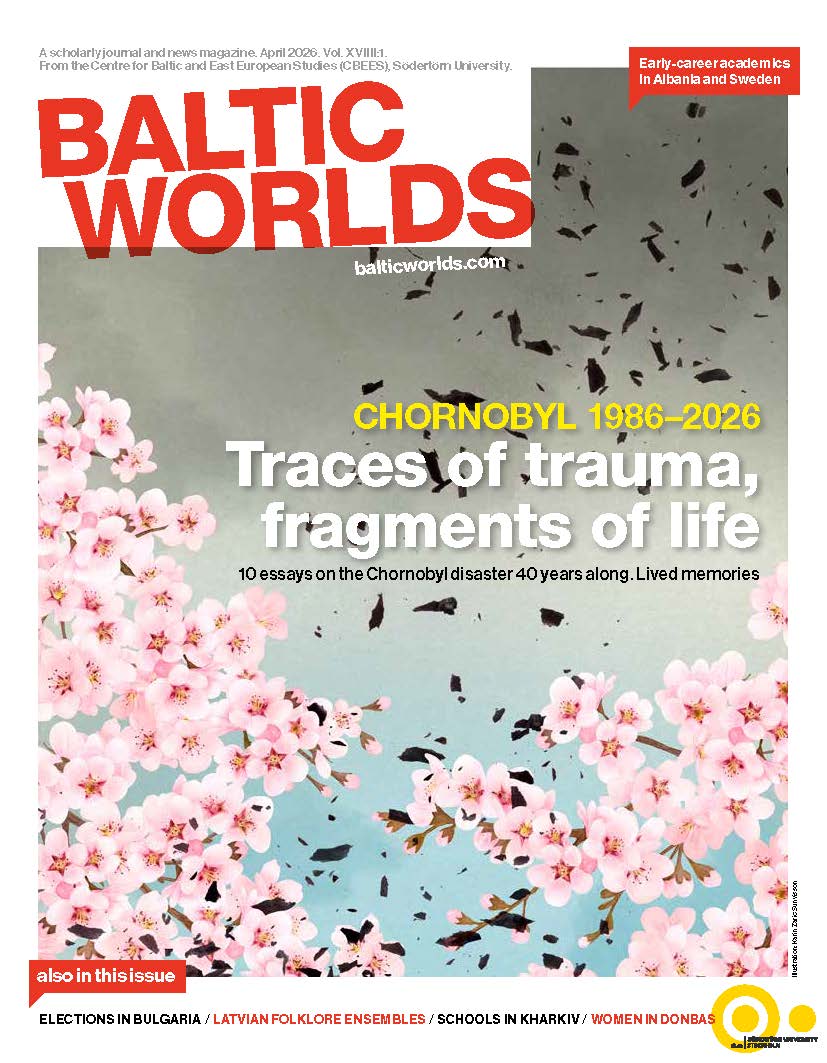 Issue 2026, 1: