contributors

Yulia Gradskova, Nadezda Petrusenko & Irina Sandomirskaja

These three authors held a seminar on Pussy Riot in November 2012. Afterwards they jointly wrote down their contributions and thoughts – and also commented each other texts.

view all contributors

Articles by Yulia Gradskova, Nadezda Petrusenko & Irina Sandomirskaja

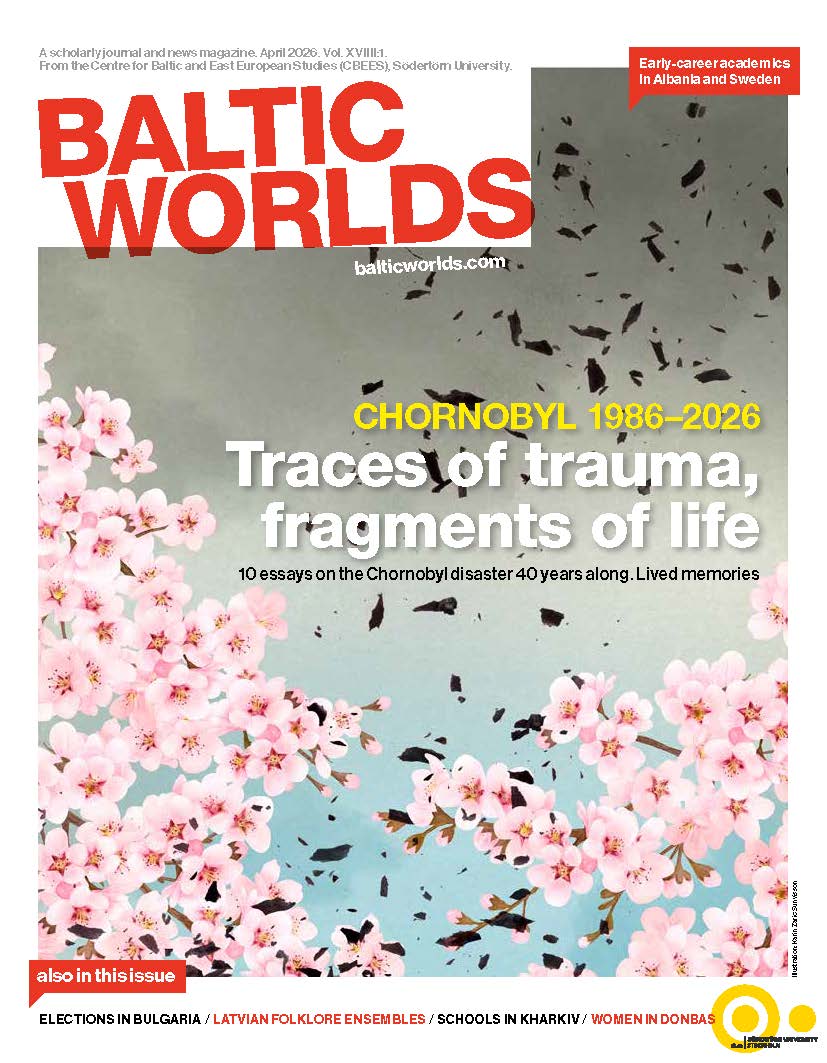
  1. Writing the disaster from Hiroshima to Chornobyl ATOMIC AND NUCLEAR TESTIMONIES AND THE AFTERLIFE OF DISASTERS

    This essay examines the memorialization of two pivotal nuclear catastrophes – the atomic bombing of Hiroshima in 1945 and the Chornobyl nuclear disaster in 1986 – through the lens of testimonial writings and Maurice Blanchot’s concept of “the disaster.” Drawing on Japanese hibakusha testimonies and Chornobyl survivors’ accounts, the essay contrasts political memory, which seeks closure and national integration, with cultural memory, which preserves trauma, ambiguity, and unresolved loss. Testimonial writings, rather than commemorating a concluded past, emerge from within the disaster itself, articulating a reality that defies assimilation into redemptive historical narratives.

  2. Peaceful atom, haunted legacy. ECHOES OF WAR(S) IN CHORNOBYL DOCUMENTARIES

    From a cinematic perspective, the Chornobyl accident became one of the most generative episodes in Ukrainian film history. The explosion of Reactor No. 4 triggered an unprecedented surge in film production: between 1986 and 1998, around forty documentaries were produced, alongside only one feature film. This essay examines one of the earliest attempts to represent the disaster, Volodymyr Shevchenko’s Chornobyl. Chronicle of the Hard Weeks (1987), now regarded as a key Chornobyl film. Focusing on its pervasive militarized rhetoric, the essay investigates how wartime language and memory structure the film’s interpretation of what was fundamentally a civilian, technological catastrophe.

  3. Chornobyl Children A generation between two realities

    After the collapse of the USSR, rural Belarus faced severe economic and social crises and psychological issues. International humanitarian Chornobyl Children respite programs enabled hundreds of thousands of children to spend time abroad in Europe and North America. Although designed to improve health after the 1986 disaster, these initiatives gave encounters with other ways of living and thinking. Personal testimonies and long-term observations suggest that the experience significantly influenced the youth’s aspirations, self-perception, and life trajectories. These projects became a transformative encounter with a bigger world.

  4. The Chernobyl Children. A generation growing up with radiological contaminations

    Chernobyl Children: A Transnational History of a Nuclear Disaster Melanie Arndt, transl. Alastair Matthews (Cambridge University Press, 2025), 368 pages.

  5. Latvian folklore ensembles and their initiatives against Russia’s war in Ukraine

    This article delves into the folk music community of Latvia and its reaction to Russia’s full-scale invasion of Ukraine in 2022. Rooted in the 20th-century folklore revival movement, during which Latvians revitalized their cultural heritage as a form of opposition to Soviet ideology, the community of Latvian folklore ensembles, musicians and enthusiasts has joined the broader civic initiative of giving aid to Ukraine and expressing solidarity with the Ukrainian people. Since February 2022, at least 80 initiatives linked to folklore (concerts, dance events, protests etc.) have been carried out that are directly connected to gathering support for or expressing solidarity with Ukraine. The analysis of these events reveals how the folklore community engages with political issues, using folklore as a medium to express its views in the contemporary political context.

  6. Resilience of school infrastructure Children’s right to education in wartime Ukraine

    This essay examines innovative educational adaptations implemented in Kharkiv to ensure children’s right to education, considered as a manifestation of resilience in wartime. The research methodology employed a descriptive case study approach utilizing multiple data sources to ensure triangulation, including official reports from educational authorities; press releases; Ukrainian and foreign mass media platforms; documented observations of facilities and stakeholder testimonials; and personal notes, videos, and photos. The results indicate the interventions successfully provided safe learning environments for approximately 15,000 schoolchildren (30% of school-aged learners) by December 2025 The experience in Kharkiv offers transferable insights for educational continuity planning in conflict zones worldwide.

  7. UKRAINE UPDATE; THE ATTITUDE CLIMATE IN 2026

    In 2018 and 2021, I wrote two articles for Baltic Worlds on Ukraine and the Ukrainian attitude climate in the context of the ongoing Russian attack on Ukraine, launched in 2014. The empirical data used in the articles was largely taken from the website of the Kyiv International Institute of Sociology (KIIS), whose press releases and reports are accessible in Ukrainian, Russian, and English. The KIIS surveys covered the territory governed by the Government of Ukraine before February 2022. One of the key purposes of the articles was to give the Ukrainian population a more international voice, taking into account the pro-Russian bias of the international research community as pointed out e.g. in the Kuzio-Sakwa debate.(See Taras Kuzio, Crisis in Russian studies? Nationalism (Imperialism), Racism and War (Bristol: E-International Relations Publishing, 2020); Richard Sakwa, Frontline Ukraine: Crisis in the Borderlands (London: B. Tauris, 2015). Now, it may be interesting to take a new look at the attitude climate in Ukraine and how it has changed; the war has continued since 2014 and escalated in 2022, and while the international community keeps speaking about peace and security guarantees, there is no real perspective of the war ending.

  8. Echoes of peace, lives of war WOMEN’S NARRATIVES OF BELONGING IN DONBAS

    Drawing on five narrative interviews with women from Ukraine’s Donbas, this article explores how belonging and national identification shift across three temporalities: everyday life before 2014, the outbreak of war in 2014, and the full-scale invasion in 2022. Using grounded theory coding, it traces how conflicting Ukrainian and Russian nation-making projects are experienced through domestic routines, media consumption, and encounters with state institutions. Before 2014, regional pride and Russophone familiarity distanced Ukrainian narratives, until war shattered this normality and forced difficult, morally charged choices. After 2022, respondents describe intensified fear, betrayal, and a reconfiguration of home and belonging, while distinguishing survival from political loyalty under occupation. The article argues that identity in Donbas is neither binary nor linear, but a gendered, emotional, and relational process shaped through everyday practices and retrospective moral evaluation. By centring women’s voices, the study complicates top-down accounts of nationhood and shows why reconciliation must address mistrust, recognition, and personal repair and dignity.

  9. WINTER OF DISCONTENT AND ELECTIONS Understanding Bulgaria’s 2025 protests and issues of Bulgarian politics

    Widespread anti-government and anti-austerity protests erupted in Bulgaria in December 2025, reflecting intense public opposition to the state’s fiscal policies, governance models, and lack of transparency in political and judicial processes, which eventually led to the resignation of the Zhelyazkov Government. The eighth round of parliamentary elections in just five years took place on April 19, 2026 and resulted in victory for Progressive Bulgaria, the new party of the former president Rumen Radev. The country faces ongoing political instability. The current essay sheds light on the central misrepresentations in the portrayal of the protests and underlying structural issues in Bulgarian politics based on the analysis of state documents, media coverage, corruption investigation cases, and digital observations.

  10. WORLDS APART, STRUGGLES ALIKE Early-career academics in Albania and Sweden

    Early-career academics (ECAs) generally experience insecure employment conditions, intense competition for research funding, and limited access to effective mentorship. Postdoctoral career pathways are marked by uncertainty and precarity, with short-term contracts and high expectations for research output, teaching, and administrative work. Drawing on interviews with ECAs in Sweden and Albania, this essay identifies a striking convergence in their experiences despite substantial differences in national academic systems. The findings suggest that these difficulties are not merely country-specific but reflect broader structural characteristics of contemporary European academia. The persistence of such conditions highlights a systemic disconnect between doctoral training and sustainable academic careers, pointing to the need for reforms that promote long-term career stability and healthier research environments. The essay also reveals differences between Albanian and Swedish ECAs’ career aspirations and experiences of gender equality.

Looking for someone? Enter a contributor's name and we will have a look!

Here you can read about the people who have been involved in Baltic Worlds. The texts and images have been provided by the individuals themselves.

If you have contributed to Baltic Worlds and would like to update your presentation, or if you want to send a message to one of our collaborators, send an email to bw.editor@sh.se.