Why is it so easy to remember war and so hard to remember peace? In order to bring forth memories of peace we need to reconceptualize what we mean by peace. I propose the term wild peace as a conceptual and potentially radical move that engage our imagination and capture the lived, embodied and agential dimensions of peace. Memories of wild peace are unruly as they hold the power to unsettle hegemonic narratives and point to alternative futures. I argue that unruly memories of wild peace are important at the present time, when the very idea of peace is contested and undermined.
By
Johanna Mannergren
March 7, 2026
The societies in Bosnia and Herzegovina (BiH) and Kosovo utilize dark (war) tourism to preserve and visualize memories of the 1990s conflicts and war crimes against civilians. Both countriesnhave developed numerous sites, mapped them, and integrated them into excursions and tourist programs. In BiH, dark tourism reflects collective trauma and a need to share experiences with others. Kosovan Albanians focus on reflecting upon the war and its consequences while constructing narratives about national history. A shared issue in both BiH and Kosovo is the dominance of a single perspective on the events of the 1990s, with Bosniaks and Kosovan Albanians promoting their versions of history while excluding the perspectives of other ethnic groups.
Essay by
Kateryna Shymkevych
April 16, 2025
Analyzing Competitive Victimhood: Narratives of Recognition and Non-recognition in the Pursuit of Reconciliation, Çağla Demirel, (Doctoral dissertation: Södertörn University, School of Social Sciences, 2023). 187 pages
By
Joakim Ekman
December 11, 2023
Nearly three decades after the end of the war in Bosnia and Herzegovina, thousands of people are missing and mass graves are regularly found. Relatives still search for knowledge about their loved ones in the midst of secrets, rumors and ethnonationalist denial. As the country struggles to come to terms with this dark legacy of the war, art has emerged as a space for recognition of the lingering presence of absence of the missing.
Essay by
Johanna Mannergren
December 11, 2023
Spomeniks are monuments commemorating the World War II dot the landscape: gigantic futuristic creations that in some cases have been spared destruction.
By
Sara Bergfors
January 16, 2012
Balkan experts attending the symposium “Memory and Manipulation: Religion as Politics in the Balkans", agree that the war was directed from the top, and that “top-down” is the key to understanding how the war began in the region.
By
Ninna Mörner
April 11, 2011

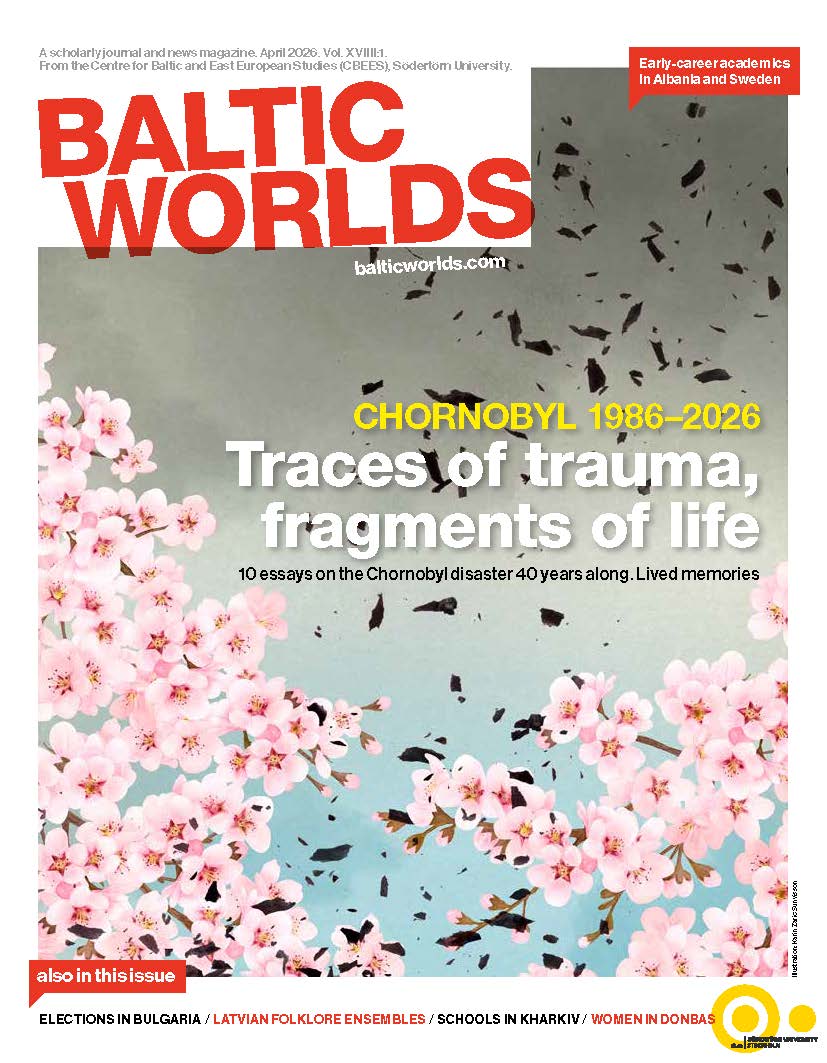 Issue 2026, 1:
 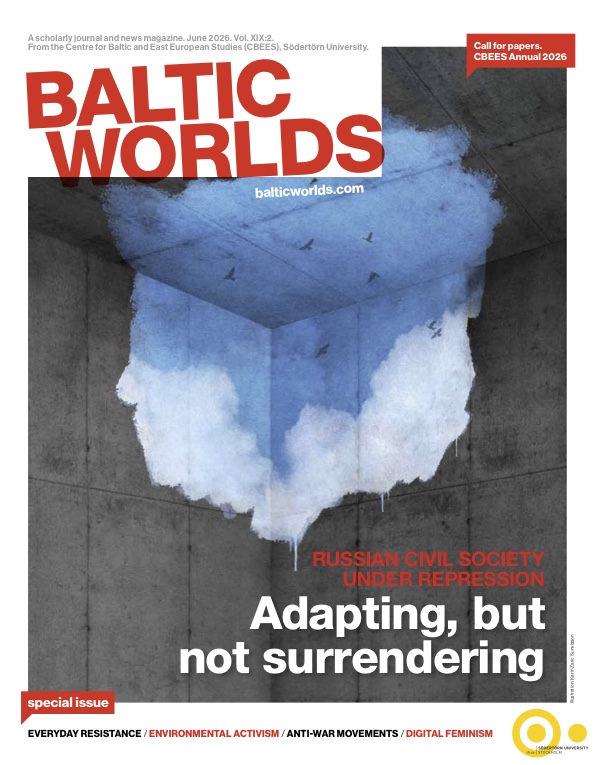 Issue 2026, 2:
  Baltic Worlds covers; the Baltic Sea Region, Eastern Europe, Russia, CentralAsia, Caucasus and the Balkan area.