The Russian energy strategy for the next few years includes lofty goals. While other countries are investing 1.5 percent of their GDP in the energy sector, Russia is spending 5 percent. This was noted at the Norwegian Institute of International Affairs (NUPI) Annual Conference on Russian and Eurasian Studies.
By
Ninna Mörner
January 10, 2011
Professor Shelley was the keynote speaker at the “Human Trafficking: The Nexus Between Research and Operative Work” conference in Uppsala, Sweden on November 25, 2010. She noted that human trafficking always grows where there are large social gaps and little opportunity for poor people to improve their situation. However the organization, manifestation and methods used in the combat are culturally distinctive.
By
Ninna Mörner
January 7, 2011
Last month Baltic Worlds' reporter visited two conferences being held in Poland with the aim of discussing the one and half year of EU’s Eastern Partnership Policy (EaP) and trying to generate new proposals for the future work of the EU towards Armenia, Georgia, Azerbaijan, Ukraine, Moldova, and Belarus. The main aim of the EaP is to promote democracy and economic integration with the Union of the six countries involved in the program, which is not an easy task.
By
Peter Johnsson
December 17, 2010
Illegal logging is the foremost threat to the survival of forests around the world. It also means that many countries lose vast amounts of tax revenue and custom duties. Russia and the Baltic countries account for the largest volume of illegal export to the EU countries.
By
Anders Hellner
July 1, 2010
The Fourth Stakeholders’ meeting gathered more than 400 delegates from government, industry, and labor, as well as consumer, environmental, health, and animal welfare groups and non-governmental organizations. The hottest discussion focused on the issue of information sharing.
By
Oksana Udovyk
June 21, 2010
One result of efforts to halt trafficking is that the situation of those at risk becomes more difficult. So say NGOs and researchers. When women are sent home, they end up in a more vulnerable position – often they go back to trafficking.
By
Ninna Mörner
February 19, 2010
World leaders discussed things behind the scenes. Thatcher but also Mitterrand were against German reunification. An analysis of documents shows how Kohl managed to get the EU’s acceptance.
Essay by
Karl Magnus Johansson
February 12, 2010

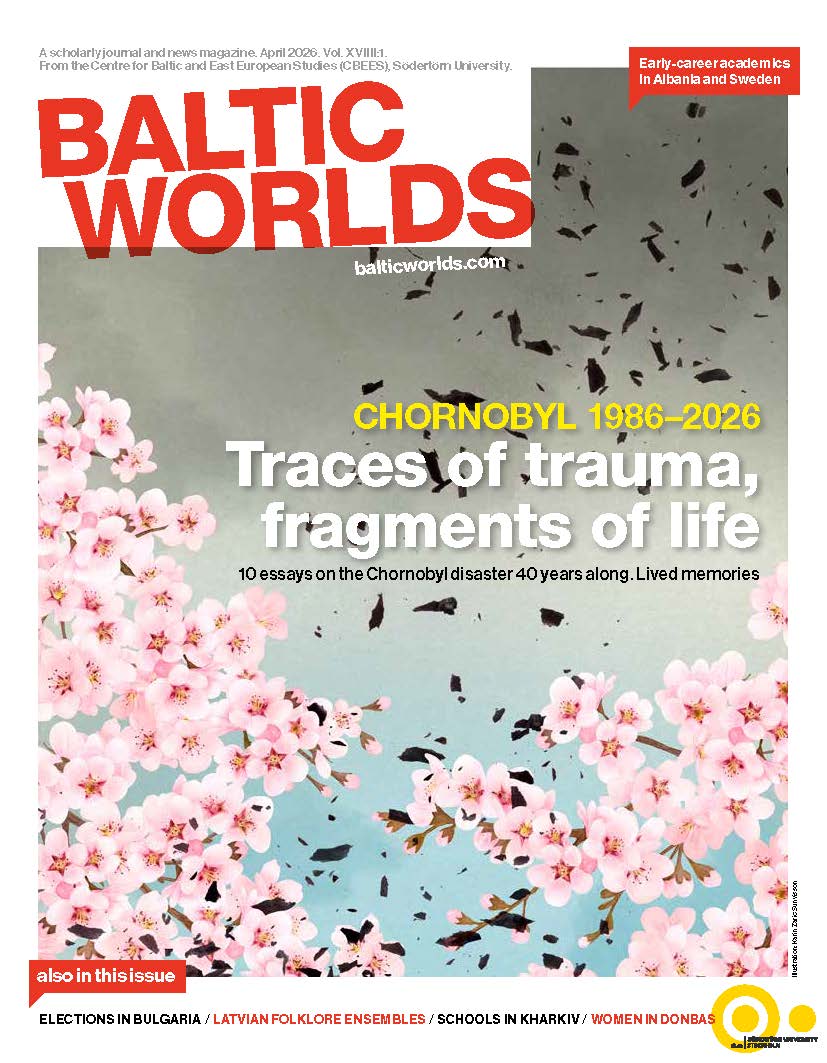 Issue 2026, 1:
 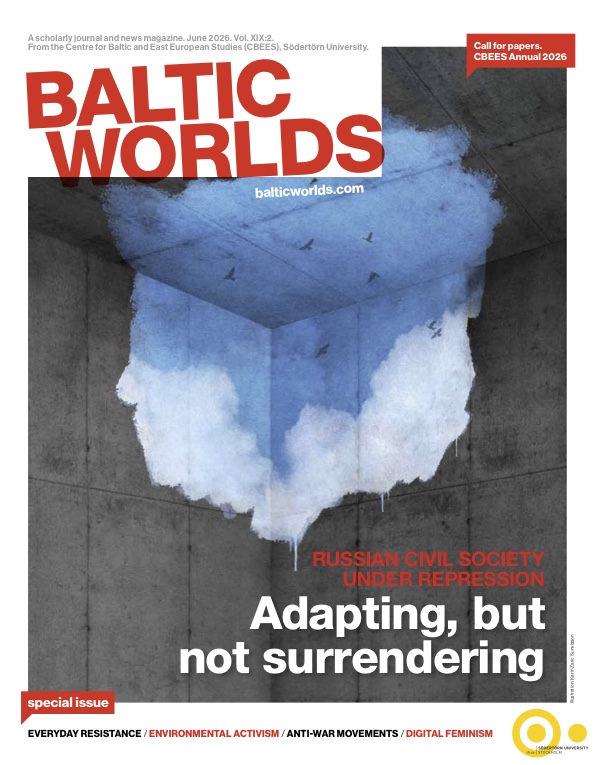 Issue 2026, 2:
  Baltic Worlds covers; the Baltic Sea Region, Eastern Europe, Russia, CentralAsia, Caucasus and the Balkan area.