For many of its practitioners, creating sound poetry means vigorously demonstrating the here and now of the poem, which has no counterpart in text; encouraging the people in the audience to place trust in their own listening rather than look to a text for answers; and by extension challenging the idea of an object which lends itself to ownership, or can be saved to experience later.
Essay by
Hannah Lutz
June 27, 2012
Brasch’s novella does two things: it presents lives smothered by incarceration, and it also places the reader on the other side of the barrier, as a witness to the road movie that crashes into the Wall.
Essay by
Jakob Norberg
June 27, 2012
The post-Soviet Estonian politics of memory have centered on the themes of national suffering and heroism, which function as a “dominant narrative and state-supported memory regime”. The fixation on victimhood has served as a screen memory18 for avoiding questions about the Holocaust in Estonian territory and the collaboration of Estonians in Soviet rule.
Essay by
Eneken Laanes
June 27, 2012
The Baltic Sea Library is a web-based literary project run by a group of editors from all the countries surrounding the Baltic Sea, plus Iceland. The website resembles an anthology and contains poetry, novel excerpts, and other genres in all the literatures of the region. The unifying aspect is something the editors call “Balticness”, and each text is accompanied by an explanation of its connection to the Baltic Sea.
By
Unn Gustafsson
June 27, 2012
Maria Janion is Poland’s undisputed intellectual authority – but she is relatively unknown abroad. Maria Janion is a professor emeritus of literature. Her studies of Romanticism led Janion to see the specificity in Poland’s cultural development. As a public intellectual, Janion has always intervened in the political discourse. In recent years, she has put her authority to use to support the feminist movement and the reawakened new Left.
Essay by
Teresa Kulawik & Renata Ingbrant
January 16, 2012
During two scorching hot days in the middle of June, a diverse assembly of scholars from Russia and beyond converged in Moscow in search of answers to two questions: What is Varlam Shalamov? And why do we need him?
By
Josefina Lundblad-Janjić
October 3, 2011
In literature, the opposition between Russian Christians and Muslims was established early on in the folk epics, in the “historical songs” told by the bards in the oral tradition. Several of them deal with the capturing of the khanate of Kazan, the northernmost Tatar realm. From the “Tatars” conquered by Ivan the Terrible in Kazan and depicted in Russian folk songs to Tolstoy’s thistle called “the Tatar” (tatarin) there is a winding line of literary works.
Essay by
Barbara Lönnqvist
August 1, 2011
The author suggests that Platonov’s Chevengur is an attempt to describe the relationships between utopia and ideology, as seen through the eyes of a participant observer.
Essay by
Natalia Poltavtseva
April 8, 2011

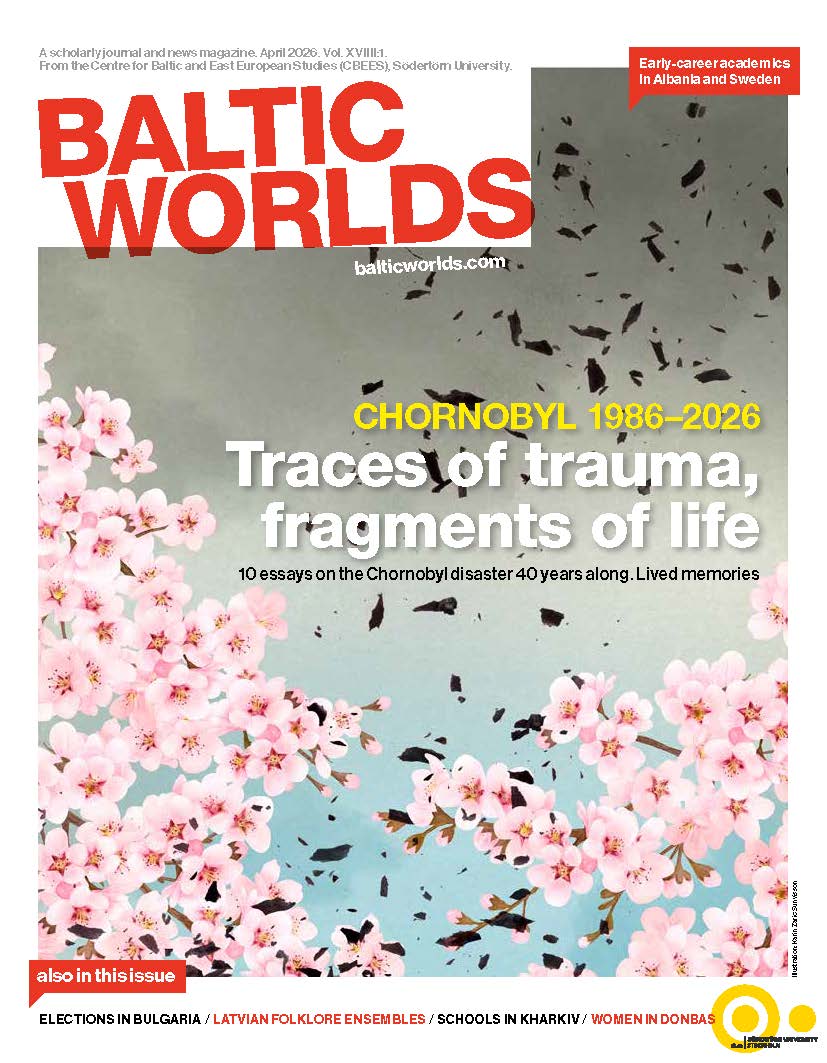 Issue 2026, 1:
 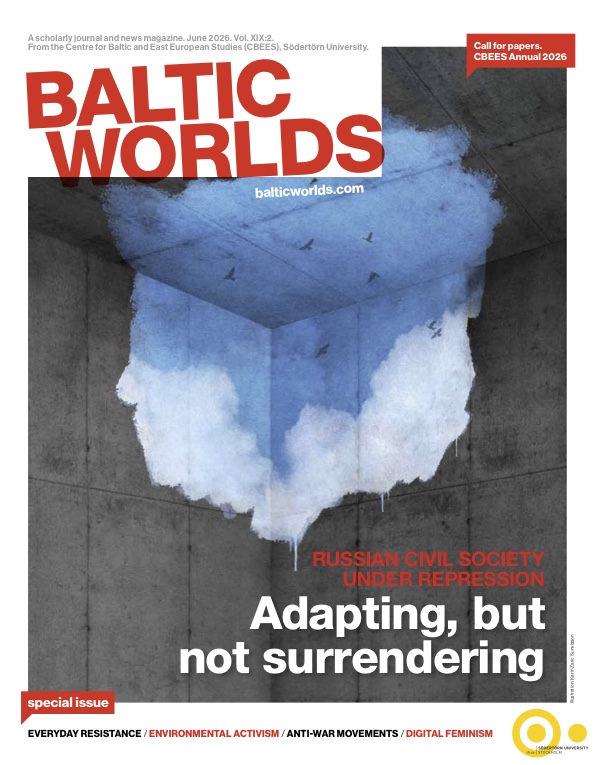 Issue 2026, 2:
  Baltic Worlds covers; the Baltic Sea Region, Eastern Europe, Russia, CentralAsia, Caucasus and the Balkan area.