+ Egle Rindzeviciute. Constructing Soviet Cultural Policy: Cybernetics and Governance in Lithuania after World War II. Linköping 2008 (Linköping Studies in Arts and Science 437. Theme Q, Culture Studies, Linköping University, Department for Studies of Social Change and Culture) 277 pages.
By
Barbara Czarniawska
February 18, 2010
Of Lithuania’s 220,000 Jews, 94 percent were killed during the Holocaust. But few in Lithuania want to talk about crimes other than those committed by the Soviets against the Lithuanian minority. Today, slogans such as “Juden Raus” can again be heard on the streets of Vilnius.
By
Arne Bengtsson
February 18, 2010
+ Arne Bengtsson. Bronssoldatens hämnd: Baltiska betraktelser. [The Revenge of the Bronze Soldier: Baltic Reflections]. Vimmerby: grannland.com 2007. 411 pages.
+ Arne Bengtsson. Hotad frihet: Baltisk kris i skuggan av Moskva. [Threatened Freedom: Baltic Crisis in the Shadow of Moscow]. Vimmerby: grannland.com 2008. 365 pages.
+ Peter Handberg. Undergångens skuggor: missiler och möten: reportage. [Shadows of the Demise: Missiles and Meetings: Reports]. Stockholm: Natur och Kultur 2007. 206 pages.
+ Peter Handberg. Kärleksgraven: Baltiska resor. [The Tomb of Love: Baltic Journeys ]. Stockholm: Natur och Kultur 2008. 326 pages.
By
Torbjörn Eng
February 17, 2010
Political development in the three Baltic countries has not been equal. The development of democracy and the degree of corruption depends, among other things – it is argued here – on how the resistance against the Soviet Union was organized.
Essay by
Li Bennich-Björkman
February 12, 2010

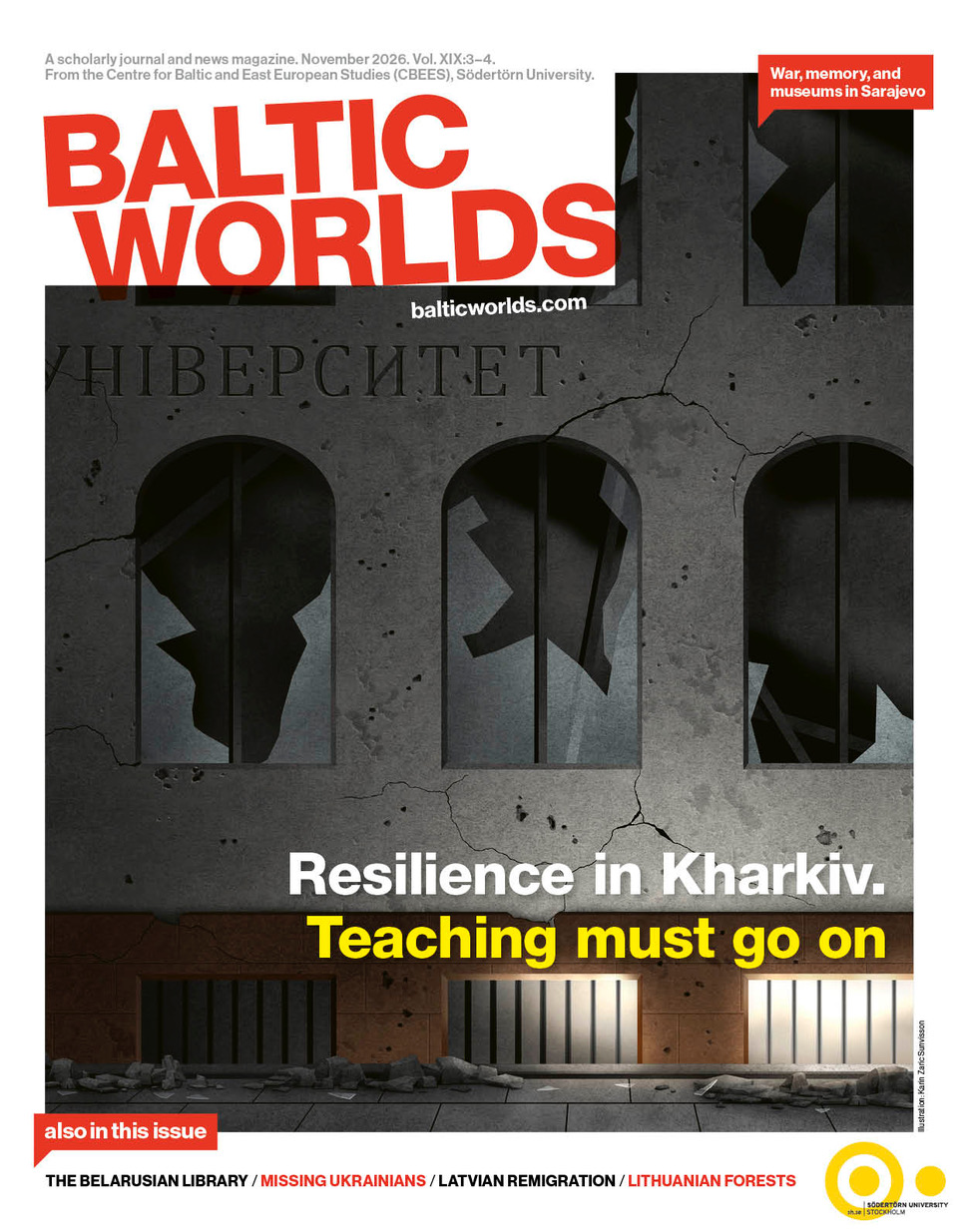 Issue 2026, 3-4:
 Baltic Worlds covers; the Baltic Sea Region, Eastern Europe, Russia, CentralAsia, Caucasus and the Balkan area.