14 articles tagged with maidan were found.
This paper delves into the ways in which art and cultural expressions have helped to preserve the memory of the Ukrainian Revolution and how the Maidan Museum contributes to this effort. Specifically, the study explores the significance of the Maidan event in Ukraine’s national memory culture and how it is being integrated into the country’s historical narrative as part of the decommunization and decolonization processes. Additionally, the text examines how the politics of memory, as expressed through the museum’s performances and aesthetics, can serve as a tool of collective and national resistance. Ultimately, the article argues that the Maidan event is not fixed but rather dynamic, and Maidan memory plays a critical role in Ukraine’s ongoing transition away from a shared historical past with Russia.
By
Galyna Kutsovska
April 23, 2024
Based in part on interviews and fieldwork, this article analyzes how artworks produced during the Ukrainian Revolution (2013–2014) present the political emergence of the Ukrainian people as a collective fused by bonds of solidarity. At first characterized by a strong universal thrust, presenting a boundless democratic anticipation, this solidarity was subsequently contained by religious-political traditions and specific forms of self-sacrificing and masculinist nationalism, often projected as a revolutionary utopia in its own right, which has been operationalized in the defense against Russia’s invasion. To substantiate the argument, the text analyzes numerous artworks from the Ukrainian Revolution. These interpretations demonstrate how aesthetic acts contribute to the production of bonds of solidarity that transcend existing modes of political and cultural representation of Ukraine.
By
Stefan Jonsson
April 23, 2024
"Business is not particulary concerned with democratic values, but rather with the existence of stable rules of the game and secured property rights for investors, says professor Andrei Yakovlev, head of the Institute for Industrial and Market Studies at the higher School of Economics in Moscow.
By
Ilja Viktorov
November 19, 2015
An international solidarity cum discussion conference concerning the Maidan revolution and its effects, took place in Kiev during five sunny days in May 2014. ”Ukraine: Thinking Together” was arranged by the Krytyka Institute in Kiev in cooperation with American historian Timothy Snyder and American news magazine New Republic.
By
Krister Eduards
April 29, 2015
The roundtable at CBEES 27 March, provided the space for an academic debate in which scholars and experts could present the findings of their research and share their views on the current events in Ukraine with a broader audience.
By
Julia Malitska, Olena Podolian & Yuliya Yurchuk
April 28, 2015
An interview with Russian human rights activist Elena Vasilyeva, founder of the group “Load 200 from Ukraine to Russia.” that gathers information about soldiers killed in military operation zones abroad and then transported home. The article contains statements that reflect the views of the author and the interviewed, not necessary the view of Baltic Worlds'.
By
Lyudmyla Pavlyuk
November 12, 2014
During the May 25 presidential election, the leaders of Svoboda and the Right sector had only 1, 7 percent of support. This is, according to Lyudmyla Pavlyuk, professor in journalism in Ukraine, an argument that the Russian official propaganda about Ukraine’s “fascism” is a way to legitimize Russian policies of occupation and aggression.
By
Lyudmyla Pavlyuk
June 5, 2014
The ambiguity of the 1920s Ukrainianization is well known among its scholars. A curious fact is that was becoming less intense and effective where the initial positions of the Ukrainian were weaker. Donbas was specifically one such region.
If Ukraine is a borderland, Donbas is a borderland multiplied by itself, notes the author and further claims that "Donbas will retain its hybridity no matter the outcome of the current unrest. Still, the volatile situation brings not only risks but also yet another chance for belated modernisation."
By
Roman Horbyk
May 19, 2014
BECAUSE OF THE direct Russian intervention, the territorial integrity and independence of the Ukrainian state is at stake. But as long as business and politics are as intimately intertwined as they are today, any serious reform in Ukraine in line with the ideological foundation of the protest movement will be a an exceptionally challenging task.
By
Hanna Söderbaum
April 28, 2014
It is difficult to identify why Maidan took a violent, military turn. Among the main possible reasons we might first note the inability of three opposition leaders (namely Vitaliy Klychko, Arseniy Yatsenyuk, and Oleh Tyahnybok) to settle on just one Maidan leader, and the absence of any visible, concrete accession to the demands of the protesters by the authorities.
By
Alla Marchenko Sergiy Kurbatov
April 28, 2014

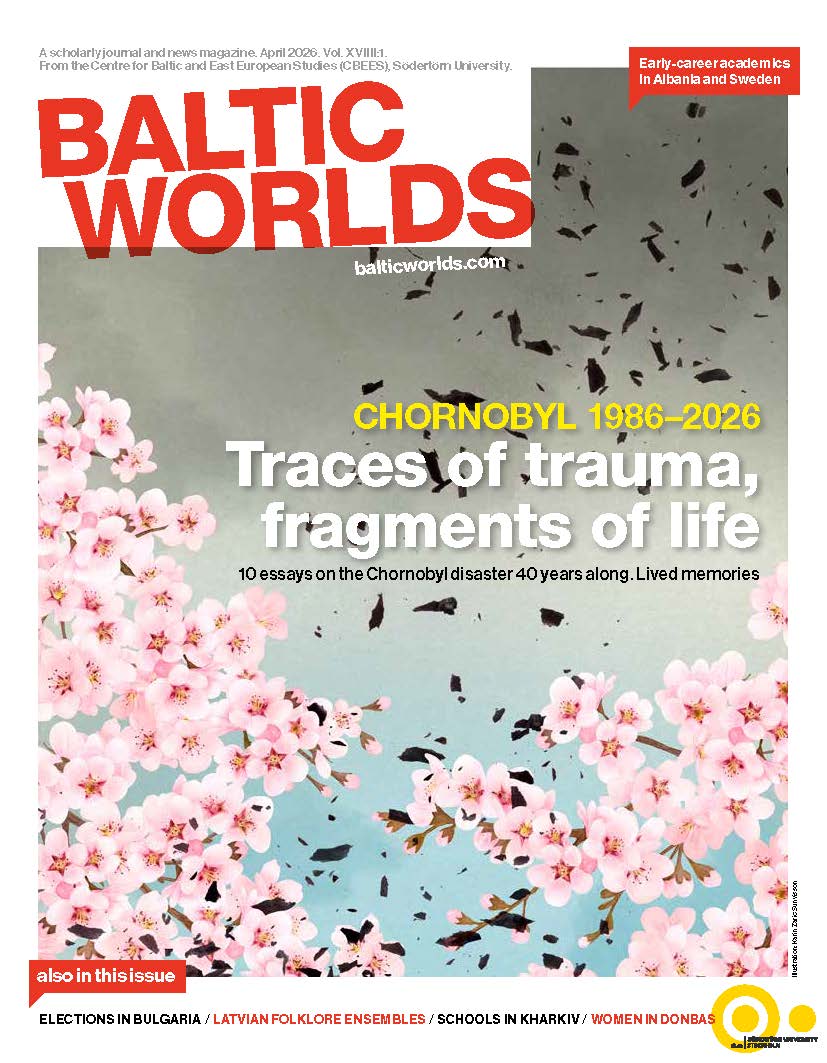 Issue 2026, 1:
 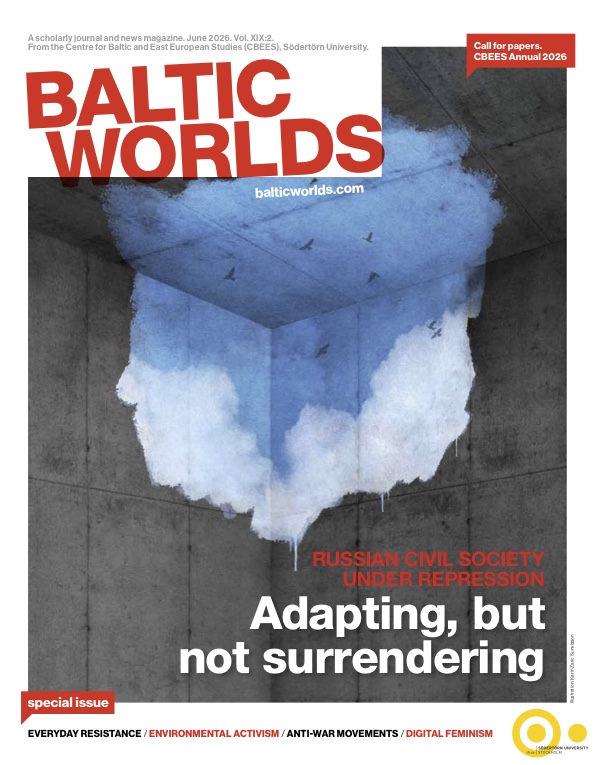 Issue 2026, 2:
  Baltic Worlds covers; the Baltic Sea Region, Eastern Europe, Russia, CentralAsia, Caucasus and the Balkan area.