
Download back issue of Baltic Worlds
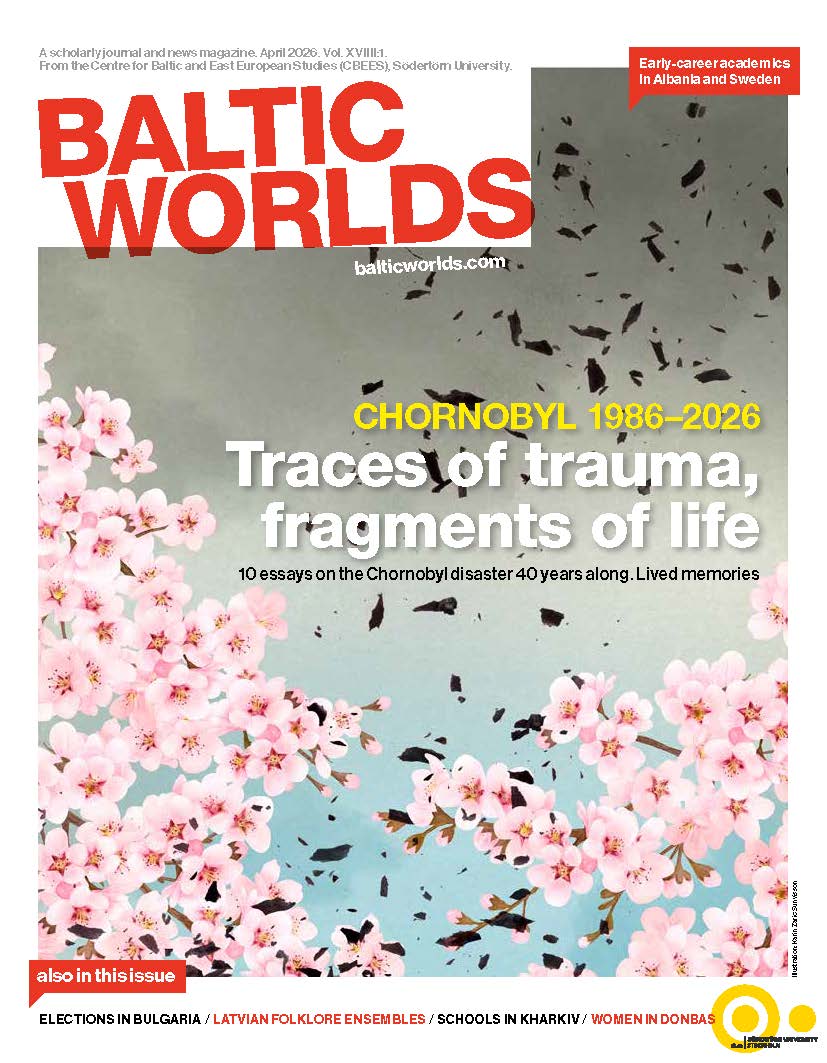 Issue 2026, 1: Download.

Essays Okategoriserade The fragility of memory. Case studies of rearranging memory-scapes in Estonia
Views of the past are constantly being revised, with the impact of different political and social occurrences generating new narratives and ways of interpreting history. This essay focuses on three cases of recent spatial reconfiguration in Estonia, all demonstrating how contrasting memoryscapes are perceived, especially after the full-scale Russian invasion of Ukraine in 2022. Since then, the Soviet memorials, symbols and murals in public space in Estonia have fallen under intense scrutiny as remnants and symbols of the Soviet regime. Russian aggression towards Ukraine seemed to reopen the wound of the most recent trauma. At the same time, the legacies of more remote oppressors, the Baltic Germans, has taken on a new meaning as a more neutral and even positive heritage. With three examples of spatial transformation, the essay examines the choices made on treating the layers of Estonian history and raises questions about how current decisions could shape our perception in the future.
Published in the printed edition of Baltic Worlds BW 2025:4, pages 98-102
Published on balticworlds.com on December 18, 2025


abstract
Views of the past are constantly being revised, with the impact of different political and social occurrences generating new narratives and ways of interpreting history. This essay focuses on three cases of recent spatial reconfiguration in Estonia, all demonstrating how contrasting memoryscapes are perceived, especially after the full-scale Russian invasion of Ukraine in 2022. Since then, the Soviet memorials, symbols and murals in public space in Estonia have fallen under intense scrutiny as remnants and symbols of the Soviet regime. Russian aggression towards Ukraine seemed to reopen the wound of the most recent trauma. At the same time, the legacies of more remote oppressors, the Baltic Germans, has taken on a new meaning as a more neutral and even positive heritage. With three examples of spatial transformation, the essay examines the choices made on treating the layers of Estonian history and raises questions about how current decisions could shape our perception in the future.
KEYWORDS: Dissonant heritage, Soviet monuments, Baltic Germans
DOWNLOAD THE FULL PAPER OA (see upper right corner)