What Did the Father Say?
Comment on Pussy Riot: Reflections on Receptions The story of innocence and corruption, bad motherhood and bad influences presented in […]

A scholarly journal from the Centre for Baltic and East European Studies (CBEES) Södertörn University, Stockholm.
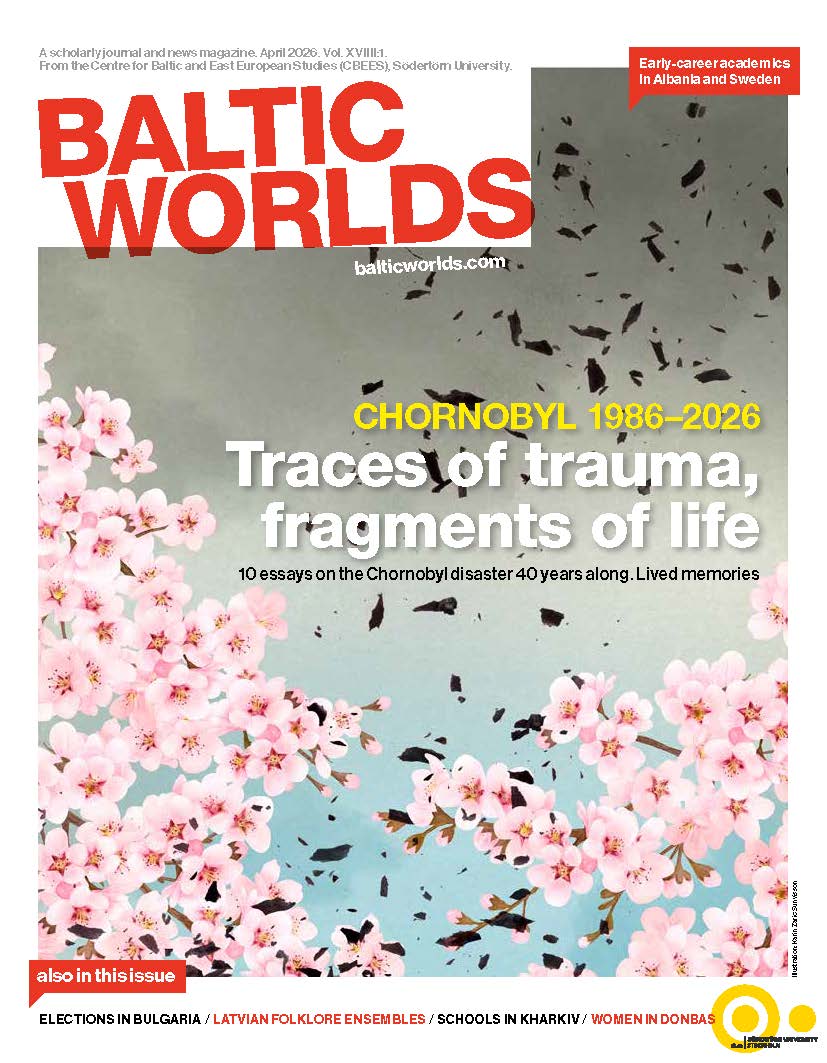 Issue 2026, 1: Download.
30 articles tagged with feminism were found.
Comment on Pussy Riot: Reflections on Receptions The story of innocence and corruption, bad motherhood and bad influences presented in […]
Comment on Pussy Riot: Reflections on Receptions It is important in this connection to mention the activities of Voina (The […]
Comments on Pussy Riot: Reflections on Receptions “Feminism is not crime but…” [1] The court cannot agree to the arguments […]
Comment written jointly with Irina Sandomirskaja on Pussy Riot: Reflections on Receptions However, in the post-modern Russian society, radical protest […]
Comment on Pussy Riot: Reflections on Receptions Pussy Riot awakened public memory to a recollection of an alternative history that […]
Comment on Pussy Riot: Reflections on Receptions It is not for the first time that feminism in Russia became an […]
Comment to Pussy Riot: Reflections on Receptions It was at the beginning of the 1990s, Russia’a first post-soviet years. We […]
EURO 2012 makes prostitution not just a Ukrainian problem, but an European issue.
Maria Janion is Poland’s undisputed intellectual authority – but she is relatively unknown abroad. Maria Janion is a professor emeritus of literature. Her studies of Romanticism led Janion to see the specificity in Poland’s cultural development. As a public intellectual, Janion has always intervened in the political discourse. In recent years, she has put her authority to use to support the feminist movement and the reawakened new Left.
“Why is there no happiness in the East?” was the, according to many, provocative title of a conference put on by CBEES and Södertörn University September 8–10 of this year. The organizers of the conference, Teresa Kulawik, Renata Ingbrant and Youlia Gradskova, wanted to bring together feminist scholars for a discussion about conditions facing feminism in the East and in the West after the Berlin Wall, as well as the role of the EU and politics in the development of feminism.
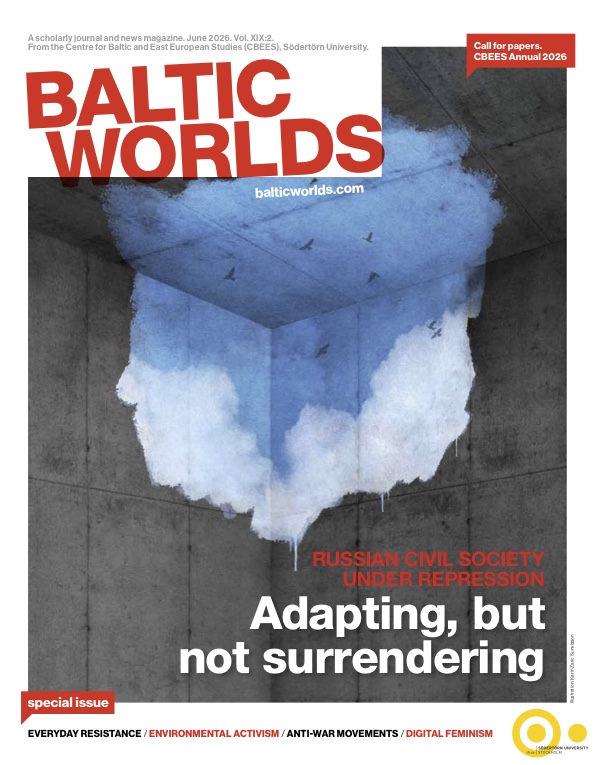 Issue 2026, 2: Download.
 Baltic Worlds covers; the Baltic Sea Region, Eastern Europe, Russia, CentralAsia, Caucasus and the Balkan area.