Today, Pomerania is divided between Germany and Poland, but the German and Polish populations have few factors in common that might serve to unify them. Nevertheless, in some respects the region is gradually becoming more interwoven. To study the development of these cross-border flows, a series of interviews is being conducted as part of a on-going research project
By
Péter Balogh
September 21, 2010
On June 24, 2010 Regeringsrätten, Sweden’s Supreme Administrative Court, reached a verdict, marking a victory for Professor Birgitta Almgren’s research. Both the Swedish Security Service (Säpo) and the Stockholm Administrative Court of Appeal had rejected Professor Almgren's request to obtain the classified documents from the GDR's foreign espionage that the CIA sent to Säpo.
By
Anders Björnsson
August 26, 2010
+ Julia Obertreis & Anke Stephen (eds.) Erinnerungen nach der Wende: Oral History und (post)sozialistische Gesellschaften, Essen: Klartext Verlag 2009, 401 pages.
By
Kristian Gerner
March 24, 2010
Cultural historian Karl Schlögel reflects on what sort of components create a geographic space. Interpretations of what took place and what is taking place always occur in a spatial context.
By
Anders Björnsson
February 19, 2010
+ Andreas Kossert. Kalte Heimat: Die Geschichte der deutschen Vertriebenen nach 1945. München: Siedler 2008. 427 pages.
+ Jan Musekamp. Zwischen Stettin und Szczecin: Metamorphosen einer Stadt zwischen 1945 und 2005. Inaugural-Dissertation zur Erlangung der Doktorwürde, vorgelegt an der Kulturwissenschaftlichen Fakultät der Europa-Universität Viadrina Frankfurt (Oder), 29. Januar 2008. 347 pages.
+ Bernd Aischmann. Mecklenburg-Vorpommern, die Stadt Stettin ausgenommen: Eine zeitgeschichtliche Betrachtung Schwerin: Thomas Helms Verlag 2008. 228 pages.
+ Stig Dagerman. Tysk höst [German Autumn]. Stockholm: Norstedts 1947 167, [1] pages and later editions. Has been translated to other languages, among them German (Deutscher Herbst). Hans-Åke Persson. Retorik och realpolitik: Storbritannien och de fördrivna tyskarna efter andra världskriget [Rhetoric and Realpolitik: Great Britain and the Displaced Germans after World War II] Lund : Lund University. Press 1993 325, [2] pages. CESIC studies in international conflict. Dissertation. German translation: Hans-Åke Persson: Rhetorik und Realpolitik: Großbritannien, die Oder-Neiße-Grenze und die Vertreibung der Deutschen nach dem Zweiten Weltkrieg. Frankfurter Studien zur Grenzregion, Band 3. Potsdam: Verlag für Berlin-Brandenburg 1997. 215 pages.
By
Thomas Lundén
February 18, 2010
+ Marjatta Hietala. De finländska forskarna och orienteringen mot Tyskland under andra världskriget. [The Finnish Researchers and the Orientation Towards Germany during World War II], in Historiska och litteraturhistoriska studier 83 [Historical and Literary-Historical Studies 83] (Malin Bredbacka-Grahn and Johan Strömberg, eds.). Svenska litteratursällskapet i Finland: Helsingfors/Helsinki 2008.
By
Thorsten Nybom
February 17, 2010
+ Dirk Hempel. Walter Kempowski – Eine bürgerliche Biographie. Verlagsgruppe Random House (2007).
By
Anders Björnsson
February 17, 2010
World leaders discussed things behind the scenes. Thatcher but also Mitterrand were against German reunification. An analysis of documents shows how Kohl managed to get the EU’s acceptance.
Essay by
Karl Magnus Johansson
February 12, 2010
An analysis of the film The Reader, based on the book of the same name. The film’s perspective on individuals’ behavior during the Holocaust makes coming to terms with acts of the past impossible – which itself invalidates the entire film.
Essay by
Antje Wischmann
February 12, 2010

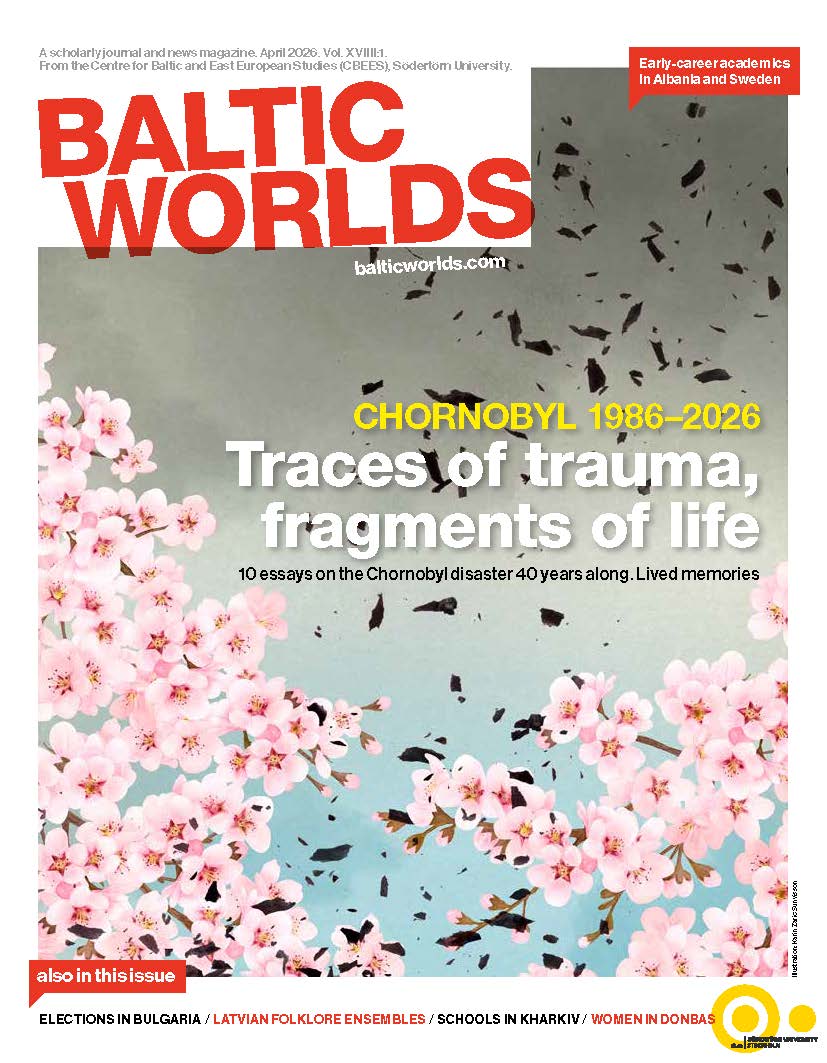 Issue 2026, 1:
 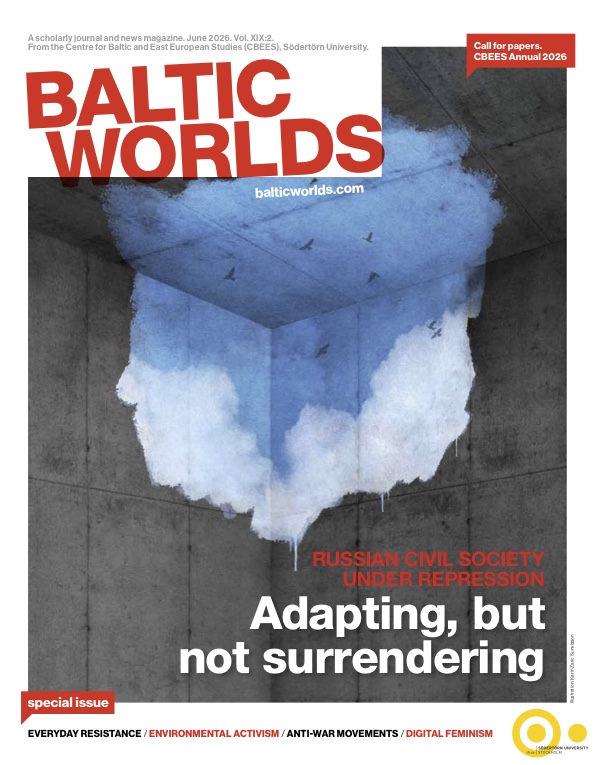 Issue 2026, 2:
  Baltic Worlds covers; the Baltic Sea Region, Eastern Europe, Russia, CentralAsia, Caucasus and the Balkan area.