Baltic Worlds Election Coverage online is commenting on the elections taking place in the region.. The comments and analyses present the parties, the candidates and the main issues of the election, as well as analyze the implications of the results.
On Sunday March 1, Slovakia woke up to a new political era. Slovaks showed to former ruling parties (SMER – SD, Slovak National Party and the Bridge) that there were fed up with their empty promises and all the corruption, scandals and nepotism. They decided to give a chance to Matovič and some of the other opposition parties.
By
Michaela Grančayová
March 2, 2020
On February 9 elections to the National Parliament – Milli Məclis – were held in Azerbaijan, nine months early. The […]
By
Sofie Bedford
February 17, 2020
To understand the election results and its implications it is necessary to distinguish two different layers of Polish politics. At the visible surface of politics, the battle takes places between the two dominant parties, PiS and PO. However, at a “deeper lever”, both parties struggle to react to global challenges, but they do so in diametrically different manners. Whether PO or PiS in government, the past years of Polish politics has seen a steadily growing realisation that politics at the national level becomes increasingly difficult.
By
Jaakko Turunen
November 4, 2019
Rather than moving towards arguments or ideological standpoints, the politics in Ukraine has moved farther towards selling emotions, stories and images. This time it was the politics of mediatised emotion on steroids. Is this simply a new politics that can be used in a populist and non-populist ways, or for progressive as much as reactionary causes? It may look like it is a neutral tool but I would still argue that this kind of politics substitutes political mobilisation with political immersion by submerging the audience into a story, an emotional environment, an experience.
By
Roman Horbyk
May 2, 2019
On March 30, Zuzana Čaputová defeated Maroš Šefčovič in the second round of the Slovak presidential election. It looks like an important victory for those who want a “European” and socially liberal Slovakia - regardless of the fact that the country is a parliamentary republic with limited powers for the president. But the presidential race has also revealed more troubling aspects of Slovak politics, and exposed deep divisions within the Slovak society.
By
Aliaksei Kazharski
April 1, 2019
Immediate reactions to the election results focused largely on the triumph of EKRE which nearly tripled its number of mandates. EKRE holding nearly a fifth of the Riigikogu seats ushers in a new era in Estonian politics where the populist far-right is a force to be reckoned with.
By
Piret Ehin
March 26, 2019
Regardless of what shape the future government will take, there is no doubt that it will remain under the control of Vlad Plahotniuc and Igor Dodon. This in turn means further deterioration of Moldova's relations with its Western partners, lack of structural reforms and deepening social collapse.
By
Kamil Calus
March 25, 2019
The elections in Lučani took place in the time of an increasingly intense atmosphere in society. The debate between opposition parties and the regime does not exist, yet there is an aggressive exchange in the media. The violence took to the streets when an opposition leader was brutally beaten just before the opposition rally.
By
Radoš Vidaković
February 27, 2019
December 9, 2018 marked a historic day in Armenia’s modern era as people went to the voting stations for a snap parliamentary election. The result rendered a landslide victory (70.4%) to acting Prime Minister Nikol Pashinyan’s My Step (Imkayl) coalition. The election was a consequence of the power shift which occurred nine months earlier in April 2018, during a popular uprising dubbed as the “Velvet Revolution”.
By
Vahagn Avedian
January 12, 2019
Salomé Zourabichvili used to be a French diplomat, now, as Salome Zurabishvili, she has become the president of Georgia: it is like a fairytale - quite a success story!
By
Hans Gunnar Adén
December 17, 2018

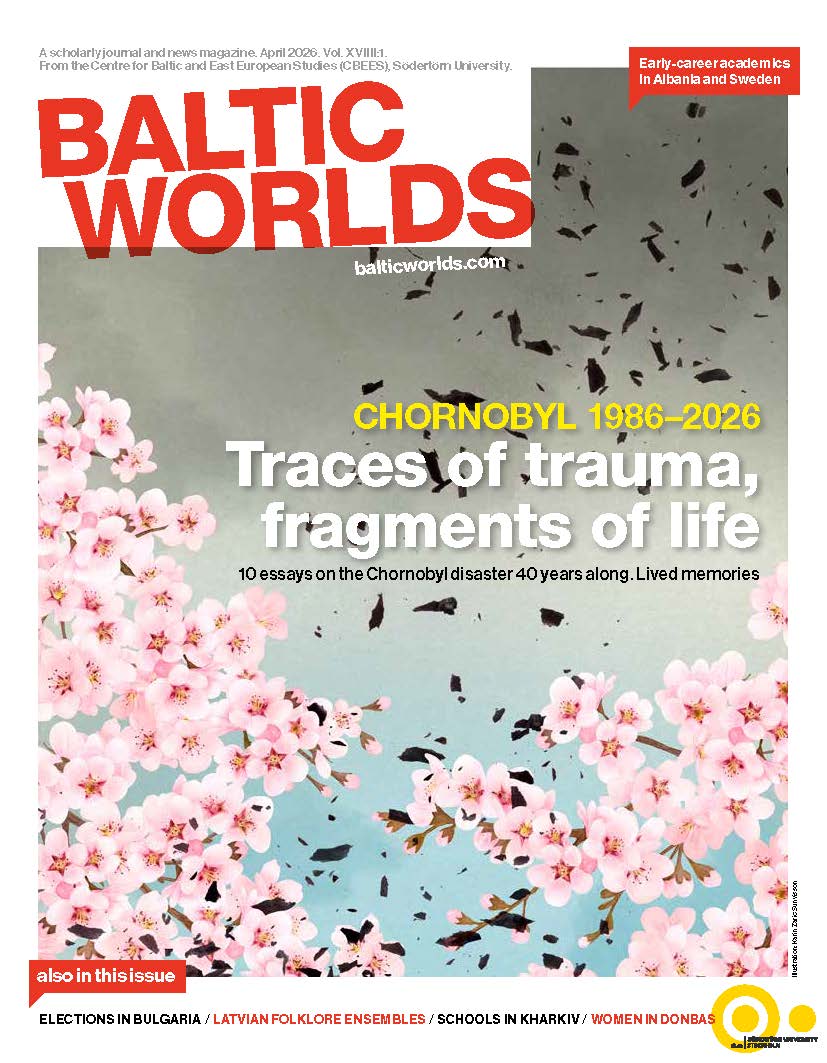 Issue 2026, 1:
 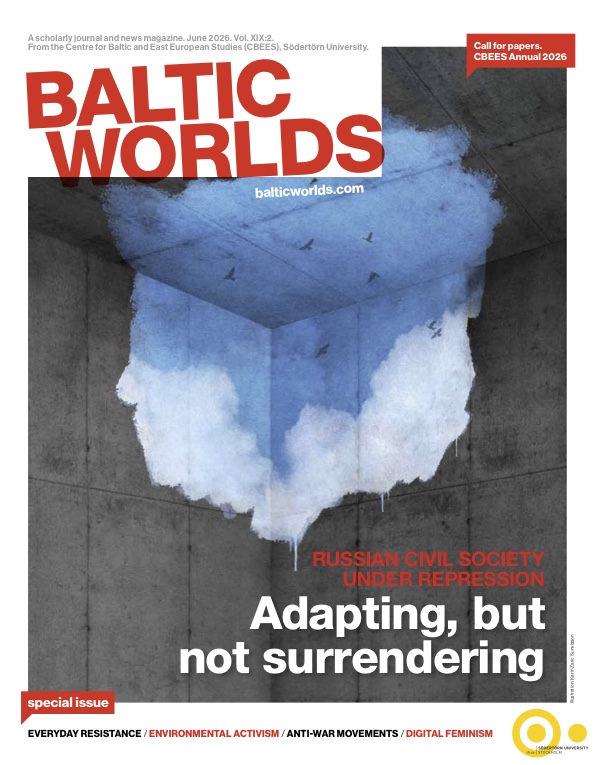 Issue 2026, 2:
  Baltic Worlds covers; the Baltic Sea Region, Eastern Europe, Russia, CentralAsia, Caucasus and the Balkan area.