Features offer in-depth accounts of issues related to the region without prior peer-review process.
Over the past two decades Poland has begun to catch up to the wealthier parts of Europe. Between 1996 and 2008, average growth in Poland was 4.6 percent, compared with 2.2 percent in the EU-15. During the crisis year of 2009, Poland was the only EU country to post positive GDP growth. Prosperity has increased, infant mortality has fallen and life expectancy is longer. But income growth has been unequally distributed. There are winners and losers. Today Poland is among the group of European countries in which income inequality is greatest.
By
Peter Johnsson
September 21, 2010
On June 24, 2010 Regeringsrätten, Sweden’s Supreme Administrative Court, reached a verdict, marking a victory for Professor Birgitta Almgren’s research. Both the Swedish Security Service (Säpo) and the Stockholm Administrative Court of Appeal had rejected Professor Almgren's request to obtain the classified documents from the GDR's foreign espionage that the CIA sent to Säpo.
By
Anders Björnsson
August 26, 2010
An exhibition about a woman born in a Europe that has vanished, in a city that no longer exists. Anna is neither East nor West, she is older than that. Her destiny is intertwined with the destiny of Europe. For this reason, the personal becomes universal in this touring exhibition.
By
Unn Gustafsson
July 1, 2010
Illegal logging is the foremost threat to the survival of forests around the world. It also means that many countries lose vast amounts of tax revenue and custom duties. Russia and the Baltic countries account for the largest volume of illegal export to the EU countries.
By
Anders Hellner
July 1, 2010
Sweden was the first in Europe to protect nature in urban areas. Today, a wide range of national urban parks are being established in the countries around the Baltic Sea, parks that will satisfy the city-dweller’s need to spend time in nature.
By
Pontus Reimers
July 1, 2010
For millennia there has been plenty of amber in the blue clay around the coasts of the Baltic Sea. These coveted stones, which were considered to be have magical properties, were sent via the rivers of Europe all the way to Rome to be traded.
By
Anders Hammarlund
March 24, 2010
The situation of the Romani has not improved since the fall of the Wall and the enlargement of the EU. Europe’s largest minority live as outsiders, and often under the threat of violence.
By
Irka Cederberg
March 24, 2010
After the financial crisis, a growing number of unemployed people have made their way to their more prosperous neighboring countries in the West in order to support themselves. The gap between the rich and the poor appears only to be increasing, both within and between countries.
By
Anna Danielsson
March 24, 2010
In the Baltic countries, there is a great need for energy. The Nord Stream project is a power game in which Russia may come to strengthen its role.
By
Anders Hellner
February 19, 2010
One result of efforts to halt trafficking is that the situation of those at risk becomes more difficult. So say NGOs and researchers. When women are sent home, they end up in a more vulnerable position – often they go back to trafficking.
By
Ninna Mörner
February 19, 2010

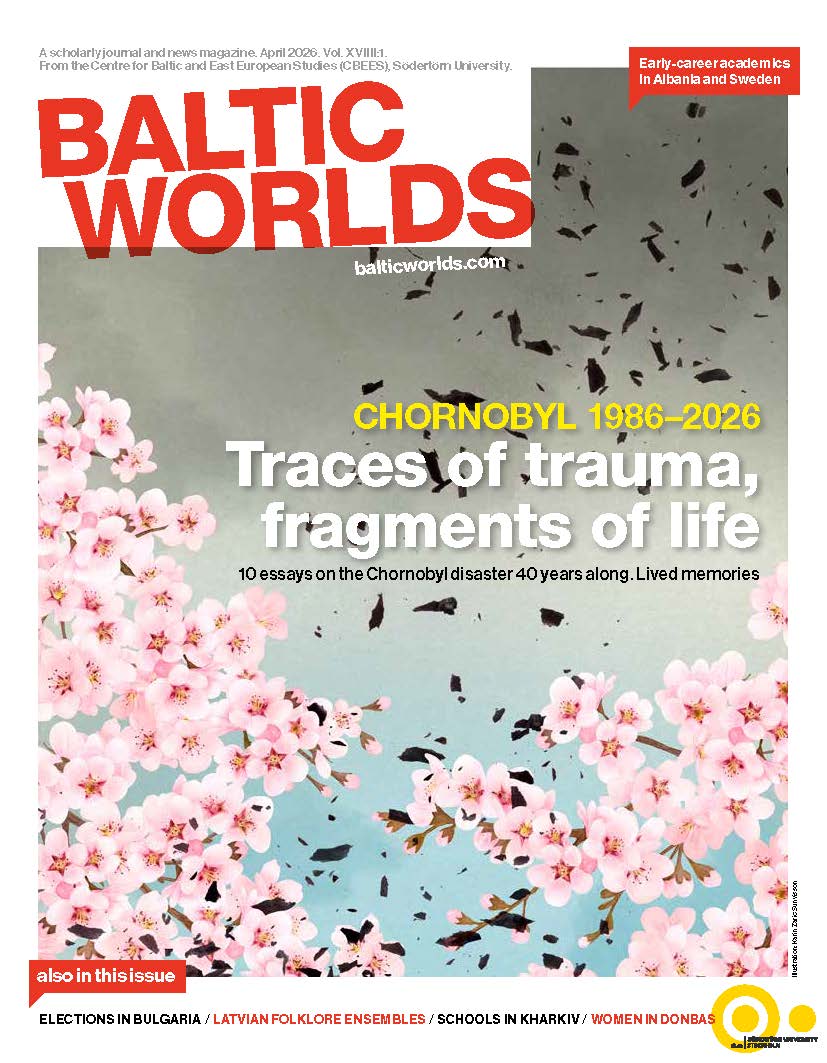 Issue 2026, 1:
 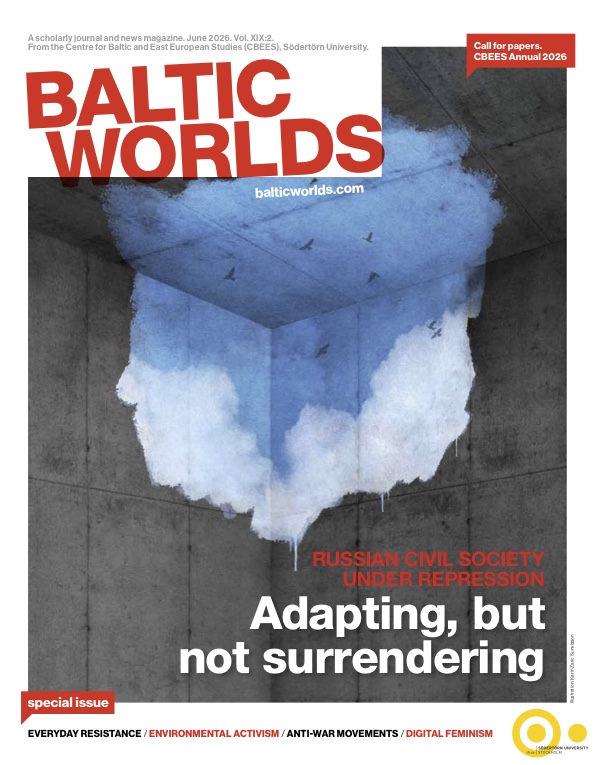 Issue 2026, 2:
  Baltic Worlds covers; the Baltic Sea Region, Eastern Europe, Russia, CentralAsia, Caucasus and the Balkan area.